Unless you have been vacationing in a cave somewhere in the nether regions of the Congo, you’ve probably heard of the brouhaha that has developed over Brit Hume’s advice to Tiger Woods:

Tiger Woods will recover as a golfer. Whether he can recover as a person I think is a very open question, and it’s a tragic situation with him. I think he’s lost his family. It’s not clear to me that — whether he’ll be able to have a relationship with his children.

But the Tiger Woods that emerges once the news value dies out of this scandal — the extent to which he can recover seems to me depends on his faith. He’s said to be a Buddhist. I don’t think that faith offers the kind of forgiveness and redemption that is offered by the Christian faith.

So my message to Tiger would be, “Tiger, turn your faith — turn to the Christian faith and you can make a total recovery and be a great example to the world.”

Many liberals are furious that Brit Hume would make such comments, for a variety of reasons.  The primary reason appears to be that he is claiming Christianity is true over and against Buddhism.  That is a politically correct no-no, labeled “intolerant.”  We’re supposed to act like our religious beliefs are no more true than the next religion’s.  How tolerant is that requirement?!  The fact of the matter is that religious claims are usually exclusive and contradict competing religious claims.  Given this fact, if one really believes the tenets of their religion, they cannot help but to think their religion is true and others’ false.
(more…)

Investors Business Daily has an article on California’s Proposition 71 that passed five years ago, which secured $3,000,000,000 dollars for embryonic stem cell research.  They note how the California Institute for Regenerative Medicine, which was created by the proposition and oversees the distribution of the research money, has shifted its focus to adult stem cell research.  Why?  Because ESCR is not panning out to be the promising research the supporters of prop 71 promised it would be.  While this is good, they note how it appears to be a bait-and-switch: 

To us, this is a classic bait-and-switch, an attempt to snatch success from the jaws of failure and take credit for discoveries and advances achieved by research Prop. 71 supporters once cavalierly dismissed. We have noted how over the years that when funding was needed, the phrase ‘embryonic stem cells’ was used. When actual progress was discussed, the word ‘embryonic’ was dropped because ESCR never got out of the lab.

They conclude by noting that “it is ESCR researchers who have politicized science and stood in the way of real progress. We are pleased to see California researchers beginning to put science in its rightful place.”

HT: Wesley Smith

In 2004 three fossilized fish were found in the Canadian Arctic that were hailed to be an important missing link in the evolution of fish to tetrapods (vertebrates with four limbs).  The newly discovered specimens, called Tiktaalik, have been touted as one of the best proofs for Darwinian evolution (common descent), providing solid evidence for the transition from water to land animals. 

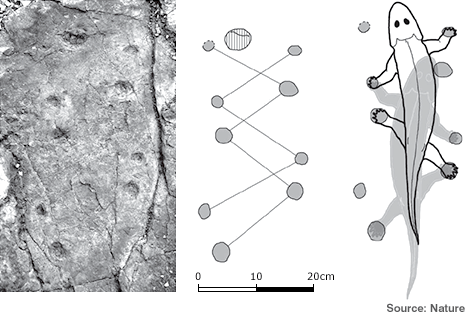
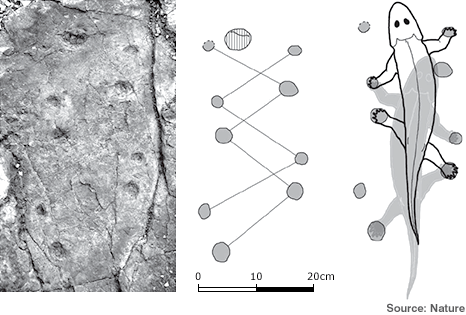
But now a paper in Nature is reporting that approximately a dozen fossilized tetrapod footprints have been discovered in Poland that date to 397 million years ago, at least 10 million years prior to Tiktaalik, forcing biologists to push the origin of tetrapods back about 20-30 millions years earlier than previously believed.  Tiktaalik cannot be a transitional form between fish and tetrapods if tetrapods existed prior to Tiktaalik!  Like so many other supposed transitional forms touted in scientific circles and the press (think Archaeopteryx and Ida), Tiktaalik is a dead end.

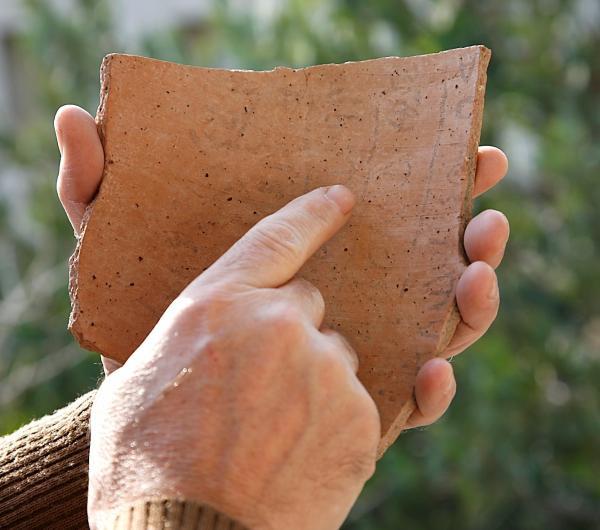
Approximately 18 months ago archaeologists discovered a 3,000 year old pottery shard containing an ink inscription written in proto-Canaanite script.  That script has now been positively identified as Hebrew, making this the oldest extant Hebrew writing ever found.  It is from the 10th century BC, which would be around the time of King David’s reign.  Interestingly, it was discovered 18 miles west of Jerusalem in a building near the city gate at Elah Fortress, in the valley where the Bible describes David’s historic battle with Goliath.

The translation of the text is:

1 you shall not do [it], but worship the [Lord].
2 Judge the sla[ve] and the wid[ow] / Judge the orph[an]
3 [and] the stranger. [Pl]ead for the infant / plead for the po[or and]
4 the widow. Rehabilitate [the poor] at the hands of the king.
5 Protect the po[or and] the slave / [supp]ort the stranger.

The importance of this discovery is two-fold.  First, it proves that Israelites had the ability to write in the 10th century, silencing critics who claim that certain books of the Bible could not have been written as early as the internal witness suggests because the Israelites lacked the ability to write.  Secondly, it proves that the fortified city in which it was discovered was a city of the Israelites (the most ancient Judean city discovered to-date).  Its massive size indicates the presence of a strong kingdom, and thus this would serve as physical evidence for the existence of an early united monarchial kingdom in Israel (a fact denied by many skeptics).

Well, kind of.  In 2006 the NJ Supreme Court ruled that the state’s legislature had to provide equal benefits to same-sex couples as it did to heterosexual couples seeking legal recognition of their relationship.  The legislature complied, but chose to call same-sex unions “civil unions” rather than “marriage” (which was an upgrade from the “domestic partnerships” they implemented in 2004).  A bill introduced last year sought to make it law that same-sex unions be termed “marriages” rather than “civil unions.”  Today, the NJ Senate voted 20-14 against that bill.  

I say the Senate “kind of” voted against same-sex marriage because same-sex marriage already exists in New Jersey; it’s just called by a different name.  Same-sex couples would not have gained anything material had this bill passed, and they have not been denied anything material with its defeat.  They have merely been denied being able to call their state-recognized relationships “marriage.”  While there is something to be said about the value of a name, the fact of the matter is that the fight over same-sex marriage is not (or at least should not be) over who gets to use the “M” word, but over the legal recognition and sanction of same-sex relationships.  If you give same-sex couples all of the benefits and privileges of opposite-sex couples, you have de facto legalized same-sex marriage, whatever you call it.  Marriage by any other name is still marriage.

This is a travesty of justice.  A woman killed her neo-Nazi husband while he was sleeping, and will not serve any jail time for doing so.  And it’s not because she was found to be mentally insane.  It’s because her husband was seen to be such a bad guy.  Indeed, he was.  He was a white supremacist, a child pornographer, an abuser, and had the materials to make a bomb.  Nevertheless, he was a human being.  He needed to experience justice for his crimes, but being killed was not the appropriate form of justice, and his wife was not the appropriate person to determine his punishment.  There is no question that she needed to remove herself and her daughter from this man’s influence, but divorce and/or relocation could have accomplished this.  Killing him was not necessary.  Given the woman’s circumstances I could understand if the court might have lessened her prison sentence, but to let her go scot-free is wrong.  This sends a message to society that murder is justifiable so long as the person you are murdering is a bad person.  How many other women might be emboldened to kill their abusive or crazy husbands as a result of this case?  This is what happens when sentimentalism is elevated in a society.  It can even trump the rule of law.

A house from the days in which Jesus walked the streets of Nazareth has been uncovered.  Amazing!

As a result of the failure of the chance hypothesis to explain the origin of life, Dean Kenyon and Gary Steinman proposed a novel solution: life’s origin is due to physical necessity, not chance (Biochemical Predestination, 1969).  Like many others in their day, Kenyon and Steinman were proponents of the protein-first model, maintaining that the first life was based on proteins rather than DNA (DNA came later).  They got around the utterly implausible odds of forming proteins by chance by just denying that chance was involved at all.  They suggested that law-like processes direct the self-organization of chemicals, making the origin of life inevitable, not some lucky happenstance.  Just like electrostatic forces draw sodium and chloride together in ordered patterns to form crystals, some (yet-to-be-discovered) natural law organized biochemicals to form the biological information that makes life possible. 

As evidence for their view that proteins could self-organize to form the basis of life, they pointed to the fact that amino acids bond with certain other amino acids better than others, making certain sequences more likely than others.  This explained how the biological information necessary for life could arise without DNA, RNA, and the transcription-translation process.[1]

Eventually, however, Kenyon came to question his model.  He recognized that even if it could explain the origin of biological information, he still needed to explain the origin of DNA as well as how protein synthesis transformed itself from a self-organizing and self-originating process to one that depended entirely on DNA transcription and translation.  He dismissed the possibility that proteins constructed DNA because the information flow in modern cells is unidirectional, and it’s in the complete opposite direction: information flows from DNA to proteins, not vice-versa.  Because DNA wholly determines the amino acid sequencing of proteins, and because there is no evidence suggesting or reason to think this order was ever different in the past he eventually abandoned the protein-first model.  DNA must have come first.  But based on his knowledge of its chemical properties, he doubted that DNA possessed the same sort of self-organizational properties he thought were present in amino acids.  He was forced by the evidence to abandon his proposal that life originated by necessity.

(more…)

I was out of town for 2+ weeks for Christmas, so I didn’t have a chance to blog much.  To be honest, I didn’t want to (and it’s not like readership would be high during the holiday anyway).  It was actually nice to be “unplugged” for a while.  But I’m back, and about to start posting again, including the 5th installment of my extended summary of Meyer’s Signature in the Cell.  Stay tuned.

Now that we have established what needs explaining (biological information, and the origin and functional interrelatedness of cellular machinery) and the scientific method biologists employ to formulate an explanation, we turn our attention to the four possible explanations for life’s origin: (1) Chance; (2) Necessity; (3) Combination of chance and necessity; (4) Intelligent agency.  In this post I will examine the possibility that life can be explained in terms of chance processes alone.

Just like the lottery, specific probabilities can be assessed for the origin of life by chance.  To illustrate how probabilities are assessed, consider a combination lock.  What are the chances of someone guessing the correct combination of a lock with four dials containing 10 digits each?  To determine the chances one must multiply the number of digits on each dial (10) by itself four times (because there are four dials): 10 x 10 x 10 x 10 = 10,000 different possible combinations.  The chances of guessing the correct combination, then, are 1 in 10,000.  If one more dial was added to the lock, it would decrease the odds by a factor of 10 (1 in 100,000).  If one is given only one try, the odds of getting the right combination are overwhelmingly against him—so much so that if the lock opened everyone would suspect that his selection was not random, but based on intelligence, or that the lock was faulty.  The odds of cracking the combination increase, however, as one increases the number of attempts.  If one is given 100,000 tries to guess the combination, then the odds are that he will eventually guess the combination through random attempts alone (if each try took 10 seconds, you could crack the 4-dial code in about 28 hours, and the 5-dial code in about 11 days).

(more…)

In May of this year the District of Columbia passed a law recognizing the legality of same-sex marriages performed in states where they are legal.  Today, they voted 11-2 to legalize same-sex marriages performed in D.C.  The mayor of D.C., Adrian Fenty, has vowed to sign it.  Because of D.C.’s unique status, the U.S. Congress has 30 legislative days to review the bill.  If they do not act to overturn it during that time, it becomes law (and there’s not much chance they will).  It looks like D.C. will be the sixth jurisdiction in the U.S. to legalize same-sex marriage.

What is the scientific method?  Everyone who sat through grade-school science class knows the answer to this question, right?: observation, hypothesis, prediction, experimentation, conclusion.  What may surprise you is that there is no such thing as the scientific method.  There are a variety of methods scientists employ in their quest to discover the truth about the natural world, none of which can be claimed as the scientific method.  Which method a scientist uses depends on what he is studying.  While the method outlined above works well for “experimental scientists” such as chemists and physicists, it doesn’t apply to “historical scientists” (i.e. those who study the past) such as paleontologists, astronomers, and evolutionary biologists.  Those in the historical sciences require a different method.

Historical scientists study the past, not the present.  They seek to discover the historical causes responsible for past events – effects that we observe in the present.  For such a task the scientific method outlined above simply won’t work.  It’s the wrong tool.  To explain the structure of the fossil record, for example, one cannot engage in experimentation.  Likewise, there is no need for making predictions since predictions address the future, not the past.  How, then, do historical scientists test their theories?

(more…)

In my first post on Meyer’s Signature in the Cell I discussed information theory, and claimed that the cell exhibits functional information—information that cannot be explained in terms of the physical machinery of the cell.  In this post I want to provide some background on the machinery and inner workings of the cell to provide evidence for the claim that the cell contains complex specified information (functional information), and explain why biologists have come to recognize that DNA stores and transmits “genetic information,” contains a “genetic blueprint” with “assembly instructions,” and expresses a “digital code.” 

The two most basic components of the cell are DNA and proteins.  DNA is made up of a 4 character chemical alphabet: adenine, thymine, guanine, cytosine (these are called nucleotides).  These nucleotides always appear in complimentary pairs: adenine is paired with thymine, and guanine is paired with cytosine. 

Proteins—the workhorses of the cell—are composed of amino acids.  The cell contains 20 different kinds of amino acids.  To create functional proteins, these amino acids must be sequenced together in a specific order, forming a “chain” of amino acids (proteins come in varying lengths, with shorter proteins consisting of ~100 amino acids, most proteins consisting of several hundred, and some as large as 34,350 [titin]).  While there are a number of ways in which amino acids can be sequenced, the vast majority of combinations are functionless.  They sequence must be specified if the protein is to have function (functionality also requires the protein to be folded into a particular shape).

(more…)

If you are interested in the history of when the celebration of Christmas began and how the date was determined, this article from Biblical Archaeological Review is a good one.  And if you think the answer is that Christians co-opted the Roman feasts of Saturnalias and/or Sol Invictus, you need to read the article.

One of the regular visitors/commentators on this blog made me aware of a video on YouTube titled “You can’t prove God doesn’t exist (lies Christians tell #4), featuring a couple of quotes from yours truly.  The video is posted below, followed by my response.

(more…)

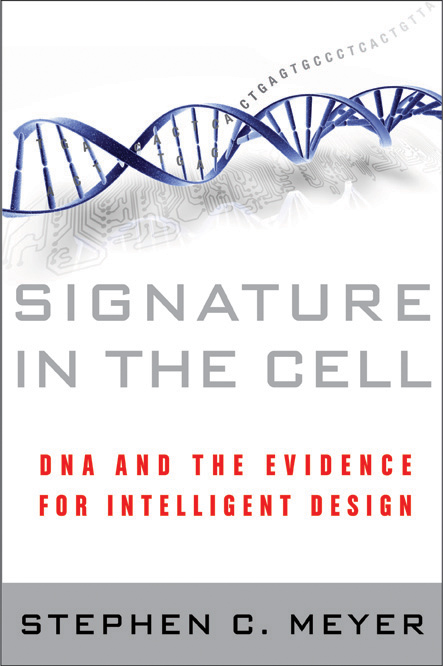
It’s not often that a book on Intelligent Design becomes a best-seller, or is opined (in print) to be one of the best books of the year by a prominent atheist philosopher.  And yet that is true of Stephen Meyer’s book, Signature in the Cell: DNA and the Evidence for Intelligent Design.  I must say it’s one of the best books I have read on the topic of the evidence for intelligent design in biology.  The information was presented in a very logical, systematic order, with each chapter building naturally on the former.  Not only was Meyer’s approach systematic, but he presented difficult concepts in very understandable ways.  Coming in at 561 pages of text, it is not a quick read, but the time spent is well worth it.

Meyer’s thesis is that the origin of life is best explained by an intelligent cause.  He begins his book by telling how the mystery of life’s origin was not recognized in Darwin’s day, but came to be realized in the decades that followed as knowledge of life’s complexity began to emerge.  That mystery has not been solved over the decades, but rather looms larger and larger the more we discover about the internal workings of the cell, and what is required for even the simplest of life. 

(more…)

I must say I am a little shocked at this one given how liberal NY is, but the NY Senate rejected a same-sex marriage (SSM) bill that passed in the NY House.  The voted it down by a vote of 38-24.  

So as of December 2009 five states allow for SSM: Iowa, Connecticut, Massachusetts, New Hampshire and Vermont.  California was once on the list when the CA Supreme Court forced the CA legislature to legalize SSM (of course, SSM was already legal in practice, although not in name), but the CA voters amended their constitution in November 2008 to overturn the Supreme Court’s ruling.  Maine was also on the list until last month, when the voters of Maine overturned a congressional law that passed in May of this year legalizing SSM.

The NJ Senate is expected to vote on a SSM bill next week, so we’ll have to wait and see what happens there.

See comments #22-31.  The atheist, awfrick, is responding to some comments I made regarding positive evidence for the existence of God.  This little exchange was so typical of my “dialogues” with atheists.  Here’s the anatomy of a dialogue with an atheist: 

  • Step 1 = Atheist tells theist how stupid they are for believing X
  • Step 2 = Theist responds to atheist point-by-point, supplying evidence against the atheist’s assertions (rather than demanding that the atheist actually give evidence for his assertion)
  • Step 3 = Atheist tells you to read some article/book that will show why your arguments are wrong, rather than offering any rebuttal of his own. It’s the “I know someone who can beat up your dad” response.
  • Step 4 = Theist takes the time to read the article and interact with its claims.  Responds to atheist with reasons why the article’s claims are mistaken.
  • Step 5 = Atheist ignores everything you said in favor of nitpicking at some irrelevant point.  Asks for more evidence.
  • Step 6 = Theist provides more evidence
  • Step 7 = Atheist acts like you skipped step 6, dismisses everything you say with a hand-wave rather than a rebuttal, and resorts to name calling and putdowns.  
  • Step 8 = Theist calls atheist on the carpet for what he’s doing.  Atheist doesn’t respond. 
  • Step 9 = Atheist goes looking for easier targets – those who will cower at the mention of his intellectual superiority, have nothing to offer in the way of rebuttal, and do not even think to demand that the atheist offer any evidence for his claims.

Awfrick, if you are reading this, I invite you back to truly engage on the topic you started.  All other atheists, if this is not descriptive of you, I am not claiming it is.  I appreciate the atheists who have engaged me on this blog in a serious dialogue.  I cannot appreciate those who assert the greatness of their intellectual superiority and strength of evidence, but never deliver on it.  If you’ve got the goods, show me the money.  If not, play at a different table.  This blog is for the serious–for those who want to engage in dialogue on serious matters in a serious, sensible way.

I just finished reading a tremendous review of Bart Ehrman’s latest book, Jesus Interrupted, by Michael Kruger.  I would highly recommend it.  The last paragraph is literary gold in my book.  It’s one of those summary paragraphs that I would have loved to have penned myself.


HT: Justin Taylor

Scott posed an interesting question to me that both of us thought would be a good blog topic: Would it be moral for a man to marry a conjoined twin, or would such constitute polygamy, or even adultery?

Let’s call the conjoined girls Mary and Martha.  You wish to marry Martha, but not Mary.  Martha accepts your proposal, and Mary has consented to the relationship you’ll have with her sister (she even promises to be at your wedding J ).  Would it be immoral to marry Martha under such circumstances.  Why or why not?