Sorry for not posting much as of late. I’ve been involved with so many projects, I have had computer issues, and I took an excursion to Lake Tahoe. As I get caught up over the next few days, I’ll begin posting again. Here’s a short post in the interim:
Back in May of this year, Greg Koukl had some insightful comments about being labeled a “modernist” for believing in truth and logic that I’d like to share with you. Greg wrote,
Yes, I believe in the legitimacy of reason, but this doesn’t make me a modern simply because the Enlightenment period exalted reason to idol statues. Pre-moderns of all stripes…trusted reason not because it was a pop idol, but because it as an undeniable feature of reality.
Exactly.
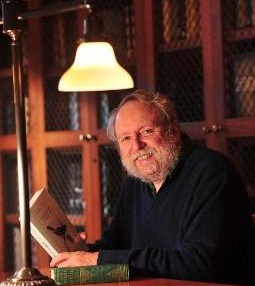 Philosopher of science, Michael Ruse, recently had a few choice words to
 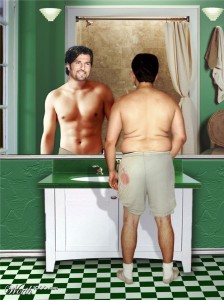 Greg Ten Elshof just released an interesting book titled
  As some of you may know, I am an advocate against the cultural tendency to willfully and purposely delay marriage late into our 20s or 30s. It is my conviction that this is a recipe for sexual immorality in the church, and that it is a contributing factor to Peter Pan Syndrome (20-, 30-, and 40-something men who are still acting and thinking like teenagers), since marriage—and the responsibilities that come with it—are a key part of the maturation process. So I was delighted to read Mark Regnerus’s article in Christianity Today, “
 J. Budziszewski made a great summary of the cosmological argument for God’s existence. He wrote, “Anything which might not have been requires a cause. Philosophers call such things ‘contingent beings.’ But the universe…is itself a contingent being, so the universe must have a cause. Now if we say that the cause of the universe is another contingent being, we merely invite an infinite regress. For the regress to have an end, we must eventually reach a being which is not contingent but necessary—not something which might not have been, but something which can’t not be. Furthermore this necessary being must be sufficient to cause its effects, and so it must have all of the qualities traditionally ascribed to God: Eternity, power, and all the rest.”
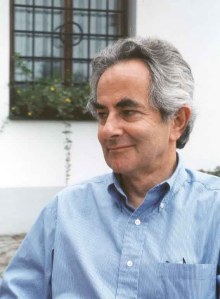 In his book The Last Word, Thomas Nagel, an atheist professor of philosophy and law at New York University School of Law, defended philosophical rationalism against subjectivism. At one point he admits that rationalism has theistic implications—implications he does not like. He suggests that subjectivism is due in part to a fear of religion, citing his own fear as a case in point:
 Atheists claim they don’t believe in miracles—that miracles are for religious people—but I beg to differ. Atheists believe in miracles too, although they do not involve a divine being. How so? Atheists believe something came into existence from nothing, out of nowhere, entirely uncaused. They believe life came from non-life, that the rational came from the non-rational, that order came from chaos, and specified information came from randomness. Those are some serious miracles, and require a lot more faith than belief in an intelligent and powerful God who created the universe from nothing, life from non-life, and ordered the universe with specified information! As Norm Geisler says, I don’t have enough faith to be an atheist!
 Thinking to Believe