The NT authors often quote an OT passage, and say it was fulfilled in Christ. Many Christians use these fulfillments as evidence for the veracity of the Christian faith. For example, I’ve heard it claimed that the probability of just one man fulfilling 48 different prophecies is something like 1:10157. It is reasoned that no man could match those odds unless the Biblical prophecies were divine in origin, and thus Jesus must be who He claimed to be. The problem with this apologetic is that the vast majority of these “messianic prophecies” are neither prophetic, nor messianic in their original context.
Consider, for example, Hosea 11:1 – “When Israel was a young man, I loved him like a son, and I summoned my son out of Egypt.” Matthew quotes this passage in reference to Jesus’ return to Nazareth, saying, “In this way what was spoken by the Lord through the prophet was fulfilled ‘I called my Son out of Egypt.’” (Matthew 2:14-15) When one examines the original context of Hosea 11:1, however, they will quickly recognize that this passage is neither prophetic nor messianic. It is a mere historical recounting of the Hebrews’ exodus from Egypt.
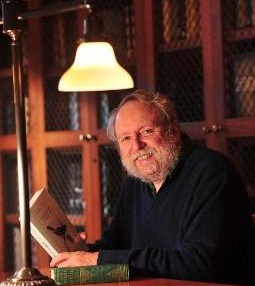 Philosopher of science, Michael Ruse, recently had a few choice words to
  Greg Ten Elshof just released an interesting book titled
  As some of you may know, I am an advocate against the cultural tendency to willfully and purposely delay marriage late into our 20s or 30s. It is my conviction that this is a recipe for sexual immorality in the church, and that it is a contributing factor to Peter Pan Syndrome (20-, 30-, and 40-something men who are still acting and thinking like teenagers), since marriage—and the responsibilities that come with it—are a key part of the maturation process. So I was delighted to read Mark Regnerus’s article in Christianity Today, “
 J. Budziszewski made a great summary of the cosmological argument for God’s existence. He wrote, “Anything which might not have been requires a cause. Philosophers call such things ‘contingent beings.’ But the universe…is itself a contingent being, so the universe must have a cause. Now if we say that the cause of the universe is another contingent being, we merely invite an infinite regress. For the regress to have an end, we must eventually reach a being which is not contingent but necessary—not something which might not have been, but something which can’t not be. Furthermore this necessary being must be sufficient to cause its effects, and so it must have all of the qualities traditionally ascribed to God: Eternity, power, and all the rest.”
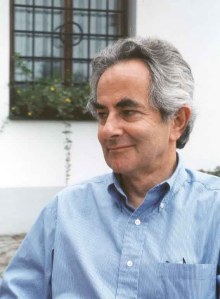 In his book The Last Word, Thomas Nagel, an atheist professor of philosophy and law at New York University School of Law, defended philosophical rationalism against subjectivism. At one point he admits that rationalism has theistic implications—implications he does not like. He suggests that subjectivism is due in part to a fear of religion, citing his own fear as a case in point:

