The Scripture says “for this reason the man shall leave his father and his mother and cleave to his wife.” The theological justification for marriage is that the woman was taken out of the man, and thus should be reunited with him in sexual union. That does not and cannot apply to same-sex couples. The man was not taken from a man, nor the woman from a woman. Same-sex marriage is excluded on theological grounds, not to mention moral grounds.
September 20, 2022
Same-sex Marriage is Theologically Excluded
Posted by Jason Dulle under Apologetics, Same-sex Marriage[12] Comments
September 2, 2022
 Why study theology? Why does it matter? Isn’t theology just for preachers and smart guys? Isn’t theology divisive and difficult? In my latest podcast series titled “The Case for Theology,” I argue that while theology can be difficult and divisive, it’s unavoidable. All of us are theologians. The question is simply whether we will be a good or bad theologian.
In this two-part series, I’m going to show why theology matters and how it benefits every believer. Episode 1 has already been published. In that episode, I argue that theology (1) defines what we are to believe; (2) reveals to us what the spiritual realm is like; and (3) it is a prerequisite for salvation.
Check it out wherever you get your podcasts from. Just search for “Thinking to Believe” or “Jason Dulle.” Or, you can listen at thinkingtobelieve.buzzsprout.com.
September 2, 2022
Podcast abortion series
Posted by Jason Dulle under Abortion, Apologetics, BioethicsLeave a Comment
My podcast series on abortion is now complete. There were 17 episodes in the series, plus the intro episode. If you haven’t had a chance to check it out, you can listen wherever you get your podcasts or from thinkingtobelieve.buzzsprout.com.
Much of what I covered in the podcast series is contained in my abortion paper. And if you want to read all of my abortion-related posts on this blog, you can do so here.
August 30, 2022
What happens when inerrancy is denied
Posted by Jason Dulle under Bible, Inspiration, Theology[2] Comments
Those who deny inerrancy end up replacing the authority of the Bible with their own authority because they get to determine which parts of the Bible are divinely inspired and which are not. The process is almost entirely subjective.
The tendency is to deny the inspiration of any part of Scripture that does not line up with what they think is true. When the Bible’s sexual ethics conflict with their sexual ethic, it is because those texts reflect man’s opinion rather than God’s. When the Bible’s teaching seems to conflict with the current scientific consensus, it is because those teachings are not inspired. When the Bible portrays God doing something that conflicts with their understanding of God, those passages must reflect man’s ideas rather than God’s. In the end, the Bible (and Christianity) is remade into their own image. When God just so happens to endorse everything you already believe, you’ve probably got the wrong God.
August 8, 2022
 Here’s a dilemma for those who support abortion.
Imagine that an IVF embryo was inserted into the wrong womb. The clinic notifies both parties. The biological mother wants the baby, but the gestational mother wants to abort the baby because it is not hers. What do you do?
August 3, 2022
Cessationism is fueled by experience, not exegesis
Posted by Jason Dulle under Spiritual gifts, TheologyLeave a Comment
 While cessationists offer Biblical arguments for their position, truth be told, Scripture plays a secondary role in most cessationists’ epistemology/theology. What’s really driving their position is their experience – or more properly, their lack of experience of the supernatural.
They seem to reason as follows: “I have never witnessed a miracle or the operation of any spiritual gifts. None of the people in my church or broader religious organization have experienced such either. I know I am a Christian and the people in my fellowship are Christians, so if God were still doing supernatural he miraculous today, surely we would witness such events in our midst. Since we have not witnessed such events, God must not be doing supernatural things in our day.” From there, one simply needs to determine when and why God stopped doing miracles and giving spiritual gifts.
July 19, 2022
The meaning of life is being in relationship with God and fulfilling God’s purpose for our life in relationship to others.
July 14, 2022
 What is the name above every name that was given to Jesus by God (Phil 2:5-11)? Was it “Jesus” or “Lord”?
In favor of “Jesus” is the fact that Paul says every knee will bow “at the name of Jesus” immediately after saying Jesus was given the name above every name (vs. 9-10). If the first name mentioned is “Jesus,” then “Jesus” would appear to be the name in question. Against this interpretation, however, is the fact that the giving of the name was an act of exultation in response to Christ’s humiliation, which includes His crucifixion. Jesus already had the name “Jesus” prior to the crucifixion, and thus it would seem to follow that “Jesus” cannot be the name above every name. Also, many Hebrew men shared the name Jesus. It was not unique.
In favor of “Lord” is the fact that Paul went on to say that every tongue will confess that Jesus Christ is Lord (v. 11). “Lord” appears to be a higher name than Jesus, which is why it is important to identify Jesus as the Lord. Add to this the fact that Paul is paraphrasing Isaiah 45:23 where it is said that every knee will bow and every tongue will confess to YHWH. The NT translates YHWH as kurios (Lord). It would seem, then, that Paul is identifying Jesus as the YHWH of the OT, and thus with the title “Lord.” Since “Lord” is unique to YHWH, it truly is the name above every other name.
I think the evidence points in favor of the name being “Lord,” but I would be interested to hear your thoughts on the matter.
July 1, 2022
 Belief in God has dropped to 81%, according to Gallup. This is down 6% from 2017, 9% from 2011, and 17% from 1953. Given the accelerated secularization of our society, this is not surprising.
What I find most interesting is who stopped believing in God. Atheism has claimed:
- More than twice as many women as men (7% drop vs. 3%)
- The unmarried (8% drop for the unmarried vs. 1% for the married)
- The young (10% drop for 18-29 year olds vs. 5% for 30-64)
- Democrats (12% drop vs. 3% for Republicans and Independents)
June 24, 2022
 June 24, 2022 will go down in history as one of the most important days in American history. I have longed for the day when I would read the headline, “Roe v. Wade Overturned.” That day has arrived, and much sooner than I ever imagined! It was made possible by God, Trump, and SCOTUS justices who care more about interpreting the Constitution than legislating from the bench.
This is not the end of the fight, but just the beginning. The reversal of Roe simply returns the issue of abortion back to the states. Now we need to work at the state level to outlaw abortion in every state of the union. It will happen, eventually. There is coming a day in this country when kids will be just as shocked to learn that we permitted mothers to murder their own children as they are to learn that we permitted people to own other people.
I published a podcast episode on the overturning of Roe after the initial leak. If you want to hear more about the implications of the decision, check it out.
June 10, 2022
When the theological tail wags the hermeneutical dog: “Nothing shall separate us from the love of God”
Posted by Jason Dulle under Bible, Calvinism v Arminianism, Hermeneutics, Theology[14] Comments
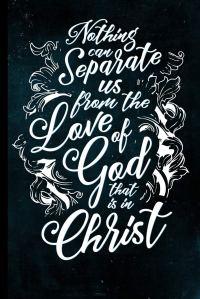 It’s amazing to me how we can interpret a passage to mean almost the exact opposite of its intended meaning simply because the intended meaning seems to conflict with our theology. A great example of this is Paul’s teaching in Romans 8:35-39:
Who shall separate us from the love of Christ? Shall tribulation, or distress, or persecution, or famine, or nakedness, or danger, or sword? 36 As it is written,
“For your sake we are being killed all the day long;
we are regarded as sheep to be slaughtered.”
37 No, in all these things we are more than conquerors through him who loved us. For I am sure that neither death nor life, nor angels nor rulers, nor things present nor things to come, nor powers, 39 nor height nor depth, nor anything else in all creation, will be able to separate us from the love of God in Christ Jesus our Lord. (ESV)
June 8, 2022
Problems with the Social Contract Theory of Morality
Posted by Jason Dulle under Apologetics, Moral Argument, Philosophy[3] Comments
 A view of morality you’ll hear a lot in the public square is social contract theory. Contractarianism holds that “morality rests on a tacit agreement between rationally self-interested individuals to abide by certain rules because it is to their mutual advantage to do so.”1 There is nothing intrinsically wrong with murder, rape, or torture, for example, but since rational self-interested persons do not want these things being done to them, they agree to extend the same courtesy to others.2 Philosopher, Edward Feser, offers at least six helpful criticisms of Contractarianism: (more…)
May 18, 2022
My new podcast, Thinking to Believe, has officially launched!
Help me make this a success by listening to the podcast and spreading the word.
You can subscribe to the podcast from your favorite podcast hub including iTunes, Spotify, iHeartRadio, Pandora, Amazon Music, Google Podcasts, Stitcher, Deezer, and others.
Or, access the podcast directly via my hosting site at https://thinkingtobelieve.buzzsprout.com.
May 17, 2022
Are the Biblical Witnesses of the Resurrection Disqualified Because they are Christians?
Posted by Jason Dulle under Apologetics, Resurrection, Theology[5] Comments

Many unbelievers have dismissed the testimony of the Biblical writers regarding the resurrection of Jesus on the basis that these witnesses are Christians. They argue that as Christians, the Biblical authors were biased to believe in the resurrection, making their testimony unreliable. Greg Koukl discussed the merits of this argument on his radio broadcast many years ago. I would like to share some of his ideas with you, as well as add a few of my own.
This objection presumes that rational objectivity is impossible if one has taken a position on a matter (in this case, the resurrection of Jesus Christ), but this ignores the fact that rational objectivity may be what led these individuals to believe in the resurrection in the first place. The evidence could have been so strong in favor of that conclusion that they were incapable of remaining intellectually honest without affirming that Jesus rose from the dead.
April 29, 2022
Since we are not omniscient, we can be wrong about any number of things for which we think we are right. How would we ever know if we are, in fact, wrong? One way to do so is to actively engage with the best arguments of your ideological opponents. What are their criticisms of your view? What are their arguments for their own view?
Another way to check our beliefs is to be self-critical. How would you argue against your point of view? What would you identify as the weakest link in your argument? What presuppositions does your view require? What sorts of objections might opponents raise against your argument or view? In other words, try to disprove your point of view. You will strengthen it in the process, or perhaps, change it if you discover the evidence points in another direction.
When discussing our views, it is also helpful to be transparent about the weaknesses of our argument, our presuppositions, and address objections that others have raised against it. People will appreciate your honesty and it often makes your case more convincing.
April 20, 2022
 For many years now I have harbored concerns about the way many churches practice the Lord’s Supper:
— We practice it too infrequently
— Our “supper” differs in appearance from that of the early church
— We make it a time of sadness and fear rather than joy and hope.
Too Infrequent
Biblically and historically, the Lord’s Supper has been a regular part of the Christian gathering. Only after the Reformation did the sermon replace the Supper as the most significant part of a service. Now, the Supper is rarely celebrated in many Protestant churches.
The early church seemed to celebrate the Lord’s Supper on a regular, if not weekly basis. In Acts 2:42 we read, “They [the Christian converts] were devoting themselves to the apostles’ teaching and to fellowship, to the breaking of bread and to prayer.” (NET Bible) While this could be a reference to general communal eating, the context suggests otherwise. First, eating is not a Christian practice to which converts must devote themselves. Eating is a practice common to everyone regardless of their religious affiliation. Secondly, the surrounding activities are religious in nature: doctrinal teaching, fellowship, and prayer. It is best to understand this eating as the Eucharist meal.
April 13, 2022
Knowledge, Truth, and their Relationship to Christianity
Posted by Jason Dulle under Apologetics, Epistemology, Pluralism, RelativismLeave a Comment
 Greg Koukl delivered a lecture at the 2006 Master’s Series in Christian Thought on the topic, “Truth is a Strange Sort of Fiction: The Challenge from the Emergent Church.” While the Emergent Church has morphed into the Progressive Church, the information is just as relevant today as it was in 2006.
Koukl argued that truth and knowledge are essential to the enterprise of Biblical faith, demonstrating this both Biblically and philosophically. Here is a summary of his case:
March 30, 2022
People act as if there is no connection between sex and babies, such that when they get pregnant they have the right to abort their baby because they didn’t want a baby. Amy Hall observed that this is like thinking there is no connection between food and calories. The fact of the matter is that if you eat too much, you’ll get fat. That’s the natural consequence of eating too much. You can’t choose to eat without also consenting to the calories. Likewise, each time we engage in sex, we consent to the possibility of creating a child because that is what the act is designed to do.
March 28, 2022
 My friend, William Arnold, once made an observation about “the rapture” that is worth sharing.
The debate over the timing of the rapture in relationship to the second coming of Christ presupposes that the rapture and the second coming are both events, and then seeks to determine when each event will take place in relationship to the other. Is that a valid presupposition? Does the Bible describe the rapture as an event?
The only clear passage in Scripture that describes a rapturing of the church is 1 Thessalonians 4:14-17. Paul wrote:
For since we believe that Jesus died and rose again, even so, through Jesus, God will bring with him those who have fallen asleep. 15 For this we declare to you by a word from the Lord, that we who are alive, who are left until the coming of the Lord, will not precede those who have fallen asleep. 16 For the Lord himself will descend from heaven with a cry of command, with the voice of an archangel, and with the sound of the trumpet of God. And the dead in Christ will rise first. 17 Then we who are alive, who are left, will be caught up together with them in the clouds to meet the Lord in the air, and so we will always be with the Lord.
March 17, 2022
Do you think I’m going to hell because I don’t believe in Jesus?
Posted by Jason Dulle under Bible, Hell, Tactics, Theology[4] Comments
 This is a difficult question. It’s not difficult theologically, but practically. If we give a simple “yes” answer, it makes Christianity and the God of Christianity look petty or bigoted. So how can we communicate the answer in a way that is both truthful and tactful? Greg Koukl from Stand to Reason has some tips for answering this question in a tactical manner.
First, clarify why it is that people go to hell. It’s not because they fail a theology test, but because they fail a moral test. People will be sentenced to hell for their moral crimes against a holy God, not for their failure to believe in Jesus. Sin is like a disease. Both will kill you (one physically, one spiritually) if they go untreated. Those who die of an untreated disease do not die because they haven’t visited the doctor, but because of their disease. Likewise, people do not go to hell because they have failed to believe in Jesus, but because of their sin.


