When we hear something that fits with what we already believe, we are apt to adopt it without much reflection or critical thinking. Instead, we should be asking ourselves what the opposition might say regarding the information. We should subject our beliefs to critique – critiquing them as though we want to prove them false. This will help us to see how solid the evidence actually is and avoid confirmation bias.
Apologetics
Archived Posts from this Category
October 13, 2020
October 5, 2020
Damned if we do, damned if we don’t
Posted by Jason Dulle under Apologetics, Ethics, Hamartiology, Problem of Evil, Sin, Theology[10] Comments
 Sometimes we are damned if we do and damned if we don’t. Let me give you two examples where Christians cannot seem to win with non-Christians.
Non-Christians will often complain that Christians are hypocrites, by which they mean we do not live up to our own moral codes. While we say people should do X, we ourselves fail to do X. And yet, these same people will complain when one Christian calls out another Christian for their immoral behavior. Now the complaint is “you shouldn’t judge” (not recognizing that they themselves are making a judgement when they say “you should not judge” – and thus being hypocritical themselves – and that they make a judgment when they say Christians are hypocrites). So let me get this straight. Christians are damned if they fail to live up to their own moral standards, and they are damned if they try to encourage each other to live up to their own moral standards. Can we win?
September 7, 2020
End of discussion
Posted by Jason Dulle under Apologetics, Political Incorrectness, Tactics, Thinking[11] Comments
 We’re living in a time when people tend to isolate themselves intellectually. Not only do they not take it upon themselves to search out viewpoints that differ from their own, but they actually shun people who do not agree with them. We see this all the time on social media. You post something that person X does not agree with. Rather than reading what you have to say and starting a dialogue regarding your differences in hopes of helping each other discover the truth, person X ignores the post, or worse yet, unfriends you.
This sort of behavior is consistent with our cancel culture, but frankly, it is childish and foolish. I use these words advisedly, not as a smear. This is childish because only children plug their ears when they don’t want to hear what you have to say, not sensible adults, and thus when adults engage in this kind of behavior they are literally acting childish. This is foolish because this sort of behavior makes it impossible for one to grow intellectually. Everyone has false beliefs. The only way to discover which of our beliefs are false and correct those beliefs is to be open to listening to alternative viewpoints. If we ignore alternative viewpoints and shun those who hold to them, we stunt this process, guaranteeing that we will not grow in our knowledge of truth and wisdom.
June 19, 2020
The limited value of personal experience
Posted by Jason Dulle under Odds & Ends, Statistics, Thinking[4] Comments
 Personal experience is valuable and powerful, but it is of little value for determining the truth or what reality is like for other people. Personal experience is anecdotal in nature. We may know what we experienced, but how could we know that others have experienced the same? Even if we found three people who shared our experience, at best, we could conclude that four people have experienced what we have. We can’t simply extrapolate from our experience that everyone else has the same experience/perspective as we do. We can’t just assume that our experience is representative of other people’s experiences.
To know how widespread and representative our experience/perspective is, we need more than anecdotal data – we need hard data. Polling and statistics serve this purpose. They seek to determine how common certain experiences and perspectives are in the general population. I can’t tell you how many times I have felt that my experience was common, only to find out from polling data that it isn’t; or how many times I have believed some X to be uncommon in society, only to find out that it was quite common (or vice-versa).
We should not place our personal experience above the facts when determining the truth. Personal experience is a factor, but it’s just one factor. If my personal experience leads me to believe that X is true, but the data shows that X is not true, then I need to correct my perception. My experience is still my experience, but I need to recognize that my experience is not necessarily the norm and should not be used to color my perception of reality. Perceptions should be based on facts, not anecdotal experiences.
P.S. As a public service announcement, for the sake of all mankind, please don’t use the phrase “lived experience.” Adding “lived” before “experience” adds no additional meaningful. It’s like saying “sufficient enough.” Every experience is a lived experience because the dead do not have experiences. ‘Nuf said.
June 18, 2020
Abortion is not an ordinary medical procedure
Posted by Jason Dulle under Abortion, Apologetics, Bioethics[12] Comments
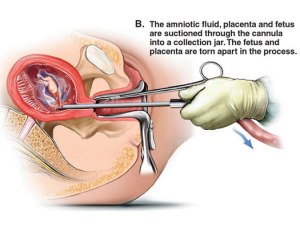 Some claim that abortion is just an ordinary medical procedure – just the removal of some tissue from a woman’s uterus – and thus no more morally significant than getting a tooth pulled. However, I’ve never known anyone who experienced angst when contemplating the decision to remove a tooth. They’ve never talked about how difficult the decision was for them, or wondered whether it was the morally right thing to do. They never experience depression after the procedure, and none of them have ever claimed that it was their biggest regret.
Clearly, there is a moral difference between abortion and other medical procedures, and everyone knows it. Abortion doesn’t remove tissue from a woman’s body – it kills an innocent human being who is developing in a woman’s body. That’s why people struggle with the decision. They understand the moral weight involved.
Abortion is a very simple issue, morally speaking. We should not kill innocent human beings. Abortion kills innocent human beings. Therefore, abortion is wrong. We can do better. Let’s protect the most vulnerable human beings among us. Let’s be pro-life.
May 20, 2020
 All of us would like to have certainty regarding knowledge, and yet, certainty is rarely afforded to us. Most of what we believe to be true, we believe on the basis of probabilities. Unfortunately, many people, being too desirous of certainty, are led in one of two bad directions: skepticism, dogmatism.
An inordinate desire for certainty leads some down the skeptics’ road, always doubting everything and never willing to make a knowledge claim that falls short of certainty (or something very close). For others, their desire for certainty leads them down the road of dogmatism, closed-mindedness, and intellectual dishonesty. In their quest for certainty, they are unwilling to entertain any ideas that would call their current beliefs into question. They respond vehemently against anyone who holds to a view contrary to their own. They argue, not to discover truth, but to defend their dogmatic certainty.
While the desire for certainty is understandable, we cannot allow it to lead us in either of these directions. We must be willing to take a position based on the evidence we have, while recognizing that we could be mistaken. We also need to be willing to consider other evidence and other points of view, and be willing to change our opinions if the evidence warrants it. In many cases, we should be less dogmatic, acknowledging the strengths and weaknesses of our view. For example, I hold to Premillennialism, but I’m not anywhere near certain that it’s true. As a percentage, I’m only ~65% convinced that it is true. That’s enough for me to claim it as my view, but not enough for me to be dogmatic about it. While I would love to have certainty regarding all of my beliefs, certainty is rarely afforded to us. In light of that, we need to do our best to form our opinions based on the evidence available to us, but always be open to revising our opinions if the evidence warrants it.
April 29, 2020
 A hypocrite is not one who fails to live up to his own ideals, but one who falsely proclaims to have such ideals in the first place.
See also “I’m not a Christian because there are too many hypocrites in the church“
January 7, 2020
 If humans have value, then abortion must be immoral. Here’s why:
Value is either intrinsic (part of the nature of the thing itself) or extrinsic (conferred on a thing by an external source). If value is intrinsic to human beings, then humans are valuable the moment they come into existence. Since it is a scientific fact that human beings come into being at conception, then unborn humans have the same value that you and I have from the moment of their conception. As such, it would be just as immoral to kill an unborn human as it is a born human. So if you believe humans have intrinsic value, then you should be opposed to abortion.
January 7, 2020
“Abortion” is a euphemism. “Abort” means to stop. What are we stopping? The life of a human being. If I kill my neighbor, we would say I murdered him. So why do we have a different term to describe the killing of unborn human beings? It’s simply to disguise what we are doing. Abortion could rightly be called preborn murder, fetal murder, embryonic murder, etc., but it is murder and we should call it such.
The euphemisms for preborn murder don’t stop at “abortion.” The list of euphemisms also includes “choice,” “women’s health,” “reproductive freedom,” etc. Abortion is not about choice, health, or reproductive freedom. Abortion is about the killing of a preborn human being because it is convenient for us to do so.
Abortion is the greatest moral atrocity of our day. One day, future generations will be just as shocked to hear that abortion was legal in this country as we are shocked today to hear that slavery was once legal in this country.
January 7, 2020
 In the abortion debate, pro-choice advocates often argue that no one should have the right to tell a woman what to do with her own body. I agree. No one has that right. But this is a red herring because pro-life advocates are not telling women what to do with their own bodies, but rather what to do with someone else’s body.
While an abortion takes place within a woman’s body, the act of abortion is targeted toward the body of a separate human being. The goal of abortion is to end the life of that human being – often by cutting his/her body into pieces. Since it is morally wrong to take the life of an innocent human being, the act of abortion is morally evil.
The bodily autonomy argument makes as much sense as saying “You don’t have a right to tell me not to murder someone.” All homicide laws aim to take away our right to murder another person. Pro-life advocates are merely applying this same logic to abortion since the object of the abortion is also a human being.
January 7, 2020
The pro-life argument in a nutshell
Posted by Jason Dulle under Abortion, Apologetics, Bioethics[3] Comments
The pro-life argument in a nutshell: It is a scientific fact that a new human being comes into existence at fertilization. It is a moral fact that it is wrong to intentionally take the life of an innocent human being. Abortion intentionally takes the life of an innocent human being. Therefore, abortion is morally wrong.
December 25, 2019
 Here’s a question to ponder: How many of the positions that you subscribe to today related to theology, economics, politics, etc., do you subscribe to because you researched the competing perspectives, weighed the merits and demerits of each, and then adopted the best position? If you are a typical human being, chances are that the number is very small. Most of the positions we subscribe to we simply inherit from our family or community, unquestioned. When we do question those positions, we often seek out evidence to shore up what we already believe rather than seeking evidence both for and against our position. Given this proclivity of human nature, and given the multiplicity of positions, there’s a high probability that we are mistaken in a number of positions we subscribe to. After all, it would be highly unlikely that one just happened to be born into a family/community who just so happened to subscribe to all of the right positions in theology, politics, economics, and the like.
December 24, 2019
Archaeologist Eilat Mazar has made another discovery confirming the Biblical record. A portion of the remnants of ancient walls that once surrounded Jerusalem were previously dated to the Hasmonean period (2nd century B.C.), but new evidence discovered by Dr. Mazar has led her to re-date the wall to the mid 5th century B.C. and identify it as a portion of the wall that Nehemiah built to protect the Jews who returned to Jerusalem after their captivity in Babylon.
June 7, 2019
Euthyphro’s Dilemma and Why God Could Not Create the Good
Posted by Jason Dulle under Apologetics, Atheistic objections, Moral Argument, Theism, Theistic Arguments[82] Comments
 Theists argue that God is the best explanation for objective moral truths. Atheists typically appeal to the Euthyphro Dilemma (ED) to show that God cannot be the foundation for morality. The ED asks whether something is good only because God wills it as such, or if God wills something because it is good. If something is good only because God considers it good, then goodness seems arbitrary and relative to God’s desires. If He had so chosen, murder could have been right and truth-telling could have been wrong. On the other hand, if God wills the good because it is inherently good, then goodness would be a standard that exists outside of God. He is subject to the moral law just as we are.
So either goodness is arbitrary or it is independent of God. Either God arbitrarily declares what is good or He recognizes what is good based on some standard outside of Himself. If the good is an arbitrary expression of God’s will, then the good is subjective rather than objective. While God may serve as the foundation for His subjective morality, He cannot serve as the foundation for objective moral truths. On the other hand, if God wills something because He recognizes it is objectively good, then something other than God is the standard of objective moral truths. He may inform us of those moral truths, but they do not depend on God for their existence.
May 13, 2019
Does everything happen for a reason?
Posted by Jason Dulle under Apologetics, Problem of Evil[2] Comments
 When something bad happens, it’s common for people to offer the encouragement that “everything happens for a reason.” Is it really true, however, that everything that happens, happens for a reason? To answer that question we need to explore what we mean by “everything,” “for” and “reason.”
Let’s start with “reason.” What do we mean when we say something happens for a reason? It means there is some intelligible and discernible relationship between two events, and that this relationship was purposed by an intelligent agent. For example, the reason I give money to the checker at the grocery store is because I want to buy food. There is a rationality to my action that links the events of giving money and receiving food. One is done for the reason of the other. In a similar manner, there is a discernible and intelligible relationship between bad and good events in our lives that was purposed by God.
April 21, 2019
Why the resurrection matters
Posted by Jason Dulle under Apologetics, Historical Jesus, Resurrection[4] Comments
The resurrection of Jesus is central to the Christian faith, but why does it matter? Why think of it as just another of many miraculous/supernatural events? Why not see it as a mere historical oddity? Why does it matter so much to Christianity? What is the significance of Jesus’ resurrection from the dead?
Here are just a few reasons it is significant:
April 21, 2019
The Historical Evidence for the Resurrection of Jesus: A Short Case
Posted by Jason Dulle under Apologetics, Historical Jesus, Resurrection[3] Comments
 The resurrection of Jesus Christ from the dead was the central message of the early church and the basis of Christian hope. But why should we believe that a man was raised from the dead 2000 years ago when we were not there to witness it, and when our uniform experience says that dead people always stay dead? While many people think the resurrection of Jesus is something you either choose to believe or choose to reject based on your personal religious tastes, the fact of the matter is that there are good, objective, historical reasons to believe that Jesus rose from the dead.
Historians must do two things: establish the historical facts, and then find the best explanation for those facts. When it comes to the life of Jesus, the primary source material for the historian is the New Testament (NT) gospels and Paul’s writings because they include the testimony of early disciples who witnessed the events in question or knew those who did, and they provide the most detail about Jesus’ life.
April 4, 2019
Bulla of Nathan-Melech discovered in Jerusalem
Posted by Jason Dulle under Apologetics, ArchaeologyLeave a Comment
 Another clay seal (bulla) bearing the name of a Biblical person has been unearthed in the City of David. The tiny clay seal was found in the remains of a large housing structure that had been destroyed by fire in the sixth century B.C. The seal reads, “[belonging to] Nathan-Melech, Servant of the King.” Nathan-Melech appears once in the Bible, in 2 Kings 23:11, and is said to be an official in the court of King Josiah. (more…)
December 30, 2018
What Morally Justifies God’s Permission of Evil?
Posted by Jason Dulle under Apologetics, Problem of Evil[598] Comments
 Probably the most-cited argument against the existence of a theistic God is the logical form of the problem of evil, which argues that the existence of an all-good and all-powerful God is logically incompatible with the existence of evil because an all-good God would want to prevent evil and an all-powerful God could prevent evil, and yet evil exists. From this, it follows that God is not all-powerful, not all-good, or more likely does not exist at all. There could be a world in which God exists, or there could be a world in which evil exists, but there can be no world in which both God and evil exist. Since it’s empirically evident that evil exists, God does not.
December 20, 2018
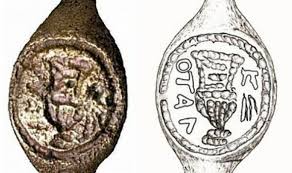 A few weeks ago, a news story broke regarding a sealing ring discovered in 1969 in Herodium – a fortress built by King Herod near Bethlehem. This ring would have been used to stamp documents and goods with an inscription. Only recently was the artefact cleaned and examined, and discovered to bear the inscription “of Pilatus.” This is a Roman name, and a rare Roman name at that. The only Romans who would have been in Israel during this time were rulers and soldiers, and the only Roman ruler who lived near the area during this timeframe is the infamous Pontius Pilate spoken of in the NT, who was prefect of Jerusalem and the man responsible for condemning Jesus to death by crucifixion. Could this be his ring, then?

 Thinking to Believe