Bible Difficulties


I’ve just completed my subseries on Differences in the Gospels in my larger series on the Historical Evidence for Jesus’ Resurrection. In the final episode (#151), I provided my best attempt to construct what I call the “video view” of the events that transpired after Jesus’ crucifixion; i.e. what you would have seen if you had a video recording of the events. It incorporates every verse in the empty tomb and resurrection accounts from all four gospels. Here it is:

Mary Magdalene (Mary M), Mary the mother of James and Joseph, Salome, Joanna, and other women journeyed together to the tomb early Sunday morning before dawn to anoint Jesus’ body (Mt 28:1; Mk 16:1-2; Lk 24:1,10; Jn 20:1). They wondered how they would roll away the stone to gain entrance to the tomb (Mk 16:3). Unbeknownst to them, before they arrived, two angels appear at the tomb to open it for the women (Mt 28:2). Their appearance frightened the guards, causing them to flee and report the event to the chief priests (Mt 28:3-4,11-15). When the women arrived, they saw the stone rolled away (Mt 28:2; Mk 16:3-4; Lk 24:2; Jn 20:1). Mary M assumed someone must have taken the body, so she (and possibly one other woman[1]) left the group of women to tell Peter and the Beloved Disciple (BD) that Jesus’ body was missing (Jn 20:2).

(more…)

I posted back in October that I was starting a podcast series on the resurrection of Jesus. That series is still on-going. Right now I’m in the midst of a sub-series focused on explaining so-called contradictions in the Gospels, particularly in the empty tomb, resurrection, and post-mortem appearance narratives. I spent three weeks laying the foundation for how we ought to approach and understand Gospel differences. The episode to be released this Friday will start to explore specific examples of differences in the empty tomb narratives. Check it out wherever you get podcasts, or at https://thinkingtobelieve.buzzsprout.com.

In Jesus’ debate with the Sadducees, He defended His position that there will be a resurrection of the dead by quoting Exodus 3:6. Luke records Jesus as saying, “But even Moses revealed that the dead are raised in the passage about the bush, where he calls the Lord the God of Abraham and the God of Isaac and the God of Jacob. Now he is not God of the dead, but of the living, for all live before him.” (Luke 20:37-8, NET).

Jesus’ argument seems to be as follows:

(1) God can only be “the God of…X”, if X exists

(2) God identified Himself as the God of Abraham, Isaac, and Jacob centuries after their death

(3) Therefore, Abraham, Isaac, and Jacob still existed when God spoke to Moses

I find two problems with this line of reasoning.

(more…)

In John 20:21-22, during Jesus’ first resurrection appearance to the apostles, He said, “’Peace be with you. As the Father has sent me, even so I am sending you.’ And when he had said this, he breathed on them and said to them, ‘Receive the Holy Spirit.'” Did the apostles receive the Spirit at that moment, or did the fulfillment of Jesus’ words await the Day of Pentecost (Acts 2:1-4)?

Many interpreters have concluded that Jesus was speaking prophetically in John 20 of the future Pentecost experience. They do so, however, because they assume that both John and Acts refer to the same event. In the paper linked below, I argue that this assumption is mistaken. The authors of John and Acts are referring to two different works of the Spirit for two different purposes that occurred on two different occasions. In John 20, the apostles experienced the regeneration of the Spirit, whereas in Acts 2 the apostles experienced the empowerment of the Spirit that equipped them to be a witness for Jesus and His resurrection.

Did the Disciples Receive the Spirit in John 20:22?

Skeptics of Christianity often try to undermine the truth of Christianity by pointing to supposed errors or contradictions in the Bible.  As a result, some Christians have abandoned the faith, while others remain shaken in their faith.  This is unfortunate because the skeptics’ approach is fundamentally flawed.

We must distinguish between what makes Christianity true (an ontological question) and how we know Christianity to be true (an epistemological question).  Many people think it’s the Bible that makes Christianity true.  That’s why they question the truth of Christianity when they are confronted with supposed errors or contradictions in the Bible.  A moment’s reflection reveals this to be wrongheaded.  After all, couldn’t God have chosen to communicate the Gospel truths orally rather than in a written format?  Of course!  Indeed, that’s how it was transmitted in the early church.  If Christianity could still be true without any written Bible at all, then surely it could still be true even if the Bible contains errors.

(more…)

Open LoopSome believe the Biblical stories were myths or exaggerations.  At worst, everything is an invention.  At best, just the miracle claims were invented.  When you examine the Gospels, however, you find plenty of evidence that the authors were being faithful to what really happened, even when it was embarrassing.  Examples abound, including Peter’s denial of Jesus, Jesus calling Peter “Satan,” the disciples not understanding Jesus’ predictions of His resurrection, etc.  This is called the principle of embarrassment, and is one of the key principles historians use to judge the historicity of a report.

While reading Matthew the other day, another example of this principle stood out to me in a way it had not before.  We are told by Matthew that the chief priests went to Pilate “the next day” after Jesus had been crucified and buried to ask for guards to be posted at the tomb (Mt 27:62-63).  Why?  Because Jesus had predicted that He would rise from the dead, and they feared that the disciples might come and steal his body from the tomb and then claim Jesus’ prediction had come true (Mt 27:64).  (more…)

If you’ve ever read the exchange between Jesus and the Syro-Phoenician woman in Mark 7:24-30, I’m sure you’ve asked the same question most of us have: “Did Jesus really say that?!”

What did He say?  In response to the woman’s request for Jesus to cast a demon out of her daughter, Jesus said, “Let the children be fed first, for it is not right to take the children’s bread and throw it to the dogs.”  How rude!  It seems out of character for Jesus to put down a woman, equating her to a dog.

Larry Hurtado has a helpful article on this passage that explains Jesus’ point in its original context.  He makes the following points:

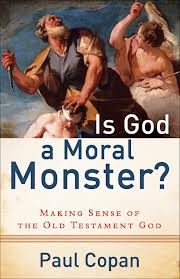
One of the distinguishing marks of the new atheists is that they not only think religion is false, but that it is dangerous and immoral too.  Even God himself is not above their judgment.  They regularly chide the God of the Bible as being a moral monster!  They accuse Him of being pro-genocide, anti-women, pro-rape, pro-slavery, etc.  Rather than the paradigm of moral goodness, God is an evil despot that is to be shunned.  You know it’s a bad day when even God is evil!

Is what they say true?  Is God – particularly as He is portrayed in the OT – morally evil?  Many Christians are sympathetic to this charge because they themselves struggle to understand God’s actions and commands, particularly as revealed in the OT.  Thankfully there have been some well-written responses to the problem of “theistic evil” written in recent years to dispel this negative portrait of God.  

(more…)

It is often said that Adam and Eve did not know the difference between good and evil prior to eating the fruit from the Tree of Knowledge of Good and Evil (TKGE).  This does seem to be the straightforward meaning of Genesis 3:22a: “Then the LORD God said, ‘Behold, the man has become like one of us in knowing good and evil.’” (ESV)  There are a couple of problems I see with this interpretation, however:

  1. The text does not say Adam and Eve only gained knowledge of evil after the Fall, but knowledge of “good and evil.”  If we understand “knowledge” in a cognitive sense, this would mean God originally created human beings as amoral beings, having no knowledge of moral concepts or moral categories.  If we were created as amoral beings, then our moral intuitions and our capacity for moral reasoning are not part of the imago Dei (image of God) in which we were created, but rather a consequence of the Fall.  That’s a tough pill to swallow for two reasons: (1) Moral reasoning is one of the unique characteristics of God that among God’s creatures, humans alone exhibit.  Since humans alone were created in the imago Dei, it stands to reason that moral reasoning was part of that original imago Dei; (2) How is it possible for an act of disobedience to produce in us the knowledge of good?  Evil, yes, but good?
  2. (more…)

I recently taught on the historical reliability of the Gospels and the historical evidence for the resurrection of Jesus.  One of the areas I focused on was the apparent contradictions and errors in the Gospels, demonstrating how most of these are easily resolvable, and thus not contradictions/errors at all.  But not all Biblical difficulties are so easily resolved.  In fact, there are some for which I do not presently have a good answer.  If you are a careful reader of Scripture, I’d bet there are Biblical difficulties you have encountered for which you lack a good answer as well.  What are we to do with such difficulties given the doctrine of Biblical inerrancy?  What should our posture be toward the Christian faith once having discovered irresolvable difficulties in the text?

Some individuals respond by concluding that Christianity is not true.  Some go so far as to conclude that God does not even exist!  I submit to you that these responses are ill-founded; the result of elevating the doctrine of inerrancy to a status it should not be accorded in one’s theological taxonomy.  While the Bible is an indispensable aid to our faith and Christian growth, an inerrant Bible is not necessary for the truth of Christianity, and thus the doctrine of inerrancy—and Bibliology in general—should be subservient to more central doctrines such as the resurrection of Jesus in our theological taxonomy.  Let me explain.

(more…)

In several previous posts (here, here, and here) I addressed the problem of differences in the Gospels, pointing out that what are often taken for contradictions are really just examples of 21st century Westerners trying to impose unrealistic and modern standards of historical reporting on ancient Easterners.  Here is another one.

Mk 14:47-54  But one of those who stood by drew his sword and struck the servant of the high priest and cut off his ear. 48And Jesus said to them, “Have you come out as against a robber, with swords and clubs to capture me? 49 Day after day I was with you in the temple teaching, and you did not seize me. But let the Scriptures be fulfilled.” 50 And they all left him and fled. 51 And a young man followed him, with nothing but a linen cloth about his body. And they seized him, 52 but he left the linen cloth and ran away naked. 53 And they led Jesus to the high priest. And all the chief priests and the elders and the scribes came together. 54 And Peter had followed him at a distance, right into the courtyard of the high priest. And he was sitting with the guards and warming himself at the fire. (See also Mt 27:55-8)

In verse 50 we are told that “all” the disciples fled the scene, and yet in verse 54 we are told that Peter followed Jesus from a distance.  Because both statements appear in the same Gospel no one complains.  But what if Mark only said that all fled, and Luke only said that Peter followed Jesus from a distance?  People would claim it was a contradiction.  How could Peter be following Jesus if he fled the scene?  Of course, the Christian would respond by trying to harmonize the two texts.  We would propose that all of the disciples did flee the scene when Jesus was arrested, but Peter returned, and followed Jesus at a distance.  Our critics would say we are being imaginative, and the only reason to offer such a harmonization is to avoid concluding that the Gospels are, indeed, contradictory.  But when both statements appear in the same Gospels within just a few verses from each other, no one claims contradiction. And guess what, most would agree that Peter must have fled with the rest of the disciples, but returned shortly afterward to learn of Jesus’ fate.  Indeed, that would explain why he followed from a distance.  He did not want to be seen by the guards lest he be arrested too—the very reason he fled in the first place.  I think this goes to show both how overblown the charge of “contradiction is,” as well as why harmonization is a perfectly legitimate enterprise when it comes to reading historical reports.

A new website, The Ehrman Project, has launched.  It’s dedicated to evaluating and responding to Bart Ehrman’s claims.  It examines each of his three best-selling books: Misquoting Jesus, God’s Problem, Jesus Interrupted.  There are eight video responses to each book, each one covering a different topic.  There are also links to related books and articles. 

Participating scholars include Ben Witherington, Darrel Bock, D.A. Carson, Daniel Wallace, Alvin Plantinga, et al.  One of the coolest features of the site is that you can pose a question on the blog, and it will be answered by one of the scholars!  So if you have any difficult questions related to the issues Ehrman raises, now is the time to ask them.

HT: Ben Witherington

Mt 27: 3-8  Now when Judas, who had betrayed him, saw that Jesus had been condemned, he regretted what he had done and returned the thirty silver coins to the chief priests and the elders, 27:4 saying, “I have sinned by betraying innocent blood!” But they said, “What is that to us? You take care of it yourself!” 27:5 So Judas threw the silver coins into the temple and left. Then he went out and hanged himself. 27:6 The chief priests took the silver and said, “It is not lawful to put this into the temple treasury, since it is blood money.” 27:7 After consulting together they bought the Potter’s Field with it, as a burial place for foreigners. 27:8 For this reason that field has been called the “Field of Blood” to this day. (NET)

Acts 1:18  Now this man Judas acquired a field with the reward of his unjust deed, and falling headfirst he burst open in the middle and all his intestines gushed out. (NET)

This is a favorite “contradiction” appealed to by skeptics to demonstrate the unreliability of the Bible.  But are these two passages really contradicting one another?  After all, it’s not as though Matthew tells us Judas hanged himself, and Luke says he didn’t hang himself.  In fact, Luke doesn’t even tell us how he died.  He only tells us that he fell headfirst and his guts gushed out.  Clearly this cannot be referring to the mode of his death because falling down, in and of itself, cannot cause someone’s belly to burst open and expose his intestines!  Falling from a distance, however, could.  If Judas was hanged as Matthew tells us, it would provide the fall-distance necessary to explain the phenomenon Luke records for us.  Indeed, if Judas hanged himself and his body was left on the tree rather than being removed, his body would have begun to decay, and his belly would have swollen.  Once he was caused to fall (for whatever reason: the rope giving way, his head slipping out of the noose, etc.), his belly would have easily burst open and his guts gushed out.  Matthew’s account and Luke’s account are harmonious, not contradictory.

In recent days I have taken up a task I had given up on a number of years ago: harmonizing the resurrection accounts in the Gospels.  I hope to blog on this in considerable detail in the future, but wanted to explore a particular anomaly I have encountered that has me befuddled – an anomaly I am hoping you, the community, can help me resolve.

All of the Evangelists – with the exception of Luke[1] – report that Jesus appeared to several of Jesus’ women followers after they saw the angels in the empty tomb, but before they reported the incident to the apostles.  Luke, however, does not mention a resurrection appearance to the women.  According to Luke the women discover the empty tomb, encounter angels who tell them Jesus is risen, and then leave to tell the disciples what they had seen and heard.[2]  If this was all there was to Luke’s account it would not be much of a problem, since each of the Evangelists omit certain details that the others chose to include.  While it would be a curious detail to omit, its omission would be just that: a curiosity.

But the story is complicated by the testimony of the two disciples on the road to Emmaus.  

(more…)

I just finished reading a tremendous review of Bart Ehrman’s latest book, Jesus Interrupted, by Michael Kruger.  I would highly recommend it.  The last paragraph is literary gold in my book.  It’s one of those summary paragraphs that I would have loved to have penned myself.


HT: Justin Taylor

The NT authors often quote an OT passage, and say it was fulfilled in Christ.  Many Christians use these fulfillments as evidence for the veracity of the Christian faith.  For example, I’ve heard it claimed that the probability of just one man fulfilling 48 different prophecies is something like 1:10157.  It is reasoned that no man could match those odds unless the Biblical prophecies were divine in origin, and thus Jesus must be who He claimed to be.  The problem with this apologetic is that the vast majority of these “messianic prophecies” are neither prophetic, nor messianic in their original context.

Consider, for example, Hosea 11:1 – “When Israel was a young man, I loved him like a son, and I summoned my son out of Egypt.”  Matthew quotes this passage in reference to Jesus’ return to Nazareth, saying, “In this way what was spoken by the Lord through the prophet was fulfilled ‘I called my Son out of Egypt.’” (Matthew 2:14-15)  When one examines the original context of Hosea 11:1, however, they will quickly recognize that this passage is neither prophetic nor messianic.  It is a mere historical recounting of the Hebrews’ exodus from Egypt.

(more…)

The following information comes from a lecture I attended of William Lane Craig:

Religious pluralists often argue that there is a contradiction between the premise that “God is all-loving/powerful” and “some do not hear the Gospel and will be lost.”

To see them as contradictory there must be one of two hidden assumptions:

  1. If God is all powerful He can create a world in which everybody hears the Gospel and is freely saved.
  2. If God is all-loving, He prefers a world in which everybody hears the Gospel and is freely saved.

I will show that such is not the case, and argue that they are logically compatible.

(more…)

In several previous posts (here, here, and here) I addressed the problem of differences in the Gospels, pointing out that what are often taken for contradictions are really just examples of 21st century Westerners trying to impose unrealistic and modern standards of historical reporting on ancient Easterners.  I demonstrated this by pointing to examples in which two different passages within the same book report different information.  No one thinks of these as being contradictions because they come from the same author, and appear in the same literary document.

I found another example of this, but not in the Gospels this time.  This one appears in Acts.  Luke’s account of Jesus’ words to Paul on the Damascus road reads as follows: “Saul, Saul, why are you persecuting me? … I am Jesus, whom you are persecuting.  But rise and enter the city, and you will be told what you are to do.” (Acts 9:5b-6, ESV)

Paul, recounting the same event in Acts 26:14b-18, records Jesus’ words as:

“Saul, Saul, why are you persecuting me? It is hard for you to kick against the goads. … I am Jesus whom you are persecuting.  But rise and stand upon your feet, for I have appeared to you for this purpose, to appoint you as a servant and witness to the things in which you have seen me and to those in which I will appear to you, delivering you from your people and from the Gentiles-to whom I am sending you to open their eyes, so that they may turn from darkness to light and from the power of Satan to God, that they may receive forgiveness of sins and a place among those who are sanctified by faith in me.” (ESV)

Not only is Acts 22 much fuller in its account of what Jesus said to Paul, but there is little overlap between them as it pertains to Jesus’ instructions.  In Acts 9 Jesus instructs Paul to go to Damascus and wait to be told what to do.  In Acts 22 Jesus does not tell Paul to go to Damascus, but instead, instructs him in his mission on the spot!  If these two accounts appeared in two different books, critics would claim a contradiction.  But because they appear in the same literary work, no such charge is made.

Of course, a reasonable harmony can be made for the two accounts.  Acts 9 appears to be a summary of the much longer conversation, rather than a transcript of the actual words Jesus said (at least for His instructions; not His introduction and self-revelation).  Acts 22 is probably closer to an actual transcript of what was said to Paul.

The fact that Jesus discloses to Paul His purpose for his life there on the road does not contradict what Luke reports in chapter 9.  No specific instructions were given regarding what he should do next to fulfill that purpose.  Furthermore, in the context of Acts 9, it seems what Paul was “to do” in Damascus was receive salvation.  That is why the Lord spoke to Ananias in a vision to go pray for Paul to regain his sight and be filled with the Spirit (9:10-19).

In an earlier blog entry, “Differences in the Gospels,” I examined some supposed contradictions in the Gospels.  I argued that these are not contradictions, but differences in what and how each author chose to portray the events in question, and that the only reason we find these texts problematic is because we fail to understand how ancient writers wrote.  Unlike modern folks, they were not concerned with the minutiae.  They were concerned with the big picture: the gist.  They even felt free to report the historical facts in such a way so as to fit their literary purpose.

I gave a couple of examples to illustrate my point.  In one place, John says Jesus was baptizing in Judea.   A little later, however, he says it was Jesus’ disciples who were doing the baptizing, not Jesus Himself.   Since both statements were penned by the same author, in the same work, in close proximity, it is clear that there is no contradiction here (interestingly, if they appeared in different gospels skeptics would cite this as a contradiction).  This demonstrates for us the flexibility with which the Biblical authors reported historical events.  John felt free to say Jesus was baptizing in one place, even though He knew it was not Jesus Himself who was doing so.  He was not lying; he was not trying to deceive; he was not mistaken.  Both reports were true, even though one was more specific than the other.  For John, since Jesus’ disciples were baptizing on His behalf, it was entirely legitimate to say Jesus was baptizing (we might call this “projection”).  The problem is not with John, but modern readers who demand that ancient writers conform to the standards common to modern writing.

(more…)

Next Page »