 Many Eastern religions make this claim about God. And now, it is being picked up as a popular idea among Westerners. Unfortunately, it is incoherent.
To say God is unknowable is either a statement about God or a statement about ourselves. If it is a statement about God, it is an affirmation that he has no properties capable of being known. And yet having at least one property is what differentiates existence from non-existence. If God has no properties, then he doesn’t exist.
If it is a statement about ourselves – our ability to know a God with specific properties – then it is self-refuting because the statement itself is a claim to know something about God: He is unknowable. If God were unknowable, we would not even be able to know that He was unknowable. The point can be made succinctly by asking, “How do you know God is unknowable if nothing can be known of God? Isn’t that something you know about him?”
Either way you look at it, that statement is incoherent.
 Thomas would not believe the report of the other disciples who said they had seen Jesus alive. He only believed in Jesus’ resurrection after Jesus appeared to Him as well. Jesus’ words to Thomas on that day have been immortalized in the Gospel of John: “Because you have seen me, you have believed: blessed are those who have not seen, and yet have believed” (John 20:29).
 Why study theology? Why does it matter? Isn’t theology just for preachers and smart guys? Isn’t theology divisive and difficult? In my latest podcast series titled “The Case for Theology,” I argue that while theology can be difficult and divisive, it’s unavoidable. All of us are theologians. The question is simply whether we will be a good or bad theologian.
 While cessationists offer Biblical arguments for their position, truth be told, Scripture plays a secondary role in most cessationists’ epistemology/theology. What’s really driving their position is their experience – or more properly, their lack of experience of the supernatural.
 What is the name above every name that was given to Jesus by God (Phil 2:5-11)? Was it “Jesus” or “Lord”?
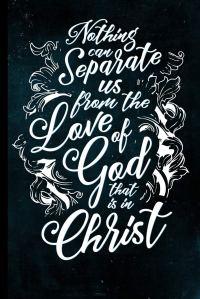 It’s amazing to me how we can interpret a passage to mean almost the exact opposite of its intended meaning simply because the intended meaning seems to conflict with our theology. A great example of this is Paul’s teaching in Romans 8:35-39:
 For many years now I have harbored concerns about the way many churches practice the Lord’s Supper:
 My friend, William Arnold, once made an observation about “the rapture” that is worth sharing.
 This is a difficult question. It’s not difficult theologically, but practically. If we give a simple “yes” answer, it makes Christianity and the God of Christianity look petty or bigoted. So how can we communicate the answer in a way that is both truthful and tactful? Greg Koukl from Stand to Reason has some tips for answering this question in a tactical manner.
 If God is omniscient, then He knows everything that will happen in the future – including everything you will ever do. God knows that on x date at time t1 you will stub your toe, and on q date at time t5 you will forget where you placed your keys. God has had such knowledge from eternity past. Since God cannot be mistaken, it is certain that you will stub your toe on x date at time t1 and forget your keys on q date at time t5. How, then, can our “choices” be free? Does God’s knowledge of the future eliminate free will, reducing us to mere actors who simply perform the parts of a cosmic play written for us by God from eternity past? Are we puppets with no control over our own destiny? Is our experience of free choice illusory? Darwinist, Robert Eberle, sums up the problem nicely:
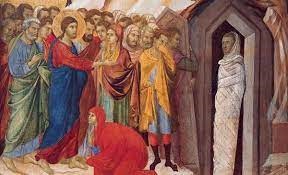 Traditionally, the fourth gospel is ascribed to the Apostle John, who is understood to be the mysterious beloved disciple that makes so many appearances in the book. However, based on the internal evidence, I am persuaded that this identification is mistaken. Lazarus is the beloved disciple, not John. Since the beloved disciple is identified as the author, wouldn’t that make Lazarus the author of the fourth gospel? In a sense, yes, but authorship is rightly attributed to John given ancient standards.
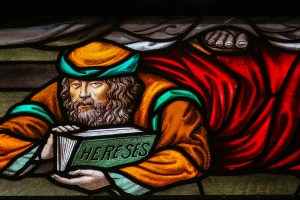 I believe in the concept of heresy. To be a Christian, one must believe in a core set of ideas (what some refer to as “primary doctrines”). If you deny or sufficiently distort those doctrines, you are not a Christian and will not be saved.
 Is gender something more than our biology? Are our souls also gendered?
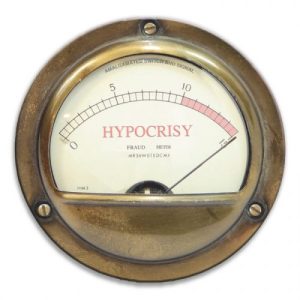 People often misunderstand and misapply the term “hypocrite.” A hypocrite literally refers to an actor. They are pretenders. In the realm of morals, a hypocrite is someone who pretends to be moral. They tell you not to do something, but have no intention of following their own commands. They are people who do not think their own rules apply to them. They might pretend to keep these rules, but secretly they flout them.
 It seems to me that most Christians have chosen to ignore Jesus’ teaching on divorce and remarriage. I realize that the Bible’s teaching on divorce and remarriage is not crystal clear, and that even conservative Christians hold to a number of different interpretations of the Biblical teaching. That said, I think it’s abundantly clear that Jesus only permitted divorce and remarriage in a very narrow set of circumstances.
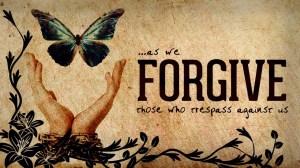 I have long been concerned by the modern, therapeutic view of forgiveness. On this view, forgiveness is primarily about ridding oneself of anger toward those who have hurt us, and this can be done completely independent of the sinner. He does not need to repent, and he does not need to know we have forgiven him.
 I baptize you with water for repentance, but he who is coming after me is mightier than I, whose sandals I am not worthy to carry. He will baptize you with the Holy Spirit and fire. (Matthew 3:11)

