 We often speak of the need to “forgive yourself.” While I understand what is meant by this phrase, it is unintelligible on the Christian worldview. People speak of the need to forgive themselves in the context of feeling guilt for something they did (or failed to do). They recognize the need to eliminate this guilt and get on with their life – to stop beating themselves up for their failure.
The problem with this notion is that it’s not possible to forgive oneself. Forgiveness is something only a third party can grant to you. You can no more forgive yourself than you can give something to yourself. On the Christian worldview, the ultimate source of our forgiveness is God Himself. We will never stop feeling guilt if we are looking to ourselves. The solution for guilt is not self-forgiveness, but divine forgiveness. If we continue feeling guilt after we have repented of our sin, that is evidence that we have not truly believed that God has forgiven us – because once God forgives and we believe He has forgiven, the conscience ought to be quieted (Heb 9).
 In the
  Have you ever tried striking up a conversation with someone about the existence of God only to find that they have no interest in the question? Trying to continue the conversation is like trying to talk to a two year old about quantum mechanics. Strategically, you must find a way to get the unbeliever to see that the question of God’s existence is relevant to his/her life. I think the most effective approach is to appeal to common existential questions that every human wonders about. This could include:
 Skeptics of Christianity often try to undermine the truth of Christianity by pointing to supposed errors or contradictions in the Bible. As a result, some Christians have abandoned the faith, while others remain shaken in their faith. This is unfortunate because the skeptics’ approach is fundamentally flawed.
 If God knows every choice we’ll make from eternity past, doesn’t that mean our choices are not free – that God has caused us to do what we do? No. Knowledge is not a cause. Knowing what someone will choose to do in advance of their actually doing it does not cause them to do it. While it’s true that if God knows X will happen, X will most certainly happen, but it’s not God’s knowledge of X that makes X happen. It’s our choice to do X. God merely knows what we will freely choose in advance. While God’s knowledge is chronologically prior to our acts, our acts are logically prior to God’s knowledge. If we would have chosen A rather than B on October 12, 2006, God would have known A rather than B. The reason He knew B would happen from eternity past is because He knew we would freely choose B from eternity past. God’s foreknowledge does not determine our choices, but is informed by our choices. In other words, God’s foreknowledge is not the cause of our actions; our actions are the cause of God’s foreknowledge.
 While there are a number of arguments for the existence of a divine being, none of them require that there be only one divine being. Why should we think there is only one God, then?
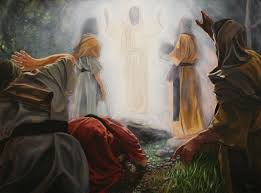 Only the resurrection of Jesus from the dead can explain why Christians believed Jesus was divine. It also gives credence to the fact that Jesus claimed to be God.
 When someone supports abortion on the basis that “nobody knows when life begins,” my immediate reaction is to immediately correct their misinformation with the
  A simple reflection tells us that something must be eternal. After all, if you start with nothing, you’ll always end up with nothing. But we ended up with something, which means we must have started with something. Put another way, since something exists now something must have always existed. There could never be a time when absolutely nothing existed. Something must be eternal, but what is that something?
 Could the human population have originated from two people? Many say science has proven this to be impossible and are reinterpreting the Biblical narrative to fit the current scientific thinking. In this
  Michael Licona’s magnum opus on the resurrection,
  I recently finished reading Greg Koukl’s new book,
 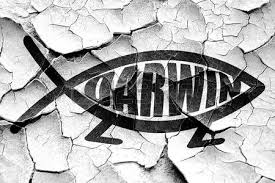 When it comes to neo-Darwinian evolution, the question isn’t whether Darwin’s proposed mechanism of biological change is true – we know it is because we observe it in nature. The question is whether it can explain what Darwin thought it explained: the diversity of life.
 “…submitting to one another out of reverence for Christ.” (Ephesians 5:21)
 For many years this proverb has been misinterpreted, probably because the KJV translates it “Where there is no vision, the people perish.” What we typically hear preached from this verse is that a church must have a long-term goal and plan if they wish to thrive rather than perish. That may be good advice, but that’s not the meaning of this proverb.
 Let the peace of Christ be in control in your heart (for you were in fact called as one body to this peace), and be thankful. (Colossians 3:15)
 Thinking to Believe