Today, the French Senate has officially approved a bill legalizing same-sex marriage. While their version is slightly different than the National Assembly’s that was passed in February – and will require reconciliation before being signed by the president – the deed is essentially done. Same-sex marriage is expected to be legal by summer.
April 12, 2013
France has approved same-sex marriage
Posted by Jason Dulle under Apologetics, Same-sex Marriage[4] Comments
April 12, 2013
What I’ve Been Reading: Cold-Case Christianity
Posted by Jason Dulle under Apologetics, Book Reviews[2] Comments
J. Warner Wallace is a retired cold-case homicide detective. For the first 35 years of his life he was a staunch atheist. Using his detective skills, however, he began to examine the NT gospels. To his surprise, he found them to be trustworthy accounts based on eyewitness testimony to the life of Jesus Christ.
Wallace recently published his first book, Cold Case Christianity: A Homicide Detective Investigates the Claims of the Gospels, detailing the evidence that convinced him the Gospels were reliable accounts of Jesus’ life, death, and resurrection. Each chapter begins with an evidential principle derived from his experience as a detective, which is then applied to the Gospels.
Here is chapter-by-chapter overview:
Chapter 1 – Question your presuppositions about God. All of us have bias. Examine your bias to see if it is valid and true. Keep an open mind.
Chapter 2 – Abductive reasoning. What is the best explanation of the evidence? Distinguish between possible and probable/reasonable (applies this to the alternative, naturalistic explanations of Jesus’ resurrection).
April 10, 2013
New Zealand is poised to approve same-sex marriage
Posted by Jason Dulle under Apologetics, Same-sex Marriage[20] Comments
New Zealand lawmakers have proposed a bill in support of same-sex marriage. In the second of three votes needed to pass the measure, it passed 77-44. The final vote is scheduled to take place in mid-April.
Does this mean Bilbo Baggins might marry Gandalf in The Hobbit part 2?
UPDATE: The bill passed 77-44 on April 17. New Zealand has become the 13th nation to legalize same-sex marriage.
April 10, 2013
Uruguay has approved same-sex marriage
Posted by Jason Dulle under Apologetics, Same-sex Marriage1 Comment
Uruguay, a small South American country of 3.3 million people, has essentially approved same-sex marriage. On December 11, 2012 the Uruguayan House of Representatives passed a bill approving same-sex marriage by a whopping 81-6 margin. On April 2, 2013 the Uruguayan Senate approved a similar bill 23-8. The bill has to go back to the House for reconciliation, and then on to the president, who has already promised to sign it into law. It’s no longer a question of whether same-sex marriage will become legal in Uruguay, but how soon. Once the bill is signed, Uruguay will become the 12th country to legalize same-sex marriage (if France doesn’t beat them to it).
This was a very fast development, considering the fact that the country just approved civil unions for same-sex couples in 2009.
The only other South American country in which same-sex marriage is legal is Argentina.
April 4, 2013
Increased numbers of Americans think the Bible is not inspired by God
Posted by Jason Dulle under Bible, Inspiration, Statistics, Theology[10] Comments
Barna Research Group reports that the number of American adults who view the Bible as “just…a book of stories and teachings written by men” has increased from 10% in 2011 to 17% in 2013. That’s a significant increase in just two years.
Read the entire report here.
April 4, 2013
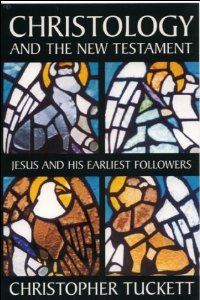
What I’ve Been Reading – Christology and the New Testament: Jesus and His Earliest Followers
Posted by Jason Dulle under Book Reviews, Christology, Theology1 Comment
I purchased Christology and the New Testament by Christopher Tuckett a couple of years ago, but just finally got around to reading it recently.
This book takes a look at the subject of Christology, but from a purely Biblical perspective (no post-apostolic theological development or creedal affirmations are considered). Tuckett, who teaches NT at the University of Oxford, looks at how each NT author presents Jesus, particularly through – but not limited to – their ascription of various titles to Jesus. While Tuckett is liberal in his theological conclusions (and it’s not even clear that he is a confessing Christian), his presentation of the Biblical data is quite good. He has a great way of bringing out the Christological emphasis of the different NT authors/books.
If you are looking for a good introduction to NT Biblical Christology, this is a good resource.
March 19, 2013
Dan Wallace reports on the release of a new New Testament. A band off 19 liberal Christian and Jewish scholars got together for a “council” and decided to add 13 new books (two are prayers, and one is a song) to the New Testament.
Given some of those on this council (Karen King, John Dominic Crossan), it’s no surprise that they are Gnostic in character. Both the “council” and the new testament they produced is a farce.
March 18, 2013
New endorsements for same-sex marriage
Posted by Jason Dulle under Apologetics, Same-sex Marriage[7] Comments
John Wesley is rolling over in his grave right about now.
Rob Bell endorses same-sex marriage. Why not, after all, given his universalism?
As for Hillary, this announcement is about as surprising as microwave popcorn.
The trend of Christian groups and political leaders supporting same-sex marriage will continue to grow.
March 12, 2013
Striking a balance on our response to the cultural shift on homosexuality
Posted by Jason Dulle under Apologetics, Homosexuality[22] Comments
Given the cultural shift toward gay-affirmation, the church must respond in two equally important ways. On the one hand, we must take a firm stance on the moral issue, faithfully communicating the Biblical teaching that homosex is immoral because it is an aberration of God’s intention for human sexuality. On the other hand, we must also communicate our love for all people, including those who experience same-sex attraction. We must be willing to minister to them, embrace them, and help them on the path toward healing.
Unfortunately, people tend to only travel one road or the other. Those who argue passionately for the Biblical position often fail to exercise love and compassion to those struggling with same-sex attraction or who are involved in a gay lifestyle. On the other end of the spectrum are those who have a lot of compassion for people who experience same-sex attraction, and come to believe that loving them requires an affirmation of their sexual orientation or an approval of their behavior. We must avoid these extremes. It is possible and necessary to both affirm the immorality of homosex while extending compassion, love, and help to those who experience same-sex attraction.
March 8, 2013
Bill Clinton op-ed supporting the demise of DOMA
Posted by Jason Dulle under Apologetics, Politics, Same-sex Marriage[2] Comments
Bill Clinton has written an op-ed in The Washington Post throwing his support behind the overturning of the Defense of Marriage Act — a bill he signed into law 17 years ago. His timing is clearly political, given the fact that the Supreme Court will hear arguments for overturning DOMA on March 27. While the justices should not be influenced by his opinions, his actions carry symbolic weight that the Supreme Court justices cannot help but to notice. After all, if the very President who signed the bill into law no longer supports it, that speaks volumes.
I find it interesting that he justifies his signing of the law in 1996 on the grounds that “it was a very different time” then, but also claims that the law is “incompatible with our Constitution.” Has the Constitution changed? No. So how could a law be constitutional 17 years ago but unconstitutional today? It’s because Clinton subscribes to the “living document” view of the Constitution in which the meaning of the Constitution changes with the culture, though the words remain the same. I think this philosophy of Constitutional interpretation is flawed. The Constitution means what its drafters intended it to mean, and what its signers and ratifiers understood it to mean. The meaning of a document does not change over time. If the Constitution can mean whatever we want it to mean, and if the Constitution can be interpreted in light of cultural changes, then the Constitution cannot protect any of us because it doesn’t mean anything in particular. It is just silly putty in the hands of the judiciary.
March 8, 2013
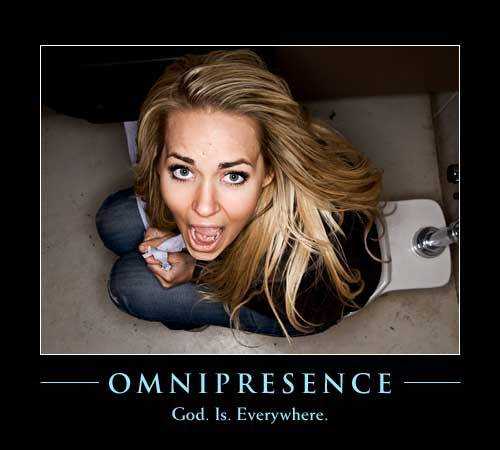
Omnipresence doesn’t mean God fills the Universe
Posted by Jason Dulle under Nature of God, Theology[3] Comments
Omnipresence is one of God’s attributes. As I argued in an article at The Institute for Biblical Studies, however, this property is not essential to God’s nature and should not be understood in spatial terms. God is not a spatial being, and thus He does not exist anywhere, similar to the way in which we should not understand God’s eternal existence to mean He existed before creation. “Before” is a temporal concept, and since time began with creation it is meaningless to speak of anything before creation. Instead, we should speak of God’s existence without creation.
Similarly, as a non-spatial being God cannot exist in any spatial location. To think of God’s omnipresence in terms of occupying points in space is a category error, similar to saying the number seven tastes delicious. To say God is omnipresent refers to God’s cognizance of and causal activity at all points in the spatial dimension.
March 5, 2013
“Morality” is a meaningless category if moral relativism is true
Posted by Jason Dulle under Apologetics, Moral Argument, Relativism, Theistic Arguments[82] Comments
If moral realism (the notion that moral values exist independently of human minds) is false, then there is no reason to talk of “morality” as if it were something distinct from personal preference. Given moral relativism, moral beliefs are just personal/social preferences. What we call “morality” is nothing more than a set of personal preferences regarding certain dispositions and behaviors, or a set of normative social preferences – both of which are subjective in nature and can change over time. Saying “vanilla ice-cream is better than chocolate ice-cream” and saying “telling the truth is better than lying” are the exact same kind of claims: personal, subjective preference. No oughts are involved. They are just autobiographic or (to possibly coin a new term) sociobiographic statements. They describe rather than prescribe.
March 1, 2013
We often think of faith as something that we have to work up in ourselves before God will give us what we want. We tell God what we want, and then make every effort to believe that we will receive it. If we were able to work up enough faith, then God will give us what we asked of Him. This notion of faith is utterly foreign to Scripture. The essence of faith is trust, and trust – by its very nature – is always in a following relationship, not a leading relationship. To have faith in God means that we relate to Him in a leader-follower relationship, and we occupy the role of follower. As a follower, we trust Him to lead us appropriately. We do not set the agenda; He does.
This does not mean we cannot ask God to grant us certain requests. By all means we should ask Him to do things for us. But faith does not demand that God do what we want. Faith makes the request, and then trusts in God’s wisdom to either give us what we have asked for or not. Faith says, “I want X, but be it according to your will.”
I’m sure most of you have had the experience of following another car on a road trip. Back in the days before cell phones, if the person in the following position wanted to make a stop, they had to signal their intentions to the person in the leading position, and the leader had to consent to the stop. If the leader was unaware of your intentions, or if he was not agreeable to the stop, but you stopped anyway, you would be left behind. In a similar fashion, we can signal to God in prayer of our desire to make a certain stop, but acting in faith means that if He keeps on going then we keep following Him to wherever He is going. It is not acting in faith to make the stop we want, and then wait for God to follow us there. At best this is presumptuous, and at worst it is disobedience. Faith trusts and faith follows; it does not lead.
February 27, 2013
Waldo as an analogy of divine hiddenness
Posted by Jason Dulle under Apologetics, Atheistic objections, Epistemology, Theistic Arguments[19] Comments
Many atheists employ the concept of divine hiddenness to argue against God’s existence. If God exists, they argue, why is His existence not more obvious?
I have blogged on this issue previously (here and here), so I won’t rehearse the arguments again. Instead, I’ll simply assert that I do not accept the claim that God’s’ existence is not obvious enough. I think there is good evidence for God’s existence, and that God only appears to be hidden because we have not looked for Him with an open mind and heart.
February 26, 2013
“Burden of justification” rather than “burden of proof”
Posted by Jason Dulle under Apologetics, Logic, Philosophy, Tactics, Thinking1 Comment
In philosophy, a burden of proof refers to one’s epistemic duty to provide reasons in support his assertion/claim/position. While listening to a debate recently, I noticed that one of the participants spoke of a “burden of justification” rather than “burden of proof.” I thought this terminological shift was helpful since when most people hear the word “proof” they think “certainty.” Clearly, no one has the burden to demonstrate their position with apodictic certainty. “Justification,” on the other hand, makes it clear that one only has a burden to back up their claims with good reasons. I am going to be intentional about adopting this terminology in the future.
February 22, 2013
If there is any word that is overused and overemphasized in Pentecostal circles, it is “excited.” All my Pentecostal life I have heard ministers, worship leaders, and prayer leaders talking about their personal excitement, and our need to be excited for Jesus. This message has never sat well with a melancholy person like myself. But it’s not just me. This sort of message is absent from the Bible as well. While the Bible does say we should be joyful, joy is not the same as excitement. Even if it were, the Bible clearly describes other not-so-exciting emotions that Christians will experience as well. It not only tells us to rejoice with those who rejoice, but also to weep with those who weep.
There are definitely times that we should experience excitement as a follower of Jesus. There is, after all, much to be excited about: forgiveness, eternal life, seeing Jesus, etc. But excitement will not be characteristic of our entire Christian life, and neither should it be characteristic of every church service. I’ve seen many excitable Christians who eventually fall by the wayside. Excitement is never enough to carry a Christian to eternity. While not ignoring excitement, we need to focus our attention on commitment, faithfulness, and perseverance. Excitement waxes and wanes, but a commitment characterized by faithful endurance will pass the test of time.
February 21, 2013
J. P. Moreland Distinguishes Between Two Kinds of Judging
Posted by Jason Dulle under Apologetics, Hamartiology, Theology1 Comment
Almost everyone, Christian and non-Christian alike, knows of Jesus’ teaching, “Do not judge, or you too will be judged.” (Mt 7:1). I have addresses the proper interpretation of this passage elsewhere in my treatment of judgmentalism, but I recently read some brief comments by J. P. Moreland on the matter that I found helpful as well. Moreland writes:
[W]e need to distinguish two senses of judging: condemning and evaluating. The former is wrong and is in view in Matthew 7. When Jesus says not to judge, he means it in the sense that the Pharisees judged others: their purpose was to condemn the person judged and to elevate themselves above that person. Now this is a form of self-righteous blindness that vv. 2-4 explicitly forbid. Such judgment is an expression of a habitual approach to life of avoiding self-examination and repentance and, instead, propping oneself up by putting others down.[1]
The distinction between moral condemnation and moral evaluation is an important one. We cannot and must not avoid moral evaluations. Such are necessary and good. What we must avoid are moral condemnations of people that elevate our own sense of moral superiority and blind us to our own moral inadequacies.
[1]J. P. Moreland, “On Judging Others: Is There a Right Way?”; available fromhttp://www.jpmoreland.com/2012/12/19/on-judging-others-is-there-a-right-way/; Internet; accessed 31 January 2013.
February 19, 2013
Starting the week on the lighter side. Here are some famous misquotes and misattributions (from Wikiquote):
- “I don’t think we’re in Kansas anymore, Toto.”, Dorothy Gale in The Wizard of Oz (played by Judy Garland)
- This phrase was never uttered by the character. What she really said was Toto, I’ve a feeling we’re not in Kansas any more.
- “I disapprove of what you say, but I will defend to the death your right to say it” — Voltaire
- Thought to be words of Voltaire, it was actually written by Evelyn Beatrice Hall.
- “Just the facts, ma’am.”
- This, the best known quote from the Jack Webb series Dragnet, was never said by Sgt. Friday in any of the Dragnet radio or television series. The quote was, however, adopted in the 1987 Dragnet pseudo-parody film starring Dan Aykroyd and Tom Hanks in which Aykroyd played Sgt. Joe Friday.
- Correct versions:
“All we want are the facts, ma’am.”
“All we know are the facts, ma’am.”
- “Elementary, my dear Watson” – Sherlock Holmes
February 14, 2013
STI Epidemic: Time to rethink the sexual revolution
Posted by Jason Dulle under Political Incorrectness, Social, Statistics[18] Comments
From the Huffington Post:
According to new government reports, there are nearly 20 million new cases of sexually transmitted infections each year in this country.
The Centers for Disease Control and Prevention reported that nearly half of these new infections occur in people between ages 15 and 24.
Researchers also found that there are 110,197,000 cases of STIs in total in the United States right now, including those occurring in people who newly contracted an infection and those who have been living with an infection. Young people between ages 15 and 24 make up more than 20 percent of the overall cases of both new and established infections.
Let me get this straight:
- There is one sexually transmitted infection for every three people in the United States.
- There are 20 million new infections each year
- This costs us $15,600,000,000 annually
February 13, 2013
King Herod’s palatial artifacts on display in new Israeli museum exhibition
Posted by Jason Dulle under Archaeology1 Comment
King Herod reigned for 33 years. He is most famous for his building projects, including the glorious expansion of the temple in Jerusalem. Christians know of him from the New Testament as the king who reigned at the time of Jesus’ birth, and who attempted to kill the newborn king. Herod died shortly thereafter in 4 B.C.
Archaeologists have been excavating King Herod’s summer home at Herodium (near Bethlehem) for 40 years. Approximately 250 artifacts, including his bathtub, statues, palatial columns, sarcophagus, and a replica of his mausoleum, went on display today at a special exhibit at the Israel Museum titled “Herod the Great: The King’s Final Journey.”
The best pictures are available at the Pinterest, Mail Online, and The Times of Israel.
News sources: