According to the Centers for Disease Control and Prevention, the birth rate has declined to 63.2 children per 1,000 women, the lowest in national history. Birth rates are declining for those in lower age-brackets, but not surprisingly, increasing for women aged 35-44. Unwed mothers account for 40.7% of all births. Not good.
November 1, 2012
U.S. birth rate lowest in history, and 4 out of 10 children are born to unwed mothers
Posted by Jason Dulle under Social, Statistics[2] Comments
October 30, 2012
“Test the spirits” and “he who is in the world”: Verses for spiritual warfare?
Posted by Jason Dulle under Hermeneutics, Spiritual gifts, Theology[6] Comments
 Portions of 1 John 4:1-6 are often cited in discussions of spiritual warfare. John’s admonition to “test the spirits to see whether they are from God” (1 Jn 4:1) is cited as evidence that we need to exercise spiritual discernment to distinguish between angelic and demonic spirits, or even good and bad human spirits. And then there is 1 John 4:4b: “Greater is he who is in you than he who is in the world.” This Scripture is typically quoted in the context of overcoming the Devil. But are these passages being interpreted correctly? Are they referring to spiritual warfare? To find out, let’s look at the context:
Beloved, do not believe every spirit, but test the spirits to see whether they are from God, for many false prophets have gone out into the world. [2] By this you know the Spirit of God: every spirit that confesses that Jesus Christ has come in the flesh is from God, [3] and every spirit that does not confess Jesus is not from God. This is the spirit of the antichrist, which you heard was coming and now is in the world already. [4] Little children, you are from God and have overcome them, for he who is in you is greater than he who is in the world. [5] They are from the world; therefore they speak from the world, and the world listens to them. [6] We are from God. Whoever knows God listens to us; whoever is not from God does not listen to us. By this we know the Spirit of truth and the spirit of error. (1 Jn 4:1-6, ESV)
A key word in this passage is “spirit.” Many presume that when John talks about “test[ing] the spirits,” he is referring to angelic and demonic beings. It’s clear, however, that John uses “spirit” in several ways in this passage. And in verse one he uses “spirit” to refer to human teachers, not angels and demons. This is evidenced by his juxtaposition of “spirits” with “false prophets” who “have gone out into the world.”
October 24, 2012
 When it comes to voting, I am persuaded that our goal should be to make an actual difference in the world, not merely to make a statement concerning our political ideals. So if there are three candidates — A, B, and C – and if elected, candidate A’s stated policies will result in a 50% increase in evil, candidate B’s policies will result in a 30% increase in evil, and candidate C’s policies will result in a 10% increase in evil – and yet candidate C is a 3rd party candidate who will not be able to secure more than 10% of the popular vote – then we ought to vote for candidate B even if candidate C more closely resembles our political ideals.
Why? Because voting for C will result in more evil. How? Since candidate C cannot possibly secure enough votes to win the election, every vote cast for candidate C makes it more unlikely that candidate B will be able to beat candidate A (assuming that the nation’s political makeup is roughly evenly divided, as in our nation), and thus more likely that candidate A will win the election and cause the greatest amount of evil in the world. In a very real sense, then, a vote for candidate C is an unintentional vote for candidate A, which is a vote for more evil in the world. If our goal is to act in such a way so as to limit evil to the best of our ability, then we should vote for candidate B. The time to vote your conscience and make statements concerning your political ideals is in the primaries, not the general election.
October 19, 2012
Nothing is what is real?
Posted by Jason Dulle under Apologetics, Logic, Philosophy, Science, Thinking[3] Comments
 New Scientist has a short video discussing the proper understanding of reality. It’s a 2:30 philosophical mess! It’s almost as bad as their video on how the universe came from nothing, but I won’t go there.
They present two definitions of reality. Their first definition is that “reality is everything that would still be here if there was no one around to experience it.” But they find this view problematic because “as far as we know, we humans actually do exist, and a lot of the things that we can all agree are real, like language, or war, or consciousness, wouldn’t exist without us.” What?
This objection is irrelevant. Yes, humans exist, but how does that count against this definition of reality? The definition doesn’t assume or require that people do not exist. It merely holds that some X is real if and only if X would still obtain in the absence of a mind to think about it. While it goes without saying that those things germane to humans would not exist if humans did not exist, what does that have to do with everything else non-human? The question is whether anything else would exist if we didn’t exist, not whether things unique to humans would exist if humans did not exist.
October 18, 2012
Another Example of How Same-Sex Marriage Won’t Affect Anyone
Posted by Jason Dulle under Apologetics, Homosexuality, Political Incorrectness, Same-sex Marriage[2] Comments
Oh the irony! The chief diversity officer at Gallaudet, a university in Washington D.C. that serves the deaf, was put on a leave of absence for signing a petition to get an initiative on the ballot to decide the legality of same-sex marriage.
Apparently the school is not interested in diversity. Everyone must subscribe the politically correct viewpoint. But remember, the government’s sanction of same-sex relationships will have no affect on those who disagree. And I’ve got beachfront property in Nevada to sell you too.
October 17, 2012
Can the universe come from nothing? If so, I want nothing for Christmas.
Posted by Jason Dulle under Apologetics, Cosmological Argument, Naturalism, Science, Theistic Arguments1 Comment
Luke A. Barnes, a specialist in astro-physics and researcher at the Sydney Institute for Astronomy, University of Sydney, has an excellent quote responding to those who claim it’s possible that the universe could have come into being from nothing:
The claim regarding a universe coming from nothing is either nonsensical or a non-explanation. If we use the dictionary definition of ‘nothing’ – not anything – then a universe coming from nothing is as impossible as a universe created by a married bachelor. Nothing is not a type of thing, and thus has no properties. If you’re talking about something from which a universe can come, then you aren’t talking about nothing. ‘Nothing’ has no charge in the same sense that the C-major scale has no charge – it doesn’t have the property at all. Alternatively, one could claim that the universe could have come from nothing by creatively redefining ‘nothing’. ‘Nothing’ must become a type of something, a something with the rather spectacular property of being able to create the entire known universe. It’s an odd thing to call `nothing’ – I wouldn’t complain if I got one for Christmas.[1]
Love it!
[1]Luke A. Barnes, “The Fine-Tuning of the Universe for Intelligent Life,” 21 December 2011; available from http://arxiv.org/abs/1112.4647; Internet; accessed 16 April 2012; page 67.
October 17, 2012
What I’ve Been Reading: Is God a Moral Monster? and God Behaving Badly
Posted by Jason Dulle under Apologetics, Bible Difficulties, Ethics, Gender Issues, Hamartiology, Hell, Hermeneutics, Mosaic Law, Nature of God, Problem of Evil, Theology[18] Comments
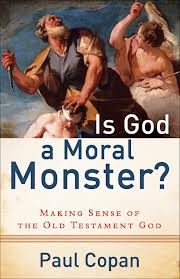 One of the distinguishing marks of the new atheists is that they not only think religion is false, but that it is dangerous and immoral too. Even God himself is not above their judgment. They regularly chide the God of the Bible as being a moral monster! They accuse Him of being pro-genocide, anti-women, pro-rape, pro-slavery, etc. Rather than the paradigm of moral goodness, God is an evil despot that is to be shunned. You know it’s a bad day when even God is evil!
Is what they say true? Is God – particularly as He is portrayed in the OT – morally evil? Many Christians are sympathetic to this charge because they themselves struggle to understand God’s actions and commands, particularly as revealed in the OT. Thankfully there have been some well-written responses to the problem of “theistic evil” written in recent years to dispel this negative portrait of God.
October 16, 2012
Moral relativism: Easy to confess, impossible to live
Posted by Jason Dulle under Apologetics, Relativism[10] Comments
 In a previous post I noted that while people may pay lip service to moral relativism, no one does, and no one can live consistently as a moral relativist. Not only do moral relativists fail to live out their moral philosophy, but I am convinced that on existentially deep level (if not an intellectually deep level), they know moral relativism is false.
If moral relativism is true, and if the moral relativist truly believes it is true, then why do they continue to believe and act as if some things are objectively wrong for everyone? Why is it that they can’t help but to make moral judgments about what is right (tolerance, fairness, open-mindedness, etc.) and what is wrong (intolerance, homophobia, discrimination, forcing one’s morality on others, etc.), and act as if these truths apply to everyone? It’s because there is such a thing as moral truth, and they know it. All of us are made in the image of God and reflect His moral nature. We all possess moral knowledge. In the same way all of us possess rational intuitions to distinguish what is true from what is false, we possess moral intuitions to distinguish between what is good and what is evil. People are free to deny these intuitions, but the fact that they live in the real world in which moral values are an objective feature means they cannot escape moral knowledge and the making of moral judgments to one degree or another.
October 11, 2012
 How should we define “reality”? We can’t say “reality is what exists” because that is tautologous. To say something exists is just to say that it is real.
Neither can we define reality as “any X that has the property of being rather than non-being”? “Being,” like “exists,” is just another way of referring to what is real, and thus this too is tautologous.
Neither can we say that “reality is that which is mind-independent” because this definition excludes the mind from the realm of reality. Surely the mind is real. If it weren’t, it couldn’t be contemplating the proper definition of reality!
How do we define reality in a way that avoids tautologies or excludes certain things we know to be real?
And is there a difference between the definition of reality (kind-defining) and the way we determine what is real? For example, I think William Lane Craig defines existence as any X that exemplifies at least one property. That is definitely a good test for determining if some X is real, but does that really tell me what it means to say some X is real?
October 11, 2012
Philippians 4:13 – What is it exactly that we can do through Christ who strengthens us?
Posted by Jason Dulle under Hermeneutics, Theology[3] Comments
 Philippians 4:13 reads “I can do all things through Christ who strengthens me.” This is taken by many to mean they can do anything they set their mind to through Christ’s strength.
NT scholar Ben Witherington argues that this is a misreading of the text. He notes that the Greek does not say “do.” The only verb in the Greek is “ischuo” which means “to be able, strong, healthy, valid, powerful.” A literal rendering of the verse is “I am able all things in Him who empowers me.” Read literally, it doesn’t make any sense. Able to what? The helping verb is missing, and can only be supplied by the surrounding context. So what is the context of Paul’s statement?
In verses 10-12 Paul wrote: “I rejoiced in the Lord greatly that now at length you have revived your concern for me. You were indeed concerned for me, but you had no opportunity. [11] Not that I am speaking of being in need, for I have learned in whatever situation I am to be content. [12] I know how to be brought low, and I know how to abound. In any and every circumstance, I have learned the secret of facing plenty and hunger, abundance and need.” (ESV).
Paul had learned to be content in any state he found himself in. He learned to endure both the good and the bad through Christ’s empowerment. A better translation of Phil 4:13 then would be, “I am able [to be content in] all things in Him who empowers me” or “I am able [to endure] all things in Him who empowers me.” This verse affirms our ability to persevere through the good and the bad by trusting in Christ, not our ability to accomplish any feat we want.
October 8, 2012
Does Bias Eliminate Objectivity?
Posted by Jason Dulle under Apologetics, Epistemology, Logic, Philosophy, Relativism, Resurrection, Theology, Thinking[5] Comments
 Some people want to reject the testimony of the NT evangelists on the basis that they are biased. I have written on the problems of this claim before, but here is a brief summary of my argument (with some added insight offered by Greg Koukl in his September 10, 2012 podcast):
- This is an example of the genetic fallacy – dismissing one’s arguments because of its origin, rather than addressing it on its own merits.
- Having a bias is irrelevant to the legitimacy of one’s testimony and/or arguments. One must grapple with the evidence rather than dismiss it because it comes from a biased source.
- Everyone has a bias, including those who reject Jesus. The only people without a bias are those who are ignorant of the matter.
- (more…)
October 5, 2012
More Updates to the Gospel of Jesus’s Wife
Posted by Jason Dulle under Apologetics, Archaeology, Bible, Historical Jesus, Theology1 Comment
 This story continues to fascinate me. It’s like CSI Miami for Biblical nerds! And new insights and arguments continue to be offered for and against the authenticity of the GosJesWife.
Christian Askeland has a nice 10 minute video demonstrating some of the peculiarities of the writing on the GosJesWife which cause scholars to doubt its authenticity.
Hugo Lundhaug and Alin Suciu discuss the problems around dating the GosJesWife and evidence that a paintbrush was used for the writing.
Timo Paananen disputes James Watson’s methodology for concluding that the GosJesWife is a patchwork of the Coptic GTh.
Peter Head examines some of the reasons King et al concluded that the writing was authentic, including the lack of ink in a hole created by an insect, the lack of ink where fibers have gone missing from the papyrus, ink on the frayed edges, and the faded ink on the recto and finds them wanting.
October 5, 2012
An Atheist Explains Why Many Scientists So Vehemently Oppose Intelligent Design
Posted by Jason Dulle under Apologetics, Atheism, Naturalism, Science[3] Comments
 In his new book, atheist Thomas Nagel had some interesting things to say about why scientists are so opposed to Intelligent Design: “Nevertheless, I believe the defenders of intelligent design deserve our gratitude for challenging a scientific world view that owes some of the passion displayed by its adherents precisely to the fact that it is thought to liberate us from religion.” – Thomas Nagel, Mind and Cosmos: Why the Materialist Neo-Darwinian Conception of Nature is Almost Certainly False, 12.
October 5, 2012
 Every election year we hear a lot about “undecided voters.” After debates, everyone is talking about how the debate might have influenced the undecided voters. Why are voters undecided? It seems to me that there are only three reasons someone might be undecided:
- They are political novices
- They don’t know the positions of the candidates/parties
- They haven’t developed a taxonomy of values
Anyone who has a developed taxonomy of values knows which issues are the most important, and anyone who is not a political novice knows where each candidate/party falls on those issues because the two parties are at opposite ends of the spectrum on almost all issues: economic, foreign policy, domestic policy, and moral/social.
October 3, 2012
 Great post from Amy Hall of Stand to Reason. Reproduced below in its entirety:
On Harper’s Magazine’s blog, Christopher Beha discusses his recent article on what he calls the “New New Atheists”—that is, atheists (such as Alain de Botton) who, having determined that God does not exist, are now exploring the question of how to restore those aspects of life whose foundations were destroyed along with God: meaning, wonder, morality, etc. But, he says, there’s a problem:
Rosenberg—a philosopher at Duke with a predictable commitment to rigor—insists that doing away with religion means doing away with most of what comes with it: a sense of order in the universe, the hope that life has some inherent meaning, even the belief in free will….
I was interested in the attempts of Harris and Botton to salvage some religious splendor for the secularists. So I was only more disappointed to find Rosenberg’s insistence that such efforts were hopeless far more convincing than the efforts themselves.
October 2, 2012
Moral Relativism Undermines the Ability to Condemn Anything
Posted by Jason Dulle under Apologetics, Moral Argument, Relativism[37] Comments
 Moral relativism – the notion that there are no moral truths, and thus “morals” are subjective preferences relative to individuals or societies – is widespread in our day, particularly among the younger segments of society. I would venture to say that moral relativism appeals to so many people because it gives them the intellectual justification they need to engage in their sins of choice. This cheap form of moral justification is not without its costs, however.
While moral relativism is an easy way to justify participation in acts that others consider morally objectionable, it also makes it impossible to condemn the acts of others that one finds morally repugnant. And believe me, every moral relativist has a list of beliefs, attitudes, and behaviors that they think are morally wrong – not just for them, but for everyone!
September 28, 2012
What I’ve Been Reading: Biblical Words and Their Meanings. Avoid the pitfalls of Word Studies.
Posted by Jason Dulle under Hermeneutics, Theology[7] Comments
 If you are a Christian theologian or teacher, or just a serious student of Scripture, you will engage in word studies. This can be a very fruitful enterprise in exegesis, and yet there are so many ways it can go badly. In his book, Biblical Words and Their Meaning: An Introduction to Lexical Semantics, Moises Silva addresses the subject of lexical semantics. He discusses the proper study of words, and common fallacies to avoid. This book is a must read for exegetes. Here are just some of the gems I have gleaned from Silva:
- Language and concepts are not necessarily correlated. For example, just because Hebrew lacks a future tense does not mean Hebrew-speakers lack a concept of the future. All talk of the “Hebrew mind” versus the “Greek mind,” based on linguistic differences, is simply fallacious. Linguistics cannot tell us about a person’s worldview and mental categories.
- Etymological studies and cognate languages are of limited value to exegesis. The history of a word’s meaning may be of interest if you are a historian, but it is of little value if you want to know what that word means in the Biblical text you are studying. To determine the meaning of a word used in the Biblical text, we must determine what it meant in the author’s day (synchronic meaning), not its origin and evolution (diachronic meaning). (more…)
September 27, 2012
Update on The Gospel of Jesus’s Wife
Posted by Jason Dulle under Apologetics, Archaeology, Bible, Historical Jesus, Theology[4] Comments
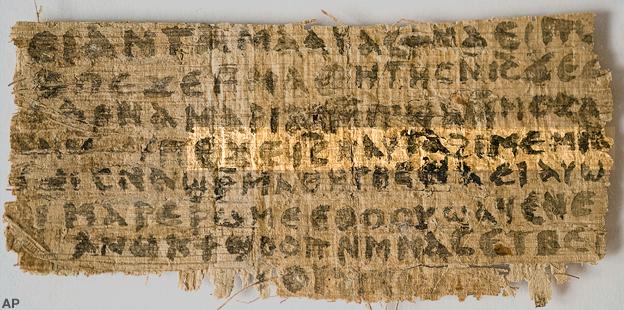
“Jesus said to them, ‘My wife'” highlighted.
The web continues to be abuzz with The Gospel of Jesus’ Wife. So much is being written that it’s hard to keep up! Here are the latest and most important developments.
James Watson has written two more papers (here and here) further developing his original thesis that The Gospel of Jesus’s Wife is a collage of various words and phrases culled from the Gospel of Thomas to form a new composition that is supposed to appear like a new gospel. Andrew Bernhard has also tested Watson’s thesis in two papers (here and here), and agrees that “a modern author could have created the text of GJW simply by using short excerpts culled exclusively from Coptic GTh.”[1] Both of Bernhard’s papers present an excellent visual and summary of the extensive semantic borrowing of the GosJesWife from the Coptic GTh. He notes that only 14 out of 139 legible letters on the recto of the GosJesWife do not correspond to the Coptic GTh. Eight of these 14 letters make up the phrase “my wife.” Of the other 6 letter differences, they are either due to gender shifts in the pronoun or uninterpretable because they are single letters that come at the beginning or end of the line and lack sufficient context for reconstruction.
September 21, 2012
Was there a Mrs. Jesus?: Thoughts on the Gospel of Jesus’s Wife
Posted by Jason Dulle under Apologetics, Archaeology, Bible, Historical Jesus, Theology[21] Comments
 Karen King, professor of divinity at Harvard and specialist in Gnostic Christianity, recently announced the existence of a small (3” x 1.5”), late-4th century[1] fragment in which Jesus speaks of his wife. Written in Sahidic Coptic with black ink[2] on papyrus, the fragment contains eight lines of text on the recto and six lines of text on the verso, with all margins missing.[3] The extant text on the recto side reads:
1 Not [to] me. My mother gave to me li[fe
2 The disciples said to Jesus
3 deny. Mary is worthy of it.[4]
4 Jesus said to them, “My wife
5 she will be able to be my disciple
6 Let wicked people swell up
7 As for me, I dwell with her in order to
8 an image[5]
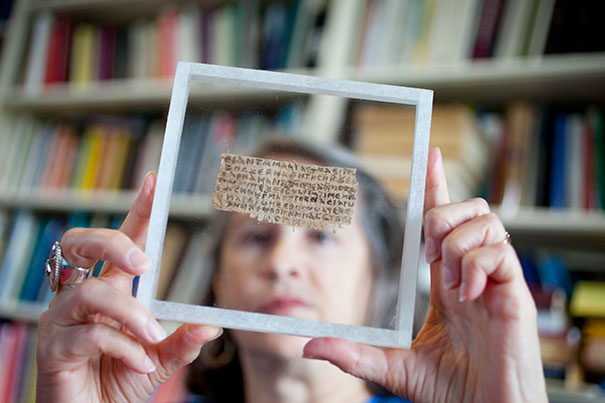 Although the text bears some striking resemblance to known Gnostic texts (particularly the Gospel of Thomas[6], and to a lesser degree the Gospel of Philip), it does not match any known apocryphal or Gnostic gospel. This may be an independent Gospel of unknown character (Gnostic, apocryphal, etc.) or, as Francis Watson has argued, it may be a modern forgery created using key words from the Coptic version of the Gospel of Thomas (more will be said concerning this momentarily).
September 18, 2012
Religious Pluralism: Insulting Everyone to Affirm Everyone
Posted by Jason Dulle under Apologetics, Pluralism[16] Comments
J.W. Wartick has a nice article on the failure of religious pluralism. He makes the point that while religious pluralists want to affirm all religions as being valid, they can only do so at the expense of charging all religions as false. It’s quite the paradox, similar to hitting people to demonstrate your love for them.
While pluralists charge all religious traditions as false in order to affirm them, their own views are presented as objective truth. They do not claim to know the true nature of the Transcendent anymore than the next guy, but they do claim to be the only ones who know the true nature of religion. How convenient.

 Thinking to Believe