For those who are reacting so negatively to the Indiana religious freedom law, do you not realize what you are saying (even if not explicitly)? You are saying that people should not have the right to live out their own religious convictions and follow their own conscience. Read that sentence again. Say it out loud. You are saying we should deny these American citizens a Constitutional right that is 200+ years old so that we can uphold these new same-sex marriage rights that are less than 10 years old and nowhere to be found in the Constitution. You would deny American citizens a basic human right (the free exercise of religion and conscience) in favor of a right we just made up a few years ago.
Apologetics
Archived Posts from this Category
March 31, 2015
The First Amendment be damned: Homosexual rights even trump Constitutional and basic human rights
Posted by Jason Dulle under Apologetics, Homosexuality, Political Incorrectness, Same-sex Marriage[7] Comments
March 27, 2015
Christian ethics are, but Christianity is not…true
Posted by Jason Dulle under Apologetics, Ethics, Theology[41] Comments
Some people value Christian ethics, but deny that Christianity itself is true. This makes no sense. The truth of Christian ethics is directly dependent on the truth of Christian metaphysics. If Christian metaphysics are mistaken, then the ethics that flow from those metaphysics have no basis in reality (on the Christian worldview).
Granted, it could still be the case that Christian ethics are still true in toto or in part, even if Christian metaphysics is false. But in that case, they are true in virtue of the truth of some other metaphysical worldview or meta-ethical system. So why continue to embrace these ethics as CHRISTIAN ethics if their truth is grounded in something other than Christianity? It’s one thing to affirm that Christian ethics are true even if Christianity isn’t, but it’s another thing to subscribe to Christian ethics as CHRISTIAN ethics while denying that Christianity is true.
March 27, 2015
Indiana governor signs free exercise of religion bill
Posted by Jason Dulle under Apologetics, Homosexuality, Political Incorrectness, Politics, Same-sex Marriage[4] Comments
Indiana Governor, Mike Pence, has signed legislation that prevents anyone (individuals, business owners, organizations) from being forced to violate their conscience and religious convictions (what the bill calls “exercise of religion”). One would think the First Amendment of the U.S. Constitution would be enough to secure these rights, but not these days. While the historical context of the bill is surely recent examples in which business owners have been forced by state governments to offer their services to homosexuals in ways that violate their conscience and religious convictions, the bill does not make any reference to homosexuality in particular. It is a general protection religious freedom.
This bill will prevent Jewish publishers from being forced by law to print anti-Jewish propaganda, gay sign-makers from being forced to make signs that condemn homosex, and Christian business owners from being forced by law to provide services that violate their religious convictions. Like it or not, agree with it or not – that is true freedom of conscience and freedom of religion.
You can read the text of the law here. An excellent legal analysis can be found here.
March 25, 2015
Morality cannot exist if God exists?
Posted by Jason Dulle under Apologetics, Atheistic objections, Moral Argument, Theistic Arguments[38] Comments

Professor Garret Merriam argues that if God exists, then we can’t be moral. In other words, we can only be moral if morality is not grounded in God’s existence. This is a reversal of the moral argument for God’s existence. It’s a moral argument against God’s existence.
Like many new atheists, Merriam argues that the Christian God commands and commits evil, so if morality is rooted in God and our moral duties are based on God’s commands, morality is impossible. I don’t accept the premise that God commands or commits evil, but let’s grant it for the sake of argument. Does his conclusion follow? No.
March 16, 2015
What I’ve Been Reading: The Bible and Homosexual Practice – Texts and Hermeneutics
Posted by Jason Dulle under Apologetics, Homosexuality[46] Comments
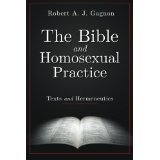 For more than three thousand years Jews and Christians have understood the Bible to condemn homosex in no uncertain terms. Today, however, we are witnessing the rise of a gay hermeneutic that reinterprets the Bible’s teachings on homosex in a way that allows for at least some forms of homosex. While small in number, this movement has a handful of reputable scholars making their case. So what does the Bible really say? Have we misunderstood the Bible on this issue for millennia, or are the Scriptures being twisted by those who want the Scriptures to affirm homosex for various personal or social reasons?
Robert Gagnon’s The Bible and Homosexual Practice: Texts and Hermeneutics is a must-read for everyone who want to know what the Bible has to say on this topic. Gagnon examines the relevant OT (creation, cursing of Ham, concubine, Sodom and Gomorrah, Leviticus, cult prostitutes, David and Jonathan) and NT texts in depth, the cultural background of the Ancient Near East (ANE), and classic arguments offered against homosex (focusing on the argument from anatomical complementarity and natural function). He finishes the book by interacting with arguments against the Bible’s enduring authority on this issue, showing how none of them are successful.
March 13, 2015
What I’ve Been Reading: The Soul – How We Know It’s Real and Why It Matters
Posted by Jason Dulle under Apologetics, Book Reviews, Dualism, Naturalism, Science, Theism, Theistic Arguments[17] Comments
 Until relatively recently, most people believed that human beings are constituted of both body and soul. With the rise of materialism, Darwinism, and neuroscience, however, this notion is under scrutiny and dismissed by most secular thinkers as ridiculous. The notion that humans have souls is tantamount to a “ghost in the machine,” as British philosopher Gilbert Ryle put it.
The existence of the soul is important to Christianity for a variety of reasons. First, the Scriptures teach that humans have souls. If we don’t, then Scripture is wrong. Second, if humans lack souls, then there is no life beyond the grave (at least prior to the resurrection). But apart from the Bible or human tradition, why should we think the soul exists? That is the subject of J.P. Moreland’s newest book, The Soul: How We Know It’s Real and Why It Matters.
This is not the first book Moreland has written on the subject, but it is the first book that is easily accessible to a lay audience. In less than 200 pages, Moreland lays out the case for the existence of the soul, the nature of the soul/consciousness, and the afterlife. He manages to examine the Biblical teaching on the topic as well.
While the modern tendency is to reduce the mind to the brain (appealing to neuroscience for empirical evidence), Moreland argues that this is manifestly false because mental properties are not identical to brain properties. If mental properties cannot be reduced to physical properties, then the mind is not a physical thing, but an immaterial substance.
March 9, 2015
Can evolution explain objective morality?
Posted by Jason Dulle under Apologetics, Atheistic objections, Moral Argument, Theistic Arguments[36] Comments
 There are two senses in which something can be considered good. Something can be good in a pragmatic sense: that which is the most effective means for obtaining some desired outcome. For example, if we desire to eat an ice cream cone without getting ice cream on our clothes, it is “good” to start eating from the top of the cone rather than the bottom. This kind of goodness is judged by something’s utility. It is considered good because it works well, and the human subject values the fact that it works well. We might call this kind of goodness “pragmatic goodness.”
Something can also be good in the sense that it has intrinsic moral virtue/character. For example, it is “good” to try to save someone who is drowning. This kind of goodness is judged by the intrinsic moral character of the act itself, rather than its utility. Indeed, risking one’s life to save a stranger has little utility for the rescuer, but great moral virtue nonetheless. This sort of goodness is not determined by what we desire or the value we attach to the outcome, but is rooted in the moral character of the act itself, wholly independent of what any human may think about it.[1] We might call this kind of goodness “moral goodness.” This is the kind of goodness moral philosophers have in mind when they talk about objective morality. (more…)
February 25, 2015
TN Pastor Gets the Revelation that Homosexuality is Morally Fine
Posted by Jason Dulle under Apologetics, Homosexuality[10] Comments
Country music star and confessing Christian, Carrie Underwood, has voiced her support for homosexuality and same-sex marriage in the past. Now, her pastor – Stan Mitchell of GracePoint Church in Franklin, Tennessee – has followed suit.[1] He announced to his church that
Full privileges are extended now to you [practicing homosexuals] with the same expectations of faithfulness, sobriety, holiness, wholeness, fidelity, godliness, skill and willingness. That is expected of all. Full membership means being able to serve in leadership and give all of your gifts and to receive all the sacraments; not only communion and baptism, but child dedication and marriage.
What? Expectations of holiness and godliness? How can they be holy and godly when they are engaging in sexual behavior that the Bible condemns as abominable? That’s like telling adulterers in the congregation that their behavior is fine so long as they have sex outside of marriage in holiness and godliness. Their behavior is the opposite of holiness. (more…)
February 10, 2015
If God Exists, Why Haven’t I Experienced Him?
Posted by Jason Dulle under Apologetics, Atheistic objections, Theistic Arguments[70] Comments
Most Christians are con vinced of God’s existence based on their personal experience of God rather than by rational argumentation (though some are convinced by a combination of experience and argument). This is a rational justification for such a belief. After all, we generally take our experiences to be veridical unless and until we have good reasons for thinking our experience was not veridical. An argument for God’s existence based on personal experience goes something like this:
- I seem to have had an experience of God
- I should trust my experiences unless I have good reasons to doubt their veracity
- I have no reason to doubt the veracity of my experience of God
- Therefore, I have experienced God
- Therefore, God exists
Atheists will often claim that they would also believe in God if they had a similar experience. It’s not uncommon for this claim to be followed up by a question: Why, if God exists, have they not experienced Him? (more…)
January 30, 2015
Visual depiction of the moral argument
Posted by Jason Dulle under Apologetics, Moral Argument, Theistic Arguments[22] Comments
January 29, 2015
CA judges barred from belonging to the Boy Scouts
Posted by Jason Dulle under Apologetics, Homosexuality, Political Incorrectness[13] Comments
 The CA Supreme Court voted on Friday, January 23 to prohibit state judges from being affiliated with the Boy Scouts on the grounds that the Boy Scouts discriminate against gays. Apparently the Court voted in 1996 to prohibit judges from participating in any organization that discriminated against someone because of their sexual orientation, but had an exception clause for youth organizations including the Boy Scouts. That exception has been rescinded. This brings CA in line with 21 other states that have the same prohibition.
This ruling strikes me as troubling for a number of reasons: (more…)
January 12, 2015

December 19, 2014
Belief in Brute Facts is Not Rational: An Argument in Defense of the Principle of Sufficient Reason and the Cosmological Argument Based on the Existence of Contingent Beings
Posted by Jason Dulle under Apologetics, Atheistic objections, Cosmological Argument, Theistic Arguments[6] Comments
 Caleb Clanton wrote an article in the most recent volume of Philosophia Christi in defense of the cosmological argument.[1] More precisely, he argued for the principle of sufficient reason that undergirds the argument, and against the existence of brute facts which undercuts the argument. Here is a brief summary of his argument.
A contingent being is one whose existence is derived from a source outside of itself. Everything we see around us is a contingent being: trees, rocks, planets, stars, and even the universe itself. How did the set of all contingent beings originate? While the vast majority of all contingent beings can be explained by appealing to a prior contingent being, this cannot go on ad infinitum because an infinite regress is logically absurd. It follows, then, that the entire set of contingent beings cannot be explained by appealing to another contingent being because as the set of all contingent beings, there can’t be any additional contingent beings. Only a being that is not contingent can explain the set. A being that is not contingent is a necessary being, meaning it does not derive its existence from anything outside of itself, but has existence in and of itself by a necessity of its own nature. Theists identify this necessary being as God. (more…)
December 18, 2014
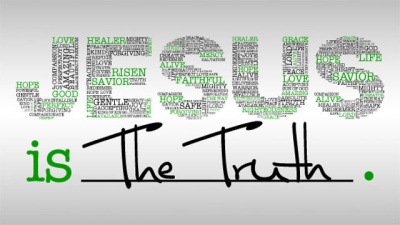 Postmodern Christians who dismiss the veracity of propositional truth like to cite John 14:26 where Jesus said, “I am the way, the truth, and the life.” “Jesus is the truth,” they say, “not doctrinal statements. Jesus is the only truth that matters.”
This way of interpreting Jesus’ statement presumes that Jesus is saying He is identical to the truth, such that to speak of the truth is to speak of Jesus. Linguists call this the “is of identity.” An example of this use of “is” would be the statement, “Barack Obama is the president of the United States.” There is an identity relationship between the man Barack Obama and the office of the president of the United States. Clearly that’s not the kind of “is” Jesus is referring to. When Jesus says he is the truth, he is not making an identity statement such that “Jesus = the truth,” otherwise, “to say that ‘2+2=4’ is true is to say that ‘2+2=4’ is Jesus. In other words, Jesus is claiming to be a mathematical statement.”[1]
December 16, 2014
What I’ve Been Reading: Darwin’s Doubt – Pt 7 of 7
Posted by Jason Dulle under Apologetics, Book Reviews, Intelligent Design[6] Comments
 For the previous installments: part 1, 2, 3, 4, 5, and 6.
Chapter 17
In this chapter, Meyer asks whether it is possible that the cause of the Cambrian explosion is an intelligent agent rather than naturalistic processes. He argues that it is, and that the design hypothesis is better supported by the evidence than any naturalistic hypothesis.
Meyer looks closely at how historical science works. It is different than physics and biology because you cannot experiment on the past. What you can do, however, is develop multiple and competing hypotheses to determine which is the best explanation for the evidence at hand (inference to the best explanation). One of the best ways to test competing hypotheses is on the basis of their causal adequacy; i.e. is the proposed cause adequate to produce the effect in question? Remember, we have to explain the origin of biological information. What sorts of causes, now in operation, are known to produce information? Only one: intelligent agents. If the basis of life is information, and the only known cause of information is intelligence, then it follows that an intelligent agent is not just the best explanation for biological information, but the only viable explanation. (more…)
December 15, 2014
The New Definition of Atheism is Compatible with God’s Existence
Posted by Jason Dulle under Apologetics, Atheism[2] Comments
 Atheists increasingly like to define atheism as the lack of belief in God rather than the affirmation that God does not exist, essentially transforming atheism from an ontological claim to a psychological state. Richard Howe recently had an interesting critique of this redefinition, pointing out that on this definition of atheism both atheism and theism could be true:
It is becoming increasingly more common for atheists to define atheism, not as the denial of the existence of God, but as a lack of belief in the existence of God. … This definition of atheism entails the quirky conclusion that atheism is logically compatible with theism. This is so because if atheism is the lack of a belief in god, then it could be the case both that atheism is true (i.e., it could be the case that George Smith, for example, lacks the belief in God) while at the same time that God actually exists.[1]
See also:
- What exactly does it mean to be an “atheist”?
- Not So Fast: There is No Presumption of Atheism
- Atheists may lack belief in God, but they do not lack beliefs about God
- No one is born an atheist
_____________
[1]Richard Howe, “God Can Exist Even if Atheism is True”; available from http://quodlibetalblog.wordpress.com/2011/11/15/god-can-exist-even-if-atheism-is-true/; Internet; accessed 15 December, 2014.
December 12, 2014
Federal judge strikes down Alaska marriage amendment, and other important court decisions
Posted by Jason Dulle under Apologetics, Same-sex Marriage[3] Comments
A federal judge struck down Alaska’s marriage amendment (approved in 1998) on October 12, 2014, effective October 13. And on October 6, the Supreme Court refused to hear a number of cases where five states were trying to protect their amendments, effectively legalizing same-sex marriage in 30 states. On October 7, the 9th district appeals court “overturned marriage bans in Nevada and Idaho.”
On November 6 a federal appeals court upheld the marriage laws of Ohio, Michigan, Kentucky, and Tennessee. Since different federal appeals courts came to different decisions, this may force SCOTUS to take up the issue.
December 12, 2014
What I’ve Been Reading: Darwin’s Doubt – Pt 6
Posted by Jason Dulle under Apologetics, Book Reviews, Intelligent Design1 Comment
For the previous installments: part 1, 2, 3, 4, 5.
Chapter 14
In principle, a neo-Darwinian explanation of the origin of new body plans can only work if body plans are wholly determined at the genetic level. If sources of information other than DNA are substantially responsible for the formation of body plans, then at best neo-Darwinism is inadequate as a holistic explanation for the diversification of life, and at worst it is simply the wrong explanation altogether.
Once again, modern discoveries in embryological development have discovered that there are many factors other than DNA that play a critical role in embryological development. For example, it’s been shown that in many organisms, you can completely remove the DNA from the developing cells and the embryo will continue to develop up to a certain point. If DNA alone was responsible for embryological development, this should be just as impossible as driving a car without gas. If the car is driving, and there is no gas in the tank, then clearly something other than gas must be powering the car. The same is true of embryological development. While DNA is necessary to embryological development, it is not sufficient in itself. There are sources of power other than DNA that are critical to the development of the organism. Scientists call such sources “epigenetic information,” meaning it is information beyond the genetic information coded in DNA.
December 11, 2014
Visual depiction of the fine-tuning of the universe for life
Posted by Jason Dulle under Apologetics, Cosmological Argument, Intelligent Design, Theistic Arguments[5] Comments
Here’s another great video from William Lane Craig, this time on the fine-tuning of the universe for the existence of life (see also his video on the kalam cosmological argument).
December 9, 2014
What I’ve Been Reading: Darwin’s Doubt – Pt 5
Posted by Jason Dulle under Apologetics, Book Reviews, Intelligent Design[7] Comments
For the previous installments: part 1, 2, 3, 4.
Chapter 12
Scientists largely ignored the mathematicians who pointed out the seeming impossibility of creating new genes and proteins because the mathematical equations of population genetics pointed to a nearly limitless creative power of random mutations. Given known mutation rates, population sizes, and reproduction rates, there seemed to be no end to what evolution could accomplish. The problem with this conclusion is that population genetics is based on some assumptions that we now know to be false.
When the neo-Darwinian synthesis (the idea that evolutionary change is driven by natural selection acting on random genetic mutations) was formulated in the 1930s, biologists did not yet understand the structure of genes. Watson and Crick would not discover the structure of DNA and the digital code it uses to build proteins until 1953 and beyond. Prior to this, genes were only understood functionally as those entities that determine visible and selectable traits such as eye color and the number of toes on our feet. It was assumed that single genetic mutations could alter genes in such a way so as to produce a new function, and that one gene could be responsible for building a complex structure. Given these assumptions, it’s easy to envision an organism slowly improving one mutation at a time. Today, however, we know that these assumptions are patently false:
- Hundreds of proteins are often required to create a complex system. To build that system would require changes to hundreds of genes. Furthermore, because the function of these systems depends on the coordination of several well-matched parts, these new proteins (or proteins with new functions) must arise at the same time.[1]
- To change or improve the function of a single protein typically requires multiple, coordinated amino acid changes, which in turn requires multiple, coordinated changes in the DNA. Because the new function depends on the coordination of multiple mutations, every mutation must be present in the protein at once.

 Thinking to Believe