Politics


Paying-Lip-ServiceOne of the reasons many conservative Christians tend to vote for Republican politicians is due to the party’s moral conservatism: pro-life, pro-family.  Several people have argued, however, that this is not a worthwhile reason to vote Republican because most Republican politicians only pay lip service to the pro-life position for political purposes, and/or they don’t really do anything to limit or abolish abortion (or can’t really do anything due to Roe).

I’ve always found the psychoanalysis claim to be dubious. It’s very difficult to prove that someone does not truly believe what they say they believe. Pro-life Republicans could make the same claims about pro-choice Democrats: They don’t really believe abortion should be permitted, but pay lip service to the pro-choice position for political purposes.  I think it’s best to avoid the psychoanalysis, and just take people at their word unless we have good reason to doubt their sincerity.
(more…)

Earlier this week, Hawaii’s senate passed a same-sex marriage bill.  Yesterday, the House approved a similar bill.  It needs to go back to the senate for reconciliation, and then on to the governor for signature (who will sign it).  This will make Hawaii the 15th state (not including D.C.) to approve same-sex marriage.  Same-sex marriages will begin in Hawaii on December 2, 2013.

11/14/13 update: Governor Neil Abercrombie signed the bill into law on Wednesday, November 13, 2013.

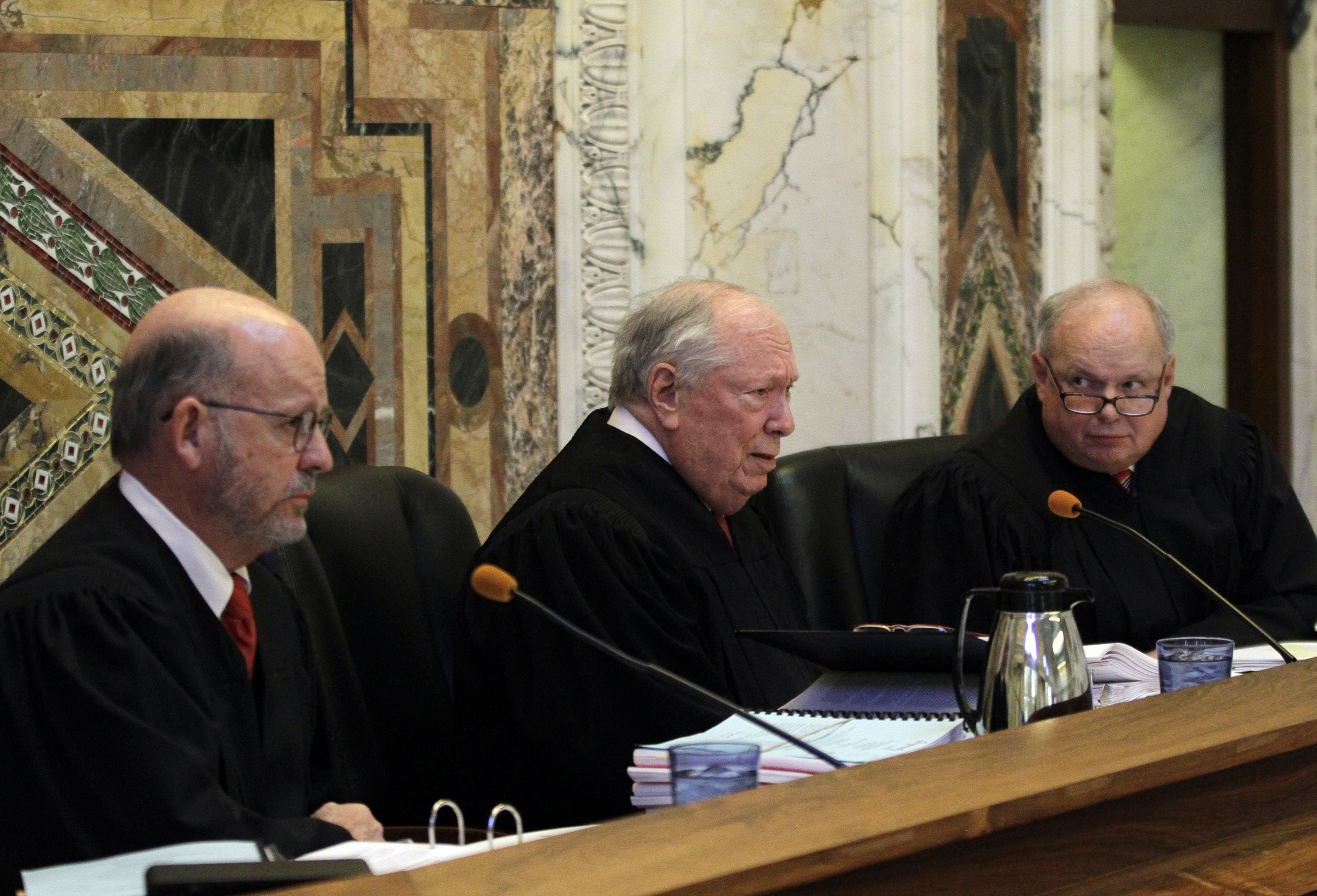
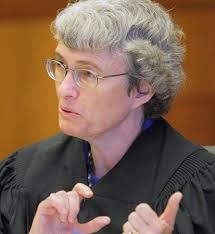
conscience violateIn recent days, I’ve reported on a florist who was sued for not providing flowers for a same-sex wedding, a baker who was sued for not providing a cake for a same-sex wedding, and a wedding photographer who lost a case in New Mexico’s Supreme Court because she would not photograph a same-sex wedding.  Many who support same-sex marriage applaud this phenomena, reasoning that people should not be allowed to discriminate against same-sex couples.  But what about personal liberty?  What about the liberty to follow one’s conscience in these matters?  Why is it ok to require people to violate their conscience, or lose their livelihood?

Can you imagine the outcry if a homosexual printer was forced by the government to either print anti-homosexual propaganda, or get out of the printing industry?  What if a homosexual filmmaker was sued for refusing to direct a film arguing that homosexuality was immoral or harmful, and forced to either direct the film or find a new line of work?  What if a screenplay writer who was also an anti-gun activist was forced to write a script for a movie promoting the use of firearms?  Would this be acceptable?  No!   No one should be forced by the government to lend their services to projects or events they believe to be immoral, and which run contrary to their conscience.  Yet this is exactly what the government is requiring of its citizens when it comes to same-sex marriage, and many same-sex marriage advocates are applauding this.  If you support people being forced by law to violate their conscience, don’t be surprised if one day the government forces you to violate your conscience as well.  It’s ironic that those who argue for more liberty in the case of same-sex marriage are willing to take liberties away from those who disagree.

In 2011 Illinois created civil unions.  Now, just two years later they are on the cusp of creating same-sex marriage.

The IL Senate had approved a bill in February to allow same-sex marriage, and now yesterday, the IL House approved the bill with minor changes.  It’s been sent back to the Senate for reconciliation, and will be signed by the governor.  Illinois will be the 15th state (not including D.C.) to approve same-sex marriage, beginning June 1, 2014.


UPDATE: Governor Pat Quinn signed the bill into law on November 20, 2013.

Mary C. JacobsonIn 2006, the New Jersey Supreme Court ruled that the NJ legislature must give same-sex couples all of the same rights and benefits as opposite-sex couples, but did not demand that the state amend its marriage laws.  The legislature responded by creating civil unions that had identical benefits to marriage.

Fast forward seven years, and Judge Mary C. Jacobson of the State Superior Court ruled on September 27, 2013 that this is not enough – the state must call same-sex unions marriage as well starting Monday, October 21, 2013.  Governor Christie vowed to appeal the decision to the NJ Supreme Court, but when that court refused to block the law while Christie challenged it, and made it clear that they would not rule in his favor, he decided to withdraw his appeal, meaning NJ is now the 14th state to offer same-sex marriage.

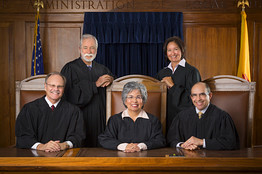
NM Supreme CourtIn any given debate over same-sex marriage, invariably same-sex marriage advocates will pose the following question: “How will allowing gay people to marry affect you or your marriage?”

If we are being asked how any particular same-sex couple setting up house and having their relationship called a “marriage” will personally affect me, the answer is probably, “Not much.”  But this question is too narrow, and misses the real significance of same-sex marriage because it focuses too much on the individual and not enough on wider social implications.  The real question is how changing marriage law to say there is no difference between opposite-sex couples and same-sex couples will affect society as a whole.

(more…)

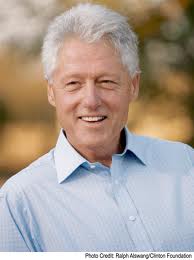
Bill ClintonBill Clinton has written an op-ed in The Washington Post throwing his support behind the overturning of the Defense of Marriage Act — a bill he signed into law 17 years ago. His timing is clearly political, given the fact that the Supreme Court will hear arguments for overturning DOMA on March 27. While the justices should not be influenced by his opinions, his actions carry symbolic weight that the Supreme Court justices cannot help but to notice. After all, if the very President who signed the bill into law no longer supports it, that speaks volumes.

I find it interesting that he justifies his signing of the law in 1996 on the grounds that “it was a very different time” then, but also claims that the law is “incompatible with our Constitution.”  Has the Constitution changed?  No.  So how could a law be constitutional 17 years ago but unconstitutional today?  It’s because Clinton subscribes to the “living document” view of the Constitution in which the meaning of the Constitution changes with the culture, though the words remain the same.  I think this philosophy of Constitutional interpretation is flawed.  The Constitution means what its drafters intended it to mean, and what its signers and ratifiers understood it to mean.  The meaning of a document does not change over time.  If the Constitution can mean whatever we want it to mean, and if the Constitution can be interpreted in light of cultural changes, then the Constitution cannot protect any of us because it doesn’t mean anything in particular.  It is just silly putty in the hands of the judiciary.

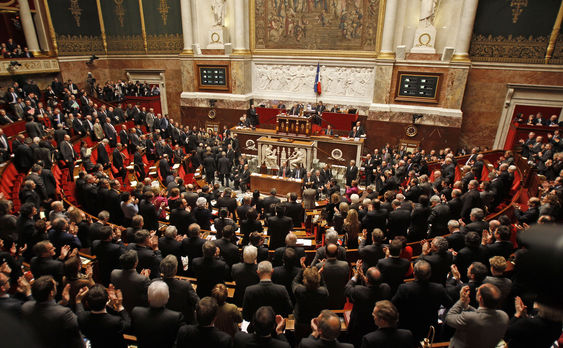
ASSEMBLYFirst Britain, now France.  France has allowed civil unions that confer many of the benefits of marriage since 1999.  Today, France’s National Assembly – its lower house of parliament – approved a bill (329-229) that would define marriage as contract between two people regardless of their sex, and allow same-sex couples to adopt children.  Now it goes to the Senate, where it is expected to pass as well.  If it does, France will become the 12th country to legalize same-sex marriage following:

  1. (more…)

Tom Chivers defines secularism as “the belief that the state should be neutral towards the religious beliefs of its citizens.”[1]  As I read his definition it struck me how different it is from other definitions I have read, and how one’s theological bias can affect their definition.  For example, Christians have often defined secularism along the lines of “ordering society as if God did not exist, or His existence is irrelevant.”  Tullian Tchividjian defines secularization as “the process through which God and the supernatural are relegated to the fringe of what’s important in society,” adding that “a secularized society is a society that has determined to make God and the supernatural socially irrelevant even if they remain personally engaging. It restricts the relevance of God to the private sphere only. …God may be important individually but he is rather unimportant socially and culturally. He may be alive and well privately but publicly he is dead.”[2]

So is secularism the idea that government should be religiously neutral, or is secularism little more than social atheism?  Is it just a matter of perspective?


[1]Tom Chivers, “Atheism may be lonely, but it’s honest – and the loneliness can be fixed, http://blogs.telegraph.co.uk/news/tomchiversscience/100149264/atheism-may-be-lonely-but-its-honest-and-the-loneliness-can-be-fixed/; Internet; accessed 30 October 2012.
[2]Tullian Tchividjian, “The Irrelevance of God”; available from http://theologica.blogspot.com/2007/07/irrelevance-of-god.html; Internet; accessed 30 July 2007.

This is crazy.  A mentally handicapped women is pregnant.  While both she and her parents want to give birth the baby and give it up for adoption (6 couples are already waiting to adopt the baby), a judge is considering forcing her to have an abortion and undergo sterilization.  Outrageous!

When it comes to voting, I am persuaded that our goal should be to make an actual difference in the world, not merely to make a statement concerning our political ideals.  So if there are three candidates — A, B, and C – and if elected, candidate A’s stated policies will result in a 50% increase in evil, candidate B’s policies will result in a 30% increase in evil, and candidate C’s policies will result in a 10% increase in evil – and yet candidate C is a 3rd party candidate who will not be able to secure more than 10% of the popular vote – then we ought to vote for candidate B even if candidate C more closely resembles our political ideals.

Why?  Because voting for C will result in more evil.  How?  Since candidate C cannot possibly secure enough votes to win the election, every vote cast for candidate C makes it more unlikely that candidate B will be able to beat candidate A (assuming that the nation’s political makeup is roughly evenly divided, as in our nation), and thus more likely that candidate A will win the election and cause the greatest amount of evil in the world.  In a very real sense, then, a vote for candidate C is an unintentional vote for candidate A, which is a vote for more evil in the world.   If our goal is to act in such a way so as to limit evil to the best of our ability, then we should vote for candidate B.  The time to vote your conscience and make statements concerning your political ideals is in the primaries, not the general election.

(more…)

Every election year we hear a lot about “undecided voters.”  After debates, everyone is talking about how the debate might have influenced the undecided voters.  Why are voters undecided?  It seems to me that there are only three reasons someone might be undecided:

  1. They are political novices
  2. They don’t know the positions of the candidates/parties
  3. They haven’t developed a taxonomy of values

Anyone who has a developed taxonomy of values knows which issues are the most important, and anyone who is not a political novice knows where each candidate/party falls on those issues because the two parties are at opposite ends of the spectrum on almost all issues: economic, foreign policy, domestic policy, and moral/social.

(more…)

In my last post I referenced a 2010 exit poll which found that people’s views on abortion had little impact on their selection of political candidates.  Other data from the poll, however, may shed some light on why people vote for the parties and candidates that they do.   

In the comments section of a previous post (Opposed to abortion? Your politics may say otherwise) I put forth my opinion that many pro-lifers vote for Democrats out of financial concerns.  Contrary to my theory, however, they did not find that one’s vote had much to do with one’s present economic circumstances.  Indeed, it didn’t even have much to do with their religious affiliation (or lack of one)[1], age[2], gender,[3] or level of education[4] either. 

(more…)

In my opinion, abortion is the greatest moral issue of our day.  Nothing is more unjust than depriving innocent human beings of their God-given, inalienable right to life simply because we are inconvenienced by them.  For that reason, the issue of abortion figures prominently in my political affiliations and the way I vote.  While I am not a one-issue voter, and while I do not think it is always wrong to vote for a pro-choice political candidate (there are some political offices for which one’s personal views on abortion are irrelevant on a practical level), I will almost always vote for the pro-life candidate even if I have fundamental disagreements with him on other matters.  It’s not that I think economic issues do not matter, or that foreign policy does not matter, but that I think the moral injustice of abortion is much more important than these others. 

That is why I was disheartened to read the results of two polls which sought to determine what voters think the most important issues are when choosing the candidates they will give their vote to.  

(more…)

That is what some Christians and secularists suggest.  They think marriage should be a private institution handled by churches and others, while the government sits by as a neutral observer.  That may salve over the current political and cultural debate over the definition of marriage, but is this a good idea?  Jennifer Roback Morse thinks not, and wrote a three-part series explaining why (1, 2, 3).  She argues that privatizing marriage is not only impossible in practice, but that it would result in more state power and would unnecessarily hurt children.

(more…)

I woke up this morning hotly anticipating the SCOTUS decision on the constitutionality of Obamacare, fully expecting it to be ruled unconstitutional.  To my dismay, it was upheld (and Roberts, rather than Kennedy, was the deciding vote).  I was happy to see that SCOTUS rejected the government’s claim that Obamacare was a valid expression of Congress’ ability to regulate interstate commerce (although Ginsberg, unsurprisingly, thinks it is), but I was blown away that they considered it a tax.  Seriously?  Talk about legal and semantical obfuscation!  As Wesley J. Smith wrote, “It appears that the Supremes have rewritten the law in order to uphold it.”  With this approach to law and constitutionality, anything can be made legal…the constitution be damned.

Apparently now the federal government can require us to buy whatever they want so long as they call it a “tax” (something Obama and the Dems specifically said it was not). Calling something a tax doesn’t make it one.  Perhaps we’ll all be required to buy, I mean pay a tax for tofu next year.

When Congress can pass such a law, and SCOTUS can uphold it as being constitutional, I fear that we are no longer being ruled by a Constitution but by the whims of those who hold office.  Federalism is dying.  Power is shifting away from the states and to the federal government.  Who needs state governments when the federal government can regulate all of American life?  I fear we are no longer the United States of America.  We are simply America.

It’s 1856.  The American presidential race is on.  What would you say to me if I told you that I am opposed to slavery, but was prepared to vote for a political candidate who personally supported it, or who was part of a political party whose platform included support for it?

While there would be no reason to question the sincerity of my personal belief/position, one would be thoroughly justified in questioning the level of my concern and the propriety of my political priorities.  If candidates’ economic and foreign policy was more influential in determining my vote, then slavery ranks low on my totem poll of priorities.  While I say I am morally outraged that society would permit the use of human beings as property, my political choices indicate that my concerns lie elsewhere.  After all, how could one be genuinely concerned for the welfare of African Americans while at the same time supporting political parties and political candidates whose platform includes the enslavement of African Americans?

(more…)

Yesterday, the 9th circuit federal court of appeals upheld District Judge Vaughn Walker’s August 2010 decision that California’s Proposition 8 is unconstitutional by a 2-1 vote.  Prop 8 was a voter referendum to amend the CA constitution to declare that marriage is only valid between a man and a woman.  While the CA Supreme Court ruled that the amendment is constitutional (when judged against the California Constitution), their decision was appealed and Judge Walker ruled that it violates the U.S. Constitution.  The 9th circuit court agrees.

(more…)

When President George W. Bush cited his religion as influencing his political decisions the Left cried foul.  The Left is eerily silent, however, to President Obama’s admission of the same.  What’s good for the goose is good for the gander.

The problem is not with the idea that one is influenced by their religious convictions, but rather with the idea that religious convictions should not influence a president’s policies and decisions.  Given the fact that moral values are highly influenced by religion, and that policies usually involve a moral dimension, it is to be expected that a president’s policies would be influenced by his religious convictions.

In California, minors are no longer able to use tanning beds even if they have their parent’s consent, but of course they can still obtain abortions even without their parent’s consent.

« Previous PageNext Page »