Theology


Updated 6/28/11

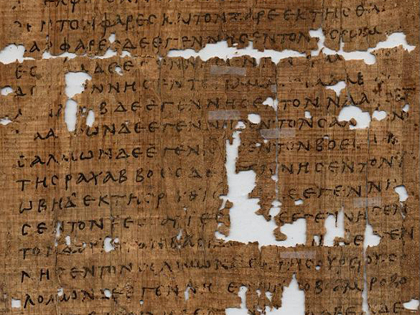
George Houston has addressed an interesting question that has direct applicability to the reliability of the NT documents: How long did manuscripts remain in use?  From the available evidence Houston concludes that some manuscripts continued to be used for 200-300 years before they were finally discarded, while the majority were used for at least 100 years.

While Houstonlooked at secular documents, Craig Evans had this to say about religious documents:

Most of the [Dead Sea] scrolls were one hundred to one hundred-fifty years old when the community ceased to exist. However, approximately 40 scrolls, many of them Bible scrolls, were 200 to 300 years old—and evidently still in use—when the community was destroyed. The same holds in the case of a number of Christian Bibles. Fourth-century Codex Vaticanus was re-inked in the tenth century, which shows that it was still being read and studied some six hundred years after it had been produced. Codex Sinaiticus was corrected in the sixth or seventh century. Codex Ephraemi Rescriptus, produced in the fifth century, was in use four or five centuries before being overwritten in the twelfth century. Retired and discarded mss were not corrected: only those still in use.

If this is true of the NT autographs as well, then the popular claim that the early transmission of the NT text was wild and erratic is false. The gap between the original autograph and our earliest copies would be largely bridged. Churches and scribes could have checked their manuscript copies against the originals for an extended period of time following the death of the apostles, correcting any errors that might have crept in.  There are two reasons to think the church preserved and continued to use the originals for some time.  First, manuscripts were valuable and would not be quickly discarded.  They would only be discarded once they had deteriorated from use.  Secondly, the NT autographs were viewed as authoritative documents, and as such they would have been preserved by their original recipients.  Indeed, Tertullian seems to affirm that at least some of the original manuscripts were extant in his day: “Come now, you who would indulge a better curiosity, if you would apply it to the business of your salvation, run over [to] the apostolic churches, in which the very thrones of the apostles are still pre-eminent in their places, in which their own authentic writings are read, uttering the voice and representing the face of each of them severally.” (AD 180 — it is possible that Tertullian was not claiming these churches had the original autographs, but rather that they had copies of the autographs that were not corrupted as were the copies used by heretics)

HT: Larry Hurtado

Do you give 10% of your income to the work of God?  Do you think by doing so you are fulfilling the Mosaic command to tithe?  Think again.  Israelites were commanded to pay upwards of ~23% in tithes, not a mere 10%.

The Mosaic Law required the children of Israel to pay three different tithes: levitical tithe (Lev 27:30-32; Num 18:21,24), annual festival tithe (Dt 14:22-27), and tri-annual poor tithe (Dt 14:28-29).  The levitical tithe was the standard tithe.  It required all Israelites to give 10% of their increase (crops, fruit, livestock) to the Levites.  This tithe was probably offered sporadically throughout the year.

(more…)

Traditionally, authorship of Deuteronomy has been ascribed to Moses.  While it has long been clear to me that Moses could not have written the last two chapters[1], I never had reason to seriously question Mosaic authorship of the other 32 chapters until recently.  I read a number of arguments against the traditional view in Peter Enns’ article, “When was Genesis Written and Why Does it Matter?: A Brief Historical Analysis.”  Enns notes that:

  • The book does not claim to be written by Moses[2];
  • Deuteronomy 1:1 says “these are the words Moses spoke on the other side of the Jordan.” (cf. Deut 1:5)  Such a comment presumes that the narrator is writing from the perspective of the land of Canaan—a place Moses never stepped foot on (Numbers 20:12; Deuteronomy 32:48-52).  At the very least this would seem to indicate at least part of the first chapter was not written by Moses, and perhaps more;
  • The book gives a third-person account of Moses’ words and deeds, as opposed to a first-person account as we might expect if Moses was the author (e.g. 1:5; 4:41,44; 5:1; 31:9).  (I should point out, however, that this is also true of Exodus, Leviticus and Numbers.  If this calls into question Mosaic authorship of Deuteronomy, it would equally call into question Mosaic authorship of the other books.  Clearly, it is not impossible that Moses purposely wrote from a third-person perspective.)

(more…)

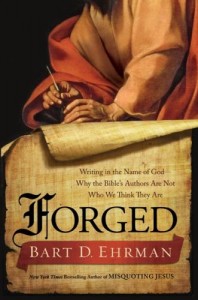
Bart Ehrman recently released his latest salvo attacking the Bible.  This time he is not just trying to undermine people’s confidence that what we read today is what the authors wrote back then.  Instead, he’s trying to undermine people’s confidence that the people we think wrote the NT documents actually wrote them.  In his view, fraudulent authors successfully deceived the NT church by forging documents in the name of ecclesiastical leaders.

Dr. Ben Witherington is currently doing a chapter-by-chapter review of the book.  He has already released four installments:

Part 1
Part 2
Part 3
Part 4

Witherington is well-qualified to interact with Ehrman’s work.  I would highly recommend that you read his review, and read his future installments.


I was listening to a debate between George Williamson and William Lane Craig on the existence of God.  Williamson argued that the concept of God is incoherent.  He claimed omniscience would require that God possess all empirical knowledge (experiential, know-how), and yet God clearly does not know what it is like to play basketball, ride a bike, or sin.  Craig responded that the classical definition of omniscience holds that God knows all true propositions, not that He knows all experiences.  Williamson counters that theists have so defined omniscience only to escape the logical absurdities involved in a being who is truly omniscient.  So is the classical definition ad hoc as Williamson claims?  No.  There is good reason to limit omniscience to propositional knowledge.

(more…)

Matthew reports a guard being stationed outside of Jesus’ tomb (Mt 27:62-66; 28:4,11-15).  While it is often assumed that the guard was a Roman guard, the text does not say this.  While it may have been a Roman guard, it is also possible that it was a Jewish guard seeing that the temple in Jerusalem employed its own guards.  Which was it?

Reasons to think the guard was a Jewish temple guard:

  • The guards return to the chief priests rather than to Pilate or a Roman officer
  • It is unlikely that Roman guards would agree to spread a story for which they could be executed (execution was the punishment for Roman soldiers who fell asleep on watch).
  • While the mention of the governor in Mt 28:14 may indicate this is a Roman guard, if it was a Roman guard then it is difficult to see how the Jewish leadership could have done anything to keep the governor for killing his own soldiers.  What influence would they have in Roman military affairs?

(more…)

Could Jesus have rolled away the stone that covered his tomb?   The entrance of a Jewish tomb was quite small, so the stone needed to cover the opening would only be 4-6’ in diameter, and approximately 1’ thick.  How much would such a stone weigh?  Depending on the type of stone used, it could weigh between 1-2 tons (2000-4000 pounds).[1] This is quite heavy, but two men could move it into place (Mt 27:60; Jn 19:38-42).  The more difficult task was removing the stone.

Generally speaking, the rolling stone was set inside a groove in front of the entrance, and secured from falling over by a stone wall that stood in front of tomb opening (the rolling stone was sandwiched between the tomb entrance and stone wall as the pictures below illustrate).  Often, the groove was not level, but slightly sloped.  To close the tomb, the stone would be rolled down the groove at a decline and come to rest in front of the entrance.  To open the tomb, the stone would have to be rolled up the groove at an incline.

(more…)

How the article ends gives you a good sense of it: “We wouldn’t dream of dropping our daughters off at college and saying: ‘Study hard and floss every night, honey—and for heaven’s sake, get laid!’ But that’s essentially what we’re saying by allowing them to dress the way they do while they’re still living under our own roofs.”—Jennifer Moses.


HT: Justin Taylor


The four gospels contain a lot of Jesus’ teachings on a variety of topics.  What do you consider to be the most important things Jesus taught or did?  I’m not looking for generalities such as “His moral teachings,” but specifics such as “Jesus’ teaching that we are to love our enemies as found in Mt 5:43-44.”


One of the distinct features of the canonical gospels is the amount of geographical and temporal details they contain.  They do not just tell you the things Jesus said and did, but they tell you where and when He did them.  This is in stark contrast to many of the Gnostic gospels such as The Gospel of Thomas which provide few (if any) details regarding geography and time.

I have spent a lot of time in the past six months studying and comparing the four Gospels.  In the course of my studies, I noticed that certain evangelists seem to provide more geographical and temporal markers than other evangelists, so I thought it would be interesting to catalogue all of the geographical and temporal markers in the Gospels to determine who provided the most detail.

(more…)

I have made two attempts at offering a rational argument for monotheism.  The first one failed, and Scalia challenged my second one.  I did not respond to his challenge immediately because I knew it would require some additional thought.  After putting it off for a while I have given it some additional thought, and concluded that my second attempt failed as well.   

I’ve been working on some additional arguments, but haven’t thought them through entirely.  If you were following the previous post, you might be interested in checking out the comments section again for my response to Scalia’s objection, and my new proposals.  Hopefully you can weigh in on their strengths and weaknesses.  If they seem to be sound, perhaps I’ll make them the subject of another post, “Omnipotence and Monotheism III”!

Christians are often accused of being judgmental by non-Christians—and sometimes, even by fellow-Christians.  Indeed, it’s not uncommon to even hear non-Christians quote Jesus’ words in Matthew 7:1 against Christians: “Judge not, lest you be judged.” (even if they’ve never read a page from the Bible in their life!)  I am persuaded that both the church and the culture at large have failed to understand the Biblical teaching on judgmentalism.  Before I explain, let’s look at a few more Biblical passages often cited in support of non-judgmentalism:

1 Cor 4:3-5 But with me it is a very small thing that I should be judged by you or by any human court. In fact, I do not even judge myself. 4 For I am not aware of anything against myself, but I am not thereby acquitted. It is the Lord who judges me. 5 Therefore do not pronounce judgment before the time, before the Lord comes, who will bring to light the things now hidden in darkness and will disclose the purposes of the heart. Then each one will receive his commendation from God. (ESV)

1 Cor 5:12-13 For what have I to do with judging outsiders? Is it not those inside the church whom you are to judge? 13 God judges those outside. “Purge the evil person from among you.” (ESV) [talking about executing punishment]

James 4:11-12 Do not speak evil against one another, brothers. The one who speaks against a brother or judges his brother, speaks evil against the law and judges the law. But if you judge the law, you are not a doer of the law but a judge. 12 There is only one lawgiver and judge, he who is able to save and to destroy. But who are you to judge your neighbor? (ESV)

(more…)

In today’s society everyone seems to be hyper-sensitive to judgmentalism.  The minute you tell someone you disagree with something they are doing, you are accused of being judgmental.  Of course, it always escapes their notice that they are judging you for being judgmental, so they are guilty of both judgmentalism and hypocrisy!  But the problem runs deeper than mere self-contradiction.

As the term is commonly used today, judgmentalism is thought to be limited to expressions of moral disapproval of X, or attempts to correct some person P for doing X.  In reality, judgment involves both moral disapproval and moral approval.  Judgment requires that we distinguish what is right/good from what is wrong/evil.  Judgments are involved when you say X is good, as well as when you say X is bad.  Indeed, the only way to say some X is good is if you know what bad is, and know X is not that.  The only way to avoid making judgments is to make no moral distinctions whatsoever.  No sane person can do this, nor is this a worthy goal.  Moral judgments are indispensable to a healthy society.

(more…)

God created every animal as a male-female pair at the same time, except for humans.  Why didn’t God create Adam and Eve at the same time?  What reason did He have for delaying the creation of Eve?


Oneness Pentecostals believe God is one in both essence and person, and that Jesus is the incarnation of this single divine person.  On this view, the deity of Jesus is numerically and personally identical to the deity of the Father.  The Father and Son differ, not in their person, but in their mode of existence.

A common Trinitarian objection to Oneness theology is that it entails the idea that the Father suffered, and even died on the cross.  The ancients called this view “Patripassianism” (Latin for “the Father suffers”) and deemed it heretical.  But why?

It is to be expected that Trinitarians would object to the claim that the Father suffered in Christ since they believe God is three persons, of whom only the second (God the Son) became incarnate.  The Trinitarian objection to Patripassianism, however, was not limited to the identity of the one who experienced the suffering, but extended to the very metaphysical possibility of the Father experiencing suffering.  On their view, it was more than just a factual/historical error to think God the Father was the divine person who experienced suffering in Christ; it was metaphysically impossible for Him to do so.  Only God the Son was capable of such.

(more…)

A new website, The Ehrman Project, has launched.  It’s dedicated to evaluating and responding to Bart Ehrman’s claims.  It examines each of his three best-selling books: Misquoting Jesus, God’s Problem, Jesus Interrupted.  There are eight video responses to each book, each one covering a different topic.  There are also links to related books and articles. 

Participating scholars include Ben Witherington, Darrel Bock, D.A. Carson, Daniel Wallace, Alvin Plantinga, et al.  One of the coolest features of the site is that you can pose a question on the blog, and it will be answered by one of the scholars!  So if you have any difficult questions related to the issues Ehrman raises, now is the time to ask them.

HT: Ben Witherington

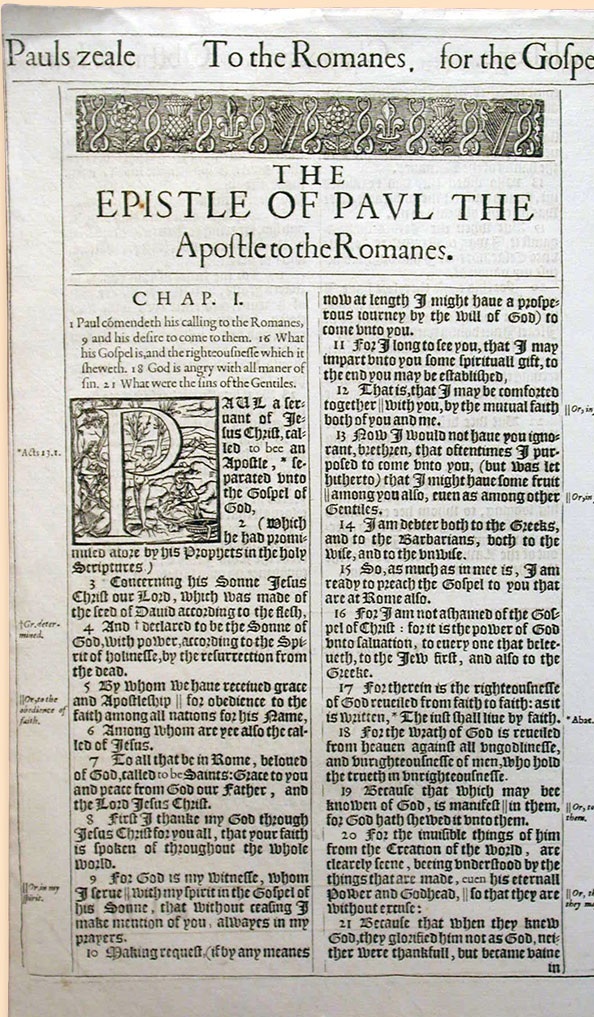
Many people are under the impression that the Textus Receptus (TR) printed by the Trinitarian Bible Society was the Greek text used by the KJV translators to translate the NT.  Not so.  The TR was not the Greek text used by the KJV translators.  Instead, it is a Greek text based on the KJV, created 270 years after the KJV was published!  To understand why, let’s explore the history of the TR in a little detail.

The story begins in 16th century Europe.  Catholicism was the religion of Europe, and Jerome’s Latin Vulgate was the Bible of the church—and had been for over 500 years.[1] In 1504, however, the Catholic humanist scholar by the name of Desiderius Erasmus came across a manuscript by the Italian humanist Lorena Valla (1407-57)—an event that would forever change Erasmus’ life, as well as the future of Bible translations.  Valla’s manuscript contained a host of annotations to the Vulgate, noting those places where it was not faithful to the Greek text.  Erasmus became enamored with Valla’s approach, and determined to carry on his work.

(more…)

I was listening to a podcast by Jim Wallace from PleaseConvinceMe.com the other day on my way to work.  He was talking about atheists’ stock objection to the cosmological arguments[1]: “Well, then, who caused God?”

Wallace pointed out that the question itself is meaningless.  He illustrates his point by asking, What sound does silence make?  Silence is soundless, of course, so it makes no sense to ask what kind of sound it makes.  Likewise, the question, Who created God? is a meaningless question because by definition God is an eternal, uncreated being.  To ask, Who caused God?, then, is to ask, Who caused the Uncreated Being to exist? which is meaningless.

For additional information on responding to the “Who made God?” objection, read my post “Inexcusable Ignorance Part II.”


[1]Which argue that the universe needs a cause, and that cause is God.

In light of the 400 anniversary of the KJV, there will be a lot of discussion this year regarding the history of English Bible translations.  If you are interested in learning more about this topic, I would highly recommend Christopher Mulvey’s article “A full account of the Bible in English.”  Mulvey focuses on the period from A.D. 735 to the KJV in 1611.

Daniel Wallace also has an excellent series of articles covering the history of English translations from Wycliffe (A.D. 1382) to the NET Bible (2001).

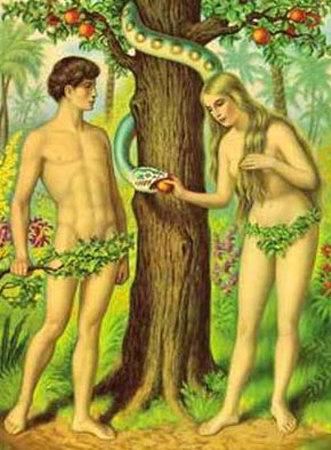
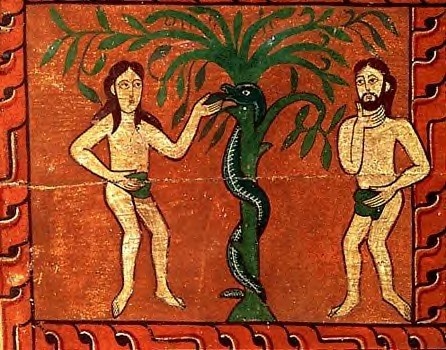
Recently, there was some discussion of the historicity of Adam and Eve in the comments section of another post, so I thought I would start a separate post on the issue and refer readers to a short post by James Anderson who summarizes some of the key Biblical reasons to think Adam and Eve were real historical figures, and the parents of the whole human race.

I will offer what I think is a compelling theological reason for thinking Adam and Eve was the original pair of humans as well.  If there was more than one pair of original humans, then humans would have fallen into sin at different times.  Indeed, there could have been two different spiritual lineages of humans living side-by-side: those who had not sinned, those that sinned.  This contradicts passages like Romans 5 which indicates that all humanity sinned in Adam.

(more…)

« Previous PageNext Page »