Part of our theodicy for the problem of evil includes the point that it was logically impossible for God to create a world in which humans enjoyed free will (a good thing), and yet were unable to use that freedom to choose evil as well as the good. I accept that as true, and yet Christianity proclaims there is coming a day in which there will be a world consisting of humans with libertarian free-will, who will never choose evil: heaven. The future hope of Christians seems to undermine one of the central premises in our theodicy. Can this be reconciled?
Some have suggested that we will not sin in heaven because we’ll be in the beatific presence of God. Presumably, the angels exist in the beatific presence of God, and yet many of the angels chose to rebel against God in that state. This alone, then, cannot explain why humans won’t sin in heaven.
Others have suggested that we will not sin in heaven because God will glorify our humanity. But this is not a solution; it is an admission of the problem. Glorification is being put forward, not to show that such a world cannot exist, but rather to explain how it will become a reality. If in the future God is able—through glorification—to make human beings such that they have free will, and yet will not choose evil, then it falsifies the claim that God cannot create a world in which humans enjoy libertarian free will, and yet never choose evil. Indeed, He will do so in the future. In light of such, we might ask why God did not do this from the onset. Why didn’t He create humans in a glorified state to begin with, if glorified humans can exercise free will and yet not choose evil?
(more…)
 Evangelism is scary for many people, including myself. Many Christians find it difficult to start a discussion on spiritual things. Others fear that they’ll be pummeled with objections to the faith that they don’t know how to answer. Many fear rejection. As a result, we’ve invented new methods of “evangelism” that don’t require us to actually talk to anyone. I’m thinking of “friendship evangelism” and “love evangelism” in particular.
 The resurrection of Jesus Christ from the dead was the central message of the early church and the basis of Christian hope. But why should we believe that a man was raised from the dead 2000 years ago when we were not there to witness it, and when our uniform experience says that dead people always stay dead? While many people think the resurrection of Jesus is something you either choose to believe or choose to reject based on your personal religious tastes, the fact of the matter is that there are good, objective, historical reasons to believe that Jesus rose from the dead.
 While there is much discussion regarding the fidelity of the transmission of the NT text, very little attention is given to the OT. I’ve long been looking for a good book dedicated to OT textual criticism, written from the perspective of a conservative text critic, so I was happy to come across John F. Brug’s
 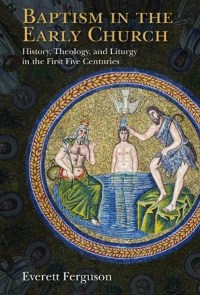 I recently finished Everett Ferguson’s
  In the parting words of Paul’s first letter to the church at Thessalonica, he admonished them with several imperatives, including “pray without ceasing” (1 Thes 5:17).
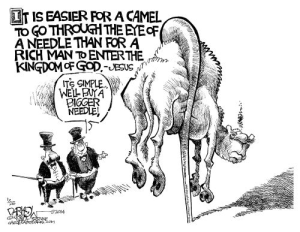 Jesus said, “It’s easier for a camel to go through the eye of a needle than for a rich person to enter the kingdom of God” (Mt 19:24; Mk 10:25; Lk 18:25). Jesus said this after the young rich ruler refused Jesus’ call to discipleship because he was unwilling to give away all of his riches. Jesus’ point seems to be that people with wealth tend to trust in their wealth, making it difficult for them to place their trust in Christ.
 We often speak of the need to “forgive yourself.” While I understand what is meant by this phrase, it is unintelligible on the Christian worldview. People speak of the need to forgive themselves in the context of feeling guilt for something they did (or failed to do). They recognize the need to eliminate this guilt and get on with their life – to stop beating themselves up for their failure.
 In the
  Skeptics of Christianity often try to undermine the truth of Christianity by pointing to supposed errors or contradictions in the Bible. As a result, some Christians have abandoned the faith, while others remain shaken in their faith. This is unfortunate because the skeptics’ approach is fundamentally flawed.
 If God knows every choice we’ll make from eternity past, doesn’t that mean our choices are not free – that God has caused us to do what we do? No. Knowledge is not a cause. Knowing what someone will choose to do in advance of their actually doing it does not cause them to do it. While it’s true that if God knows X will happen, X will most certainly happen, but it’s not God’s knowledge of X that makes X happen. It’s our choice to do X. God merely knows what we will freely choose in advance. While God’s knowledge is chronologically prior to our acts, our acts are logically prior to God’s knowledge. If we would have chosen A rather than B on October 12, 2006, God would have known A rather than B. The reason He knew B would happen from eternity past is because He knew we would freely choose B from eternity past. God’s foreknowledge does not determine our choices, but is informed by our choices. In other words, God’s foreknowledge is not the cause of our actions; our actions are the cause of God’s foreknowledge.
 While there are a number of arguments for the existence of a divine being, none of them require that there be only one divine being. Why should we think there is only one God, then?
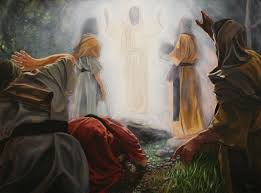 Only the resurrection of Jesus from the dead can explain why Christians believed Jesus was divine. It also gives credence to the fact that Jesus claimed to be God.
 Could the human population have originated from two people? Many say science has proven this to be impossible and are reinterpreting the Biblical narrative to fit the current scientific thinking. In this
 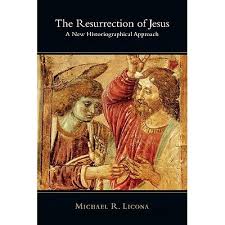 Michael Licona’s magnum opus on the resurrection,
 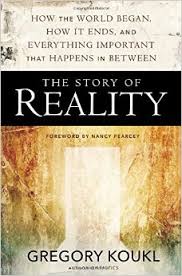 I recently finished reading Greg Koukl’s new book,
  “…submitting to one another out of reverence for Christ.” (Ephesians 5:21)
 For many years this proverb has been misinterpreted, probably because the KJV translates it “Where there is no vision, the people perish.” What we typically hear preached from this verse is that a church must have a long-term goal and plan if they wish to thrive rather than perish. That may be good advice, but that’s not the meaning of this proverb.
 Thinking to Believe