Archaeologist Eilat Mazar has made another discovery confirming the Biblical record. A portion of the remnants of ancient walls that once surrounded Jerusalem were previously dated to the Hasmonean period (2nd century B.C.), but new evidence discovered by Dr. Mazar has led her to re-date the wall to the mid 5th century B.C. and identify it as a portion of the wall that Nehemiah built to protect the Jews who returned to Jerusalem after their captivity in Babylon.
December 24, 2019
September 5, 2019
Would you still be a Christian if there was no afterlife?
Posted by Jason Dulle under Eschatology, Hell, Holiness, Theology[17] Comments
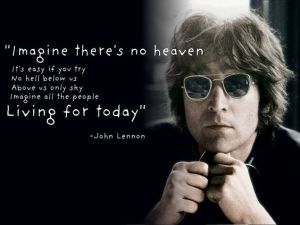
Would you still be a Christian if there was a heaven, but no hell?
Imagine for a moment that God set up reality differently, such that people could be as bad as they wanted without any risk of eternal punishment. When you die, you simply cease to exist. However, if you follow Jesus, heaven still awaits you. Would you still follow Jesus? Be honest. I encourage you to take five minutes to reflect on this question before reading on below.
August 19, 2019
Evangelism requires speech, not friendship or love
Posted by Jason Dulle under Ethics, Holiness, Miscellaneous, Soteriology[6] Comments
 Evangelism is scary for many people, including myself. Many Christians find it difficult to start a discussion on spiritual things. Others fear that they’ll be pummeled with objections to the faith that they don’t know how to answer. Many fear rejection. As a result, we’ve invented new methods of “evangelism” that don’t require us to actually talk to anyone. I’m thinking of “friendship evangelism” and “love evangelism” in particular.
The premise of friendship evangelism (also known as relationship evangelism or lifestyle evangelism) is that people will be attracted to your way of living (your holy behavior, your happiness, how you treat others, etc.), prompting them to ask you what your secret is, and predisposing them to become a Christian. At that point, you share the gospel with them.
June 7, 2019
Euthyphro’s Dilemma and Why God Could Not Create the Good
Posted by Jason Dulle under Apologetics, Atheistic objections, Moral Argument, Theism, Theistic Arguments[82] Comments
 Theists argue that God is the best explanation for objective moral truths. Atheists typically appeal to the Euthyphro Dilemma (ED) to show that God cannot be the foundation for morality. The ED asks whether something is good only because God wills it as such, or if God wills something because it is good. If something is good only because God considers it good, then goodness seems arbitrary and relative to God’s desires. If He had so chosen, murder could have been right and truth-telling could have been wrong. On the other hand, if God wills the good because it is inherently good, then goodness would be a standard that exists outside of God. He is subject to the moral law just as we are.
So either goodness is arbitrary or it is independent of God. Either God arbitrarily declares what is good or He recognizes what is good based on some standard outside of Himself. If the good is an arbitrary expression of God’s will, then the good is subjective rather than objective. While God may serve as the foundation for His subjective morality, He cannot serve as the foundation for objective moral truths. On the other hand, if God wills something because He recognizes it is objectively good, then something other than God is the standard of objective moral truths. He may inform us of those moral truths, but they do not depend on God for their existence.
May 13, 2019
Does everything happen for a reason?
Posted by Jason Dulle under Apologetics, Problem of Evil[2] Comments
 When something bad happens, it’s common for people to offer the encouragement that “everything happens for a reason.” Is it really true, however, that everything that happens, happens for a reason? To answer that question we need to explore what we mean by “everything,” “for” and “reason.”
Let’s start with “reason.” What do we mean when we say something happens for a reason? It means there is some intelligible and discernible relationship between two events, and that this relationship was purposed by an intelligent agent. For example, the reason I give money to the checker at the grocery store is because I want to buy food. There is a rationality to my action that links the events of giving money and receiving food. One is done for the reason of the other. In a similar manner, there is a discernible and intelligible relationship between bad and good events in our lives that was purposed by God.
May 13, 2019
We tend to define backsliding as a believer reverting to a life dominated by sin, but I think a better definition of backsliding is simply when we lose spiritual ground that we had achieved previously.
April 21, 2019
Why the resurrection matters
Posted by Jason Dulle under Apologetics, Historical Jesus, Resurrection[4] Comments
The resurrection of Jesus is central to the Christian faith, but why does it matter? Why think of it as just another of many miraculous/supernatural events? Why not see it as a mere historical oddity? Why does it matter so much to Christianity? What is the significance of Jesus’ resurrection from the dead?
Here are just a few reasons it is significant:
April 21, 2019
The Historical Evidence for the Resurrection of Jesus: A Short Case
Posted by Jason Dulle under Apologetics, Historical Jesus, Resurrection[3] Comments
 The resurrection of Jesus Christ from the dead was the central message of the early church and the basis of Christian hope. But why should we believe that a man was raised from the dead 2000 years ago when we were not there to witness it, and when our uniform experience says that dead people always stay dead? While many people think the resurrection of Jesus is something you either choose to believe or choose to reject based on your personal religious tastes, the fact of the matter is that there are good, objective, historical reasons to believe that Jesus rose from the dead.
Historians must do two things: establish the historical facts, and then find the best explanation for those facts. When it comes to the life of Jesus, the primary source material for the historian is the New Testament (NT) gospels and Paul’s writings because they include the testimony of early disciples who witnessed the events in question or knew those who did, and they provide the most detail about Jesus’ life.
April 4, 2019
Bulla of Nathan-Melech discovered in Jerusalem
Posted by Jason Dulle under Apologetics, ArchaeologyLeave a Comment
 Another clay seal (bulla) bearing the name of a Biblical person has been unearthed in the City of David. The tiny clay seal was found in the remains of a large housing structure that had been destroyed by fire in the sixth century B.C. The seal reads, “[belonging to] Nathan-Melech, Servant of the King.” Nathan-Melech appears once in the Bible, in 2 Kings 23:11, and is said to be an official in the court of King Josiah. (more…)
March 9, 2019
Old Testament Textual Criticism
Posted by Jason Dulle under Bible, Textual Criticism, TheologyLeave a Comment
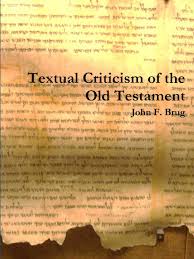 While there is much discussion regarding the fidelity of the transmission of the NT text, very little attention is given to the OT. I’ve long been looking for a good book dedicated to OT textual criticism, written from the perspective of a conservative text critic, so I was happy to come across John F. Brug’s Textual Criticism of the Old Testament.
Brug does a great job of explaining the manuscript resources, how text critics go about establishing the original text, ancient and modern criticism of the text, and many examples of the variants with a fair assessment of which are original. What I was particularly interested in is his explanation of the differences between the Greek translation and the Hebrew, as well as the differences in names and numbers in parallel passages such as Kings and Chronicles.
The book is under 200 pages, so it’s very digestible. I would highly recommend this as an intermediate introduction to OT textual criticism.
January 21, 2019
What I’ve Been Reading: Baptism in the Early Church
Posted by Jason Dulle under Baptism, Theology[11] Comments
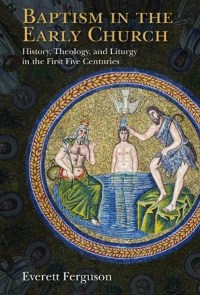 I recently finished Everett Ferguson’s Baptism in the Early Church. This massive tome of 860 pages thoroughly explores the theology and practice of baptism in the first five centuries of the church. What follows is a brief summary of Ferguson’s main findings.
Origins
Baptism was a big deal to the early Christians. It was modeled on John’s practice, as well as Jesus’ example and command. Unlike Jewish and pagan precursors which saw ritual washings as related ritual purification, Christian baptism was intended for spiritual cleansing and moral transformation.
Ceremony
Great pomp and ceremony developed very early around the church’s practice of baptism. While traditions differed from region to region as well as over time, in general, baptism was performed in the nude, via triple immersion, with the laying on of hands, exorcisms, renunciation of the devil, anointing with oil, confession of the creed, post-baptismal eucharist, and the wearing of a white garment. (more…)
January 7, 2019
 In the parting words of Paul’s first letter to the church at Thessalonica, he admonished them with several imperatives, including “pray without ceasing” (1 Thes 5:17).
Many Christians have struggled to make sense of Paul’s admonition because it’s evident that we cannot literally pray without ceasing. At the very least, we would have to stop praying when we go to sleep at night. Even if Paul was only talking about our conscious hours, one cannot pray while they are talking to other people, concentrating on their work, etc. Many Christians, wanting to affirm the sense of “continual prayer,” have taken this verse to mean that we should continually be in “a spirit of prayer.” This is often construed along the lines of always having a prayerful attitude even when we are not praying to God (which should be a frequent affair throughout one’s day). What exactly a prayerful attitude is, is not entirely clear. Others take it to mean that we should pray about everything.
December 30, 2018
What Morally Justifies God’s Permission of Evil?
Posted by Jason Dulle under Apologetics, Problem of Evil[598] Comments
 Probably the most-cited argument against the existence of a theistic God is the logical form of the problem of evil, which argues that the existence of an all-good and all-powerful God is logically incompatible with the existence of evil because an all-good God would want to prevent evil and an all-powerful God could prevent evil, and yet evil exists. From this, it follows that God is not all-powerful, not all-good, or more likely does not exist at all. There could be a world in which God exists, or there could be a world in which evil exists, but there can be no world in which both God and evil exist. Since it’s empirically evident that evil exists, God does not.
December 20, 2018
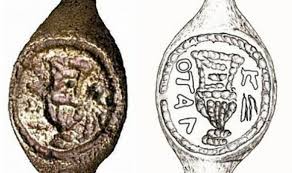 A few weeks ago, a news story broke regarding a sealing ring discovered in 1969 in Herodium – a fortress built by King Herod near Bethlehem. This ring would have been used to stamp documents and goods with an inscription. Only recently was the artefact cleaned and examined, and discovered to bear the inscription “of Pilatus.” This is a Roman name, and a rare Roman name at that. The only Romans who would have been in Israel during this time were rulers and soldiers, and the only Roman ruler who lived near the area during this timeframe is the infamous Pontius Pilate spoken of in the NT, who was prefect of Jerusalem and the man responsible for condemning Jesus to death by crucifixion. Could this be his ring, then?
December 4, 2018
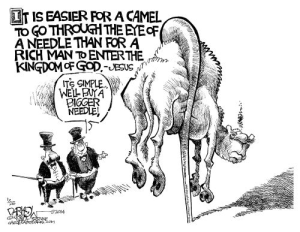 Jesus said, “It’s easier for a camel to go through the eye of a needle than for a rich person to enter the kingdom of God” (Mt 19:24; Mk 10:25; Lk 18:25). Jesus said this after the young rich ruler refused Jesus’ call to discipleship because he was unwilling to give away all of his riches. Jesus’ point seems to be that people with wealth tend to trust in their wealth, making it difficult for them to place their trust in Christ.
This doesn’t make much sense on a Calvinistic view of salvation, and thus serves as evidence against Calvinism.
November 15, 2018
Age is Just a Feeling – Literally
Posted by Jason Dulle under Apologetics, Transgender[38] Comments
 A 69 year old Dutch man, Emile Ratelband, is petitioning a court to legally change his age to 49. For him, it is an exercise of personal autonomy: “With this free(dom) of choice, choice of name, freeness of gender, I want to have my own age. I want to control myself.” He told The Washington Post that “we can make our own decisions if we want to change our name, or if we want to change our gender. So I want to change my age. My feeling about my body and about my mind is that I’m about 40 or 45.”
Absurd, right? Yes, but not given the logic of the transgender movement. If we have absolute autonomy over ourselves, such that we can deny biological reality due to our feelings, it’s not a stretch to think we have the autonomy to deny historical reality because of our feelings too. If feelings rather than biology determine one’s gender, then why can’t feelings rather than history determine one’s age?
March 14, 2018
Have we found archaeological evidence of Isaiah the prophet?
Posted by Jason Dulle under Apologetics, Archaeology[3] Comments
In 2009, archaeologist Eilat Mazar discovered 33 bullae (small clay seal impressions) in the Ophel area of Jersualem. In 2015 she announced that one of the bullae bore the impression of the seal of King Hezekiah. Now, she has announced that one of those bullae may belong to the Biblical prophet Isaiah.

Isaiah bulla

Discovery location
If valid, this would be the first archaeological evidence of the prophet.
The bulla in question was discovered less than 10 feet from King Hezekiah’s bulla. Given the close relationship between the two men, it would not be surprising to bullae belonging to both of them in close proximity. But is this truly the bulla of Isaiah the prophet?
March 6, 2018
You Can’t Forgive Yourself
Posted by Jason Dulle under Hamartiology, Miscellaneous, Soteriology, Theology[249] Comments
 We often speak of the need to “forgive yourself.” While I understand what is meant by this phrase, it is unintelligible on the Christian worldview. People speak of the need to forgive themselves in the context of feeling guilt for something they did (or failed to do). They recognize the need to eliminate this guilt and get on with their life – to stop beating themselves up for their failure.
The problem with this notion is that it’s not possible to forgive oneself. Forgiveness is something only a third party can grant to you. You can no more forgive yourself than you can give something to yourself. On the Christian worldview, the ultimate source of our forgiveness is God Himself. We will never stop feeling guilt if we are looking to ourselves. The solution for guilt is not self-forgiveness, but divine forgiveness. If we continue feeling guilt after we have repented of our sin, that is evidence that we have not truly believed that God has forgiven us – because once God forgives and we believe He has forgiven, the conscience ought to be quieted (Heb 9).
January 9, 2018
 In the past I offered a general Christian creed written from a Oneness perspective. Here is another creed I wrote specifically articulating Oneness theology:
I believe in one God, eternal and almighty,
creator of heaven and earth;
Both one in essence and one in person;
Who for us became one of us, and yet remained God;
One person in two natures, both divine and human;
The eternal God who became temporal man.
I believe in Jesus Christ, God incarnate;
Son of God and son of Adam;
Who took on our nature to take away our sin;
Divine by identity and human by function,
he rescued us as one of us, dying in our stead;
Raised from death to die no more,
In whom we confidently wait for the same, amen.
November 30, 2017
Restoring the “pathos” in the apathetic unbeliever
Posted by Jason Dulle under Apologetics, Atheism, Atheistic objections, Tactics[25] Comments
 Have you ever tried striking up a conversation with someone about the existence of God only to find that they have no interest in the question? Trying to continue the conversation is like trying to talk to a two year old about quantum mechanics. Strategically, you must find a way to get the unbeliever to see that the question of God’s existence is relevant to his/her life. I think the most effective approach is to appeal to common existential questions that every human wonders about. This could include:
- What do you think happens when you die?
- Where did everything come from?
- What is the source of our moral awareness?

 Thinking to Believe