For the previous installments: part 1, 2, 3, 4, 5.

Chapter 14

Darwin_DoubtIn principle, a neo-Darwinian explanation of the origin of new body plans can only work if body plans are wholly determined at the genetic level.  If sources of information other than DNA are substantially responsible for the formation of body plans, then at best neo-Darwinism is inadequate as a holistic explanation for the diversification of life, and at worst it is simply the wrong explanation altogether.

Once again, modern discoveries in embryological development have discovered that there are many factors other than DNA that play a critical role in embryological development.  For example, it’s been shown that in many organisms, you can completely remove the DNA from the developing cells and the embryo will continue to develop up to a certain point.  If DNA alone was responsible for embryological development, this should be just as impossible as driving a car without gas.  If the car is driving, and there is no gas in the tank, then clearly something other than gas must be powering the car.  The same is true of embryological development.  While DNA is necessary to embryological development, it is not sufficient in itself.  There are sources of power other than DNA that are critical to the development of the organism.  Scientists call such sources “epigenetic information,” meaning it is information beyond the genetic information coded in DNA.
(more…)

Here’s another great video from William Lane Craig, this time on the fine-tuning of the universe for the existence of life (see also his video on the kalam cosmological argument).

Darwin_DoubtFor the previous installments: part 1, 2, 3, 4.

Chapter 12

Scientists largely ignored the mathematicians who pointed out the seeming impossibility of creating new genes and proteins because the mathematical equations of population genetics pointed to a nearly limitless creative power of random mutations.  Given known mutation rates, population sizes, and reproduction rates, there seemed to be no end to what evolution could accomplish.  The problem with this conclusion is that population genetics is based on some assumptions that we now know to be false.

When the neo-Darwinian synthesis (the idea that evolutionary change is driven by natural selection acting on random genetic mutations) was formulated in the 1930s, biologists did not yet understand the structure of genes.  Watson and Crick would not discover the structure of DNA and the digital code it uses to build proteins until 1953 and beyond.  Prior to this, genes were only understood functionally as those entities that determine visible and selectable traits such as eye color and the number of toes on our feet.  It was assumed that single genetic mutations could alter genes in such a way so as to produce a new function, and that one gene could be responsible for building a complex structure.  Given these assumptions, it’s easy to envision an organism slowly improving one mutation at a time.  Today, however, we know that these assumptions are patently false:

  • Hundreds of proteins are often required to create a complex system. To build that system would require changes to hundreds of genes.  Furthermore, because the function of these systems depends on the coordination of several well-matched parts, these new proteins (or proteins with new functions) must arise at the same time.[1]
  • To change or improve the function of a single protein typically requires multiple, coordinated amino acid changes, which in turn requires multiple, coordinated changes in the DNA. Because the new function depends on the coordination of multiple mutations, every mutation must be present in the protein at once.

(more…)

Darwin_DoubtFor the previous installments: part 1, 2, 3.

Chapter 9

In the early 1960s, MIT professor Murray Eden set his mind to discover whether neo-Darwinism could account for the origin of new organisms.  He knew life was based on a genetic code, and based on our shared experience of all other coded systems, he assumed the sequence of nucleotides was absolutely critical to its function.  If you start adding, deleting, or moving pieces of a digital code, for example, the meaning (function) is degraded or even lost.  If we can’t create a better program by randomly adding, deleting, and moving pieces of digital code, why think a Darwinian process that makes random changes to the DNA code could build better and novel organisms (indeed, why think a coded system could ever be built by random processes to begin with)?

In 1966, Eden and other colleagues convened a conference at the Wistar Institute in Philadelphia.  The conference was titled “Mathematical Challenges to the Neo-Darwinian Interpretation of Evolution.”  The conference sought to explore the creative power of natural selection acting on random mutations.  Those present recognized that there are an enormous number of ways to combine amino acids together to form protein chains.  And while they did not know precisely how many combinations could result in a functional protein compared to those that could not, they did know the number of functional combinations was extremely small.

(more…)

Darwin_DoubtFor the previous installments: part 1, 2.

Chapter 6

If common ancestry is true, we would expect the evolutionary tree of life (TOL) based on animal morphology to line up with the evolutionary TOL based on molecules, but they don’t.  In fact, there is no one TOL based on morphology or one TOL based on molecules.  There are multiple TOLs.

Interestingly, a comparison of different genes from the same organism can result in different TOLs for that organism.  The same is true of morphology.  For example, when the TOL is constructed based on germ-cell formation (which is basic to the evolutionary process because it underlies reproduction, and we would expect for all organisms in a branch of the TOL to have the same germ-cell formation) it leads to one TOL, but this TOL differs radically from TOLs constructed based on body-play symmetry, the number of primary tissues, or the mode of development.

Looking at the Cambrian pyla specifically, there is no one TOL showing what the ancestry looked like leading up to the Cambrian.

Convergent evolution is a word to describe how similar morphological features develop in different species, where that feature was not shared by their common ancestor.  There are many examples of so-called convergent evolution.  But convergent evolution undermines the presupposition underlying the theory of common descent: similar homology indicates similar ancestry.  Convergent evolution demonstrates that homological similarities do not necessarily imply a common ancestry.  Convergent evolution negates the logic of the argument for common descent from homology.

Chapter 7 (more…)

Darwin_DoubtFor the previous installment, see here.

Chapter 3

In 1995, Chinese scientists discovered even older Cambrian fossils near Chengjiang, China.  At this site, even more Cambrian phyla and species were uncovered.  This discovery also put to death the most popular form of the artifact hypothesis.  One can no longer claim that the Pre-Cambrian lacks the Cambrian ancestors because the ancestors were too soft (no exoskeleton) or too small given the fact that the Chinese researchers discovered fossilized sponge embryos which are both microscopically tiny and entirely soft-bodied.  They were preserved so beautifully that they were even able to see them in the midst of cell-division and identify the nucleus of the cells.  Of course, even before this discovery, we knew that soft-bodied animals could be preserved in the fossil record since filament-shaped micro-organisms had already been discovered in the Precambrian, and many other soft-bodies animals, organs, and anatomical structures in both the Cambrian and Precambrian.  According to Simon Conway-Morris, the Burgess Shale (Cambrian) contains 70K+ specimens, and 90% of them are either entirely soft-bodied or have a thin skeleton.  The fossils discovered by the Chinese contained even more soft-body animals and preserved eyes, intestines, stomachs (and even the contents in the stomachs), mouths, and nerves.  Furthermore, it would be impossible for some ancestors of the Cambrian phyla to function without their hard parts (such as an exoskeleton).  They would have to have evolved together, and thus we would expect to find those ancestors in the Precambrian.  If the Precambrian could preserve soft, tiny organisms, then why don’t we find the transitional forms leading up to the Cambrian phyla in the Precambrian?

(more…)

Darwin_DoubtI may be a bit late to the party, but I’ve finally gotten a chance to read Stephen Meyer’s latest book, Darwin’s Doubt.  Having read his previous book, Signature in the Cell, I had high expectations, and Meyer did not disappoint.  Darwin’s Doubt takes a look at the longstanding enigma of the Cambrian explosion – a very brief time in history in which the majority of all major animal forms abruptly appear in the fossil record with no trace of simpler ancestral forms.  Darwin recognized the problem the Cambrian fossils posed to his theory, but thought future discoveries would solve the problem.  After 150 years, the problem hasn’t been solved.  Instead, it’s been made more acute.

Scientists are increasingly coming to recognize that Darwin’s theory cannot explain the Cambrian explosion.  Some are proposing alternative, naturalistic explanations.  Others see the Cambrian explosion as powerful evidence for the intervention of an Intelligent Designer nearly 550 million years ago.  Who’s right?  Darwin?  The Darwin doubters?  Intelligent Design theorists?  Stephen Meyer walks the reader through the evidence, and then evaluates competing explanations to see how they stack up against the evidence.  It should be no surprise to those who know Stephen Meyer where the book concludes.  The question is how he gets to his conclusion.

(more…)

God necessary for moralityIf there is no God, there is no morality either.  Only a transcendent, personal being like God can serve as the ontological foundation for transcendent moral truths and moral duties. Cultural norms and mores may still exist without God, but not moral truths. Without God to provide the ontological grounding for objective moral values, what we refer to as “morality” is nothing more than expressions of our subjective preferences or human pragmatism.  To say “murder is wrong” is no different than saying “chocolate ice-cream is gross” or “you shouldn’t drive on the left side of the road.” Moral obligations fall by the wayside, for in the name of what ought anybody submit to cultural preferences or pragmatic mores?

To believe morals exist but God does not is like believing books exist but authors do not. There wouldn’t be any books in the absence of authors, and there wouldn’t be any moral truths in the absence of a transcendent, personal, holy God to ground those moral truths in reality. Put another way, to believe moral truths exist in the absence of a transcendent source like God is like believing books exist in the absence of authors. And to believe that we are obligated to behave in certain ways in the absence of a moral law maker and judge is tantamount to thinking one is obligated to obey the laws in a nation without legislators.

(more…)

It’s been just over two months since my last post. No, I’m not dead.  No, I haven’t given up blogging. I’ve just been working crazy hours at my job.  Sleep has been a luxury (to give you an idea of how crazy it’s been, last week I slept five hours between Sunday morning and Thursday night), so blogging has been out of the question.  I apologize for not at least posting something a couple months ago notifying everyone that blogging would be next to non-existent for a while.  When I have a few minutes I write down some thoughts for a blog post, but then it takes me 10 days to get back to it, and I only have five minutes to write.  So I will be posting something in a few days.  It’s only a few paragraphs, but it took me more than a month to write!

For those of you who have not already subscribed to my email feed, I would encourage you to do so (click “email notifications” on the top right).  Hopefully by December things will be back to normal, and I’ll resume blogging on a regular basis.  Until then, I’ll try to post when I can.  Thank you for your faithful readership!

Paul_R_McHugh_MD2Former psychiatrist in chief at Johns Hopkins Hospital, Dr. Paul McHugh, recently penned a poignant opinion piece in the Wall Street Journal titled “Transgender Surgery Isn’t the Solution.” John Hopkins was the first medical center to perform sex-reassignment surgery in the 1960s, but based on evidence that such surgeries did not help transgendered people, they ceased performing the surgeries.  In light of the recent push to normalize transgenderism, Dr. McHugh has sounded the medical alarm to warn us that in our efforts to help these people we may be having the opposite effect.

(more…)

Kentucky’s marriage law has been found unconstitutional by a KY juduge, though there is a stay on his decision.

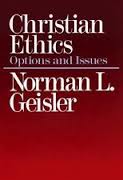
Christian Ethics GeislerChristian Ethics by Norman Geisler was written in 1989.  I’ve known many people who have read this book over the years, but never bothered to do so myself until I saw it on sale for a deep discount!  I found it to be a great introduction to ethical systems and pressing moral issues.

Geisler starts by looking at various ethical systems such as antinomianism, situationism, utilitarianism, generalism, and variations of absolutism (these are the names he gives these views, which are not exactly my preferences).  He concludes that the Bible teaches a deontological view of ethics.  When it comes to the question of whether moral duties ever conflict and how we are to respond, he argues for the “greater good” view in which moral conflicts are real, and we do the greater good when we choose to lesser of the two evils.

(more…)

Jay MichaelsonOne of the expectations of marriage is sexual fidelity (monogamy).  In “Were Christians Right about Gay Marriage All Along?” gay rights advocate, Jay Michaelson, acknowledges that gay relationships (particularly males) are typically not monogamous.  So what effect will including gays in the institution of marriage have?  Will homosexuals change the concept of marriage so that monogamy is no longer considered essential, or will marriage domesticate homosexuals, leading them in the direction of monogamy?  A 2013 survey of same-sex married couples in San Francisco revealed that half of same-sex marriages involve extra-marital partners, and Michaelson thinks the actual number is closer to 75%.  So it doesn’t appear that marriage is domesticating homosexuals, and Michaelson thinks the openness to extra-marital sex among same-sex married couples will eventually lead to a reformation of marriage among heterosexuals.  Only time will tell, but I find it interesting that Michaelson is willing to admit that kind of marriage practiced by many same-sex couples is not the same kind of relationship envisioned by most heterosexual couples.


HT: Stand to Reason

Materialists will tell you they don’t believe anything other than the material world exists, but seem oblivious to the fact that propositions – such as the proposition that only the material world exists – are not material.  That means materialism is falsified the moment you think about it. Pun intended.

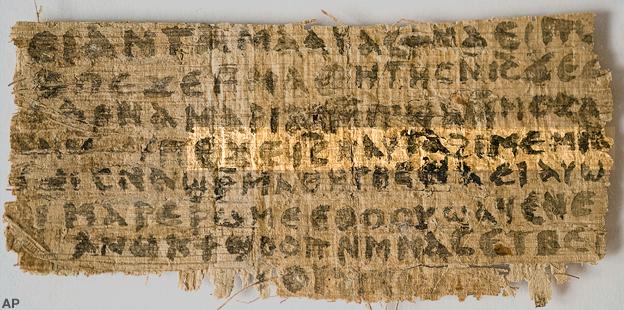
"Jesus said to them, 'My wife'" highlighted.

“Jesus said to them, ‘My wife'” highlighted.

I had previously written about the so-called Jesus’ Wife fragment that was brought to the public’s attention in 2012 by Karen King of Harvard Divinity School (here, here, and here). It was greeted by a lot of controversy regarding its authenticity, with the evidence leaning heavy in the direction of forgery. We had been waiting for tests to be performed on the papyrus and ink for well over a year to see if they also pointed in the direction of forgery. Those results finally came out in April 2014. It turns out that the materials are old (~8th century A.D.), but not nearly as old as King initially suggested and the paleographic evidence indicated (4-5th century A.D.).

Despite the ~300 year difference between estimated age and actual age of the papyrus, this seemed to be a vindication for King against those who argued that it is a modern forgery.  But is it?  Couldn’t it be a modern forgery using ancient materials?  After all, no forger buys his paper at the local Wal-Mart!  We would expect a forger to use an old papyrus for his forgery, so an analysis of the materials alone is not sufficient to tell us whether this is a forgery (it can confirm forgery, but not preclude it).  The analysis of the contents (vocabulary, grammar, writing style, etc.) is equally important, if not more important than the material composition itself for evaluating authenticity.

(more…)

Denmark’s parliament voted overwhelmingly that churches in Denmark must allow same-sex couples to use their facilities for same-sex weddings, and even officiate the weddings. If the priest of the parish is unwilling to officiate the wedding, the bishop must find a priest who is willing to do so.

The government is using its power to force churches to rent out their facilities for purposes they find immoral, and that go against the dictates of their religion.  I would love to see them try to force mosques to do the same!  Hopefully the church in Denmark will rebel.  Considering the fact that less than 1/3 of the priests object, however, I doubt it.

(more…)

Michael Sam was just drafted by the St. Louis Rams.  So were a bunch of other guys, so why is Sam in the news?  What makes Sam unique is that he is the first openly gay player to be drafted into the NFL.  Given the nature of the NFL, I can see why this is news, but from a Christian perspective, I don’t consider this to be a big deal at all.  Neither do most Christians.  Unlike some on the Left, Christians do not think that those who disagree with us do not deserve to be employed.  If Sam’s athletic abilities qualify him to play in the NFL, then he should be allowed to play in the NFL.  His sexual orientation/behavior is irrelevant.

What I do consider to be a big deal is the fact that Miami Dolphins’ safety, Don Jones, was fined, suspended, and forced to undergo sensitivity training for expressing his personal disgust at Sam and his partner’s televised celebratory kiss.  Jones tweeted the words “OMG” and “horrible” to describe this public display of affection.  The very next day the Miami Dolphins’ head coach, Joe Philbin, described Jones’ tweet as “inappropriate and unacceptable,” and that it required them to speak to Jones about “respect, discrimination and judgment” because such “statements will not be tolerated.”  Perhaps it escaped Coach Philbin that he himself was passing judgment on Jones and discriminating against him based on his comments.

(more…)

I can’t keep up with all of the natural marriage laws being ruled unconstitutional these days!  Three states have had their marriage laws overturned in the last two weeks. 

Arkansas

In 2004, Arkansas voters approved a constitutional amendment that recognized a man and woman as vital to the institution of marriage.  Fast forward 10 years.  On May 9, Judge Chris Piazza of the Pulaski County Circuit Court ruled that this amendment is unconstitutional.  The Alabama state attorney general appealed to the Alabama State Supreme Court to put a stay on the decision, which was granted in a back-handed way only because Piazza’s decision did not invalidate a law prohibiting clerks from issuing marriage-licenses.  But Piazza updated his ruling to try to address the issue, and refused to suspend his decision.  As a result, some counties are continuing to issue marriage-licenses while others are not.

Oregon

On Monday, May 19, U.S. District Judge Michael McShane ruled that Oregon’s natural marriage-only constitutional amendment, passed by 57% of the voters in 2004, is unconstitutional. A request was made to the 9th U.S. Circuit Court of Appeals to put a stay on the decision, but the request was denied.

Pennsylvania

Yesterday, U.S. District Judge John E. Jones III federal judge declared Pennsylvania’s marriage laws unconstitutional.  The decision was effective immediately, and same-sex couples began applying for marriage licenses the same day.

There are now 19 states, plus the District of Washington, that support same-sex marriage.

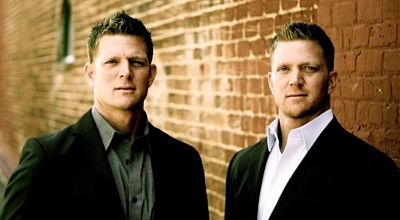
benham-brothersHGTV was planning to air a new show about fixing up houses for families in need, Flip It Forward.  It was being hosted by twin brothers, David and Jason Benham, who have made a career of flipping houses.  But the network decided to cancel the show after Right Wing Watch reported that the Benham twins do not agree with homosexuality, and have even led protests outside of abortion clinics.  Initially HGTV said they were “currently in the process of reviewing all information about the Benhams,” and then they issued a tweet declaring that they would not move forward with the series.

While Right Wing did not call on HGTV to cancel the show, it appears that HGTV caved to the small amount of public pressure they received based on Right Wing Watch’s report. Shame on HGTV for not having the internal fortitude to stand up to the public pressure and say, “We understand that a large number of people do not agree with the personal views of David and Jason Benham, and we respect that. However, Flip It Forward is not a show about the Benham brothers’ personal views.  It’s a show about helping financially-challenged families get their dream home.  The Benham brothers’ experience in flipping houses makes them well-qualified to host this show, so we will continue to air the show with them as hosts.  HGTV’s employment of the Benham brothers is not an endorsement of their views, but we believe people have a right to their own moral opinions, and that those of us who disagree have a responsibility to extend tolerance to those we disagree with.  We believe a civilized, tolerant society must give space for people to believe and act according to their convictions, and do not agree with those who think anyone who doesn’t agree with them is not deserving of gainful employment.  We can do better that as a society, and at HGTV, we are doing better than that.  For those who find the Benham’s views distasteful, we would ask that you extend the same tolerance to them that you want extended to those who share your point of view. We ask that you set aside your personal differences with the Benham’s personal views, and allow yourself to enjoy and celebrate their work to help our mutual neighbors.”  That’s the press release you’ll never see, but one that would be cheered by the vast majority of citizens, and I would suspect, the vast number of HGTV viewership.

The Benham brothers have responded graciously (see here and here).

Remember when they asked us, “How is same-sex marriage going to affect you?”  This is how.


InfatuationThere is a difference between being enthralled/infatuated by someone, and being in love with someone.  Enthrallment or infatuation is when you are consumed with your desire for someone else.  Love, on the other hand, is the giving of oneself to another.  It is caring for their needs as you would your own.  It is doing all you can to make them a better person.  In short, infatuation is self-consuming, while love is self-giving.

I tend to think that we have so confused the two in our culture that only a minority of couples ever experience true love.  Instead, they experience intense periods of infatuation in the beginning of their relationship, and that gives their relationship the gas it needs to continue for a considerable distance.  But like a car that only gets filled with gas in the beginning of a long trip, the relationship does not reach its intended destination of “til death do us part.”  Only true love (or pure will and commitment) can fuel a relationship so that it can endure the many hardships of life.