 There’s no question that systemic racism existed in this country in the form of slavery, Jim Crow laws, and the like. However, all forms of systemic racism have been made illegal since the 1960s. Systemic racism does not exist in America today. That’s not to say there are no racists left in America. Surely there are, but they are few in number. To say systemic racism no longer exists in America is to say that racism is no longer embedded in society’s systems. There are no institutions or laws that are explicitly or implicitly based on racist ideology, nor policies that treat people differently based on their race.
Many disagree with this assessment. They will agree that there are no institutions, laws, or policies that explicitly treat people differently based on their race (racism proper), but they argue that racism is still implicit in our institutions, law, and policies as evidenced by racial disparities in outcome. Black people are arrested at higher rates, have a higher incarceration rate than whites, earn less income than whites, etc.
While such racial disparities could be the result of implicit systemic racism, they could also be due to other factors as well. Racism must be proved, not assumed. If the racial disparities can be explained by differences in personal choices or behaviors, then there is no reason to think racism plays any major factor.
 Based on my research, if you have been infected with COVID-19, there is no good reason for you to get vaccinated. Getting Covid provides you with a natural immunity to future reinfections that is thousands of times more effective than the immunity conferred by the vaccines. Also, the vaccines fare no better than natural immunity at preventing the transmission of Covid. Let me explain.
 A little over a month ago, I
  Texas is on a roll! First, Texas reported
  The telltale sign of fascism is the silencing of dissent. If you don’t agree with the fascists’ point of view, you will be de-platformed, cancelled, fired, imprisoned, or killed. Which side of the ideological aisle is engaging in fascism these days? Here’s a clue: It’s not the Right. While we haven’t seen the Left imprisoning or killing anyone in this country yet, given enough time, and given enough power, it will happen. It’s already happening in other countries, and we can see the same trajectory in our own.
 I am temporarily reviving an old series I did on hermeneutics called “straight outta context.” For this installment, I want to look at 1 Corinthians 3:10-17.
 Is abortion moral? It’s rather telling when one side of the moral debate wants to ignore the most important question – what is being killed? – and focus on the will of the mother instead. It’s equally telling when that same side invents a host of euphemisms to obfuscate the issue including “women’s health, reproductive rights, choice, and termination of pregnancy.” When people avoid the main issue and use euphemisms to hide the truth of their actions from the public, you can pretty much bet that those people are on the wrong side of that issue.
 In John 20:21-22, during Jesus’ first resurrection appearance to the apostles, He said, “’Peace be with you. As the Father has sent me, even so I am sending you.’ And when he had said this, he breathed on them and said to them, ‘Receive the Holy Spirit.'” Did the apostles receive the Spirit at that moment, or did the fulfillment of Jesus’ words await the Day of Pentecost (Acts 2:1-4)?
 Over the last year, the Left has popularized the phrase “systemic racism.” What exactly does this mean? It doesn’t mean racism is widespread throughout America, or even that there are some racist individuals within the power structures of various social systems. Rather, it means that the very systems of our society and government are rooted in racist ideology, and thus necessarily result in discrimination against non-whites. That’s why some of those who claim there is systemic racism are also calling for us to tear down these power structures and start anew. They don’t want to eliminate the racist people from the systems, but eliminate the systems themselves. The systems are deemed irredeemable.
 What are the main ideological differences between the “Left” and the “Right”?* Here is a handy chart detailing the primary differences. Please note that I am focusing on ideological differences as opposed to how those ideological differences translate into specific policy differences such as taxes or abortion.
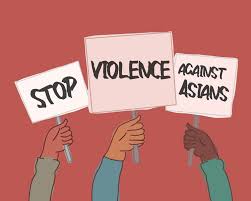 The latest scare being proffered by the media is that it isn’t safe to be an Asian in America. Headlines everywhere read “Asian hate crime is up 150%.”
 A new
A new  More than 80 fragments of Nahum and Zechariah (not all have text written on them) were recently discovered in the Judean desert. These are the first Dead Sea Scrolls discovered in 60 years. Apparently, these fragments belong to a scroll of the Minor Prophets that was discovered in this same cave more than 60 years ago. That scroll, and these new fragments, are written in Greek rather than Hebrew. One of the interesting features of this scroll is that the name of God is written in paleo Hebrew, which is the ancient Hebrew script. Hopefully more scrolls will soon be discovered.
 In
In  If you haven’t heard of the
 Thinking to Believe